
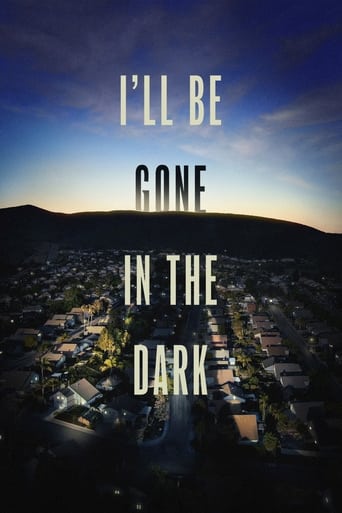
The Pitch
A six-part 2020 HBO documentary directed by Liz Garbus, adapted from Michelle McNamara's book of the same name. McNamara was a true-crime writer who spent years chasing the man she christened the Golden State Killer — the serial rapist and murderer who terrorized California from Sacramento to Orange County across the '70s and '80s under a rotating cast of nicknames. The series braids two stories: the decades-long hunt led by cops, criminalists, and a scattered civilian obsessive community, and McNamara herself, whose voice (read by Amy Ryan from her writing) narrates alongside interviews with her husband Patton Oswalt, her collaborators Paul Haynes and Billy Jensen, retired investigators, and — crucially — several survivors who agreed to sit on camera.
The Argument For
Garbus is a serious documentarian (she made "What Happened, Miss Simone?") and it shows. She resists the true-crime instinct to turn victims into set dressing. The survivor interviews are patient, framed straight-on, given room. The Ryan voiceover is the smartest formal choice in the series: McNamara's prose was genuinely good, and hearing it read aloud keeps her on screen even when she isn't. Oswalt is disarming — a comedian talking about grief with none of the practiced beats you'd expect. And the show is honest about the queasy engine underneath civilian sleuthing: the message boards, the map pins, the way a hobby can eat a life.
The Case Against
It's slow, and it's occasionally in love with its own melancholy. Episodes two and three sag under repetition — the same locations, the same map, the same weight. If you came for a procedural you'll notice how little forensic granularity the series actually delivers; it's more interested in mood and grief than in evidence. The dual structure sometimes fights itself, with the biographical strand pulling focus from the case and vice versa. And a few of the amateur-detective interviews cross into self-mythologizing that Garbus lets sit longer than she should.
The Right Viewer
If you liked "The Jinx" for its texture, "Wormwood" for its formal ambition, or "The Keepers" for how it centers survivors, you're in. Readers of the book will find it a faithful companion piece. Bouncers: anyone who wants a tight three-episode "who did it and how" cut, anyone allergic to voiceover, anyone who watches true crime for the puzzle rather than the human wreckage around it. If "Making a Murderer" was your speed for its courtroom rails, this is a different animal.
The Sentence
WORTH IT because the craft matches the ambition. Garbus made a documentary about obsession that has the discipline not to become obsessive itself — the pacing is deliberate, the survivor interviews are ethically framed, and the writer at the center is treated as a subject with a real interior rather than a martyr. The show has a point of view about true crime as a genre — that watching it is not free, that the audience is implicated — but it earns that through Oswalt's interviews, McNamara's own words, and the survivors' testimony. Nobody's monologuing at you. It's a documentary that trusts its material and its viewer, which is rarer than it should be.