The Pitch
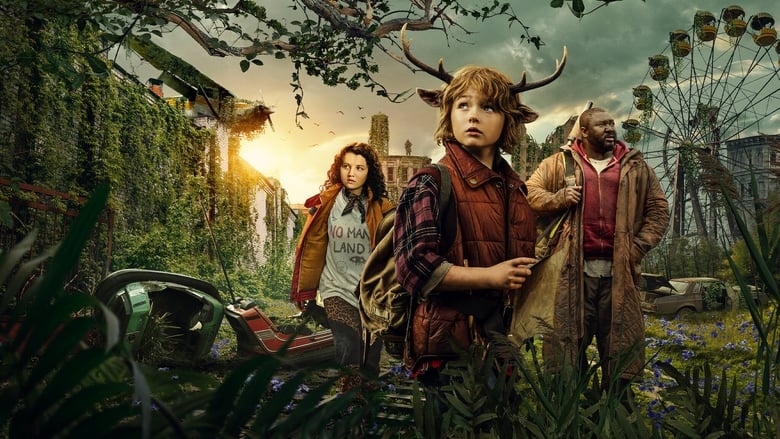
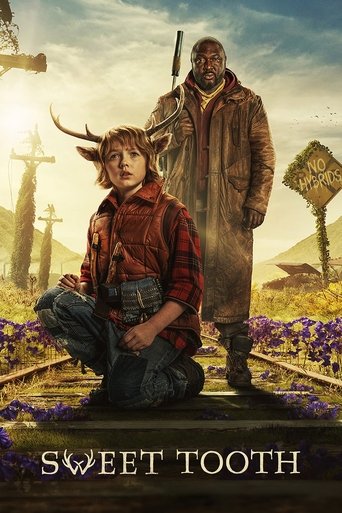
A virus wiped out most of humanity. At the same time, babies started being born as animal hybrids — antlers, tails, fur — and nobody's sure which came first. Ten years in, a deer-boy named Gus (Christian Convery) has been raised alone in a Yellowstone cabin by a father who taught him one rule: don't leave the woods. He does. He ends up traveling with a hulking, glowering ex-something named Tommy Jepperd, played by Nonso Anozie, who does not want a kid tagging along. James Brolin narrates the whole thing like he's reading you a bedtime story that has some rough parts. Jim Mickle developed it from Jeff Lemire's Vertigo comic, with Robert and Susan Downey producing. Netflix ran it for three seasons between 2021 and 2024.
What Works
Mickle takes source material that on the page is bleak and gory and finds a completely different key for television — golden-hour light, wide skies, a storybook cadence that never tips into cutesy. Convery is the whole show. He plays wonder without ever mugging for it, which is the hardest thing a child actor is asked to do, and he pulls it off across three seasons of growing up on camera. Anozie's Jepperd is the counterweight: a big man with a quiet voice doing the reluctant-dad thing better than most prestige dramas manage. Brolin's narration gives the whole enterprise a fable's shape, so the pilot lands somewhere between a Pixar opening and a Cormac McCarthy sketch. The parallel storylines — a doctor, a teen sanctuary, a militia — are woven cleanly enough that you always know where you are.
Where It Falls Down
It's earnest. Deeply, unapologetically earnest, and if you came in expecting The Last of Us with antlers you'll be annoyed by episode three. The pacing is patient in a way that reads as slow if you're not in the mood; some subplots take a full season to matter. The hybrid prosthetics range from lovely to distractingly rubbery depending on the kid. And the show occasionally reaches for a moral that a smarter cut would trust the audience to find on its own.
The Right Viewer
If Station Eleven worked on you, or if you rewatch the calm episodes of The Leftovers, this is your lane. Parents watching with older kids get a rare thing here — an apocalypse show that isn't traumatizing. People who need their post-collapse fiction to be grim, ironic, or bristling with body count will bounce halfway through the pilot. Same for anyone allergic to voiceover.
The Bottom Line
WORTH IT because the craft matches the ambition without overreaching. Mickle picked a tone — pastoral fairytale — and held it for three seasons, which is a discipline most streamers can't manage past episode six. The show has themes (nature, difference, who gets counted as a person) and it dramatizes them through Gus and Jepperd instead of parking the plot to explain them. Nobody speechifies. Nobody stares into the middle distance quoting the writers' room. When it gets sentimental it earns it with the performances, not with a score cue telling you to cry. Not a masterpiece. A well-made, well-finished thing, which on Netflix in 2024 is already rare.
Sources: