What It Is
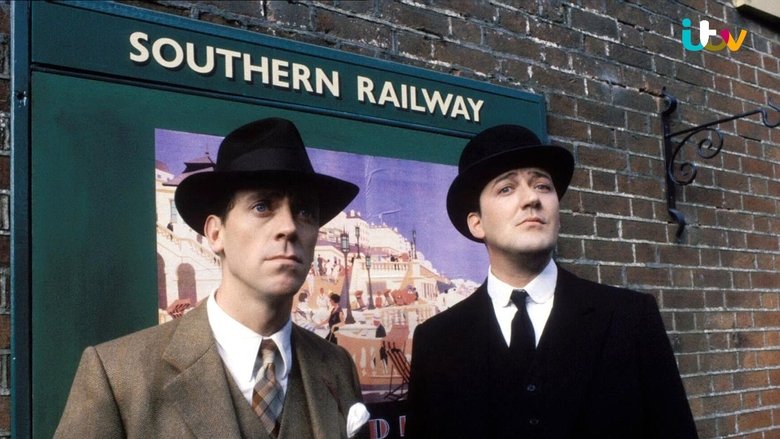
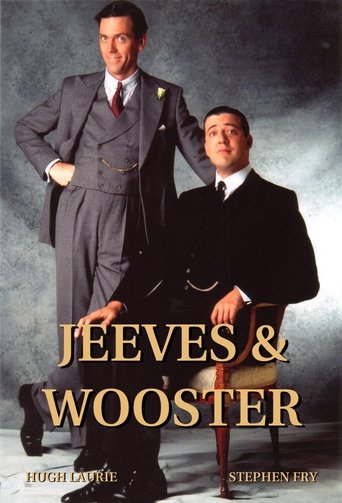
"Jeeves and Wooster" is the ITV adaptation of P.G. Wodehouse's stories that ran from 1990 to 1993, four series, starring Hugh Laurie as Bertie Wooster, a wealthy, well-meaning, staggeringly dim young man about town in interwar London, and Stephen Fry as Jeeves, his impossibly composed valet with a brain the size of a cathedral. Early episodes establish the machine: Bertie stumbles into an engagement he doesn't want, or gets roped into helping a chum out of a scrape, or accepts a house invitation from a terrifying aunt. Jeeves quietly disapproves of a tie, then quietly saves everyone's life.
The Argument For
Fry and Laurie. That's most of the pitch, and it's enough. They'd been writing sketch comedy together for years by 1990, and the shorthand shows in every scene: Laurie's Bertie is all elastic face and posh burble, a golden retriever in spats, and Fry's Jeeves barely moves and somehow gets more laughs. Adapter Clive Exton lifts huge chunks of Wodehouse's prose intact and hands them to Laurie, who narrates like a man mildly astonished to find himself in his own life. The production also spends real money on the period — vintage cars, Deco hotels, boater-hatted extras — so the world feels lived in rather than sketched. And Laurie plays piano and sings the interwar standards himself in the title sequences and drawing rooms, which is a small pleasure that keeps paying off.
The Argument Against
It's genteel to a fault. Nothing is at stake beyond an engagement Bertie doesn't want or a silver cow-creamer somebody's pinched. The plots repeat by design, because Wodehouse's plots repeat by design, and if you don't find the fifth misunderstood-fiancée farce funnier than the fourth, you'll find it identical. The pacing is theatrical rather than televisual, some episodes feel visibly stretched to fill an hour, and a few of the New York-set stories in later series wobble on their American accents. It is also, unavoidably, a show about very rich idiots being gently rescued by their servants, played entirely straight. That's the joke, but it's a narrow joke.
Who This Is Actually For
Sticks with you if you like "Frasier" for the vocabulary, "The Grand Budapest Hotel" for the doll's-house tidiness, or any British sitcom where the pleasure is watching clever people be clever at each other. Bounces if you need jeopardy, if you need a serialized arc, if you need anyone to grow or change, or if the sight of two men in white tie fretting about a garden party sends you looking for the remote. Also a hard sell for viewers who need their comedy loud; this one operates at library volume.
The Sentence
WORTH IT is the right shelf. It's not prestige, it's not urgent, and it's not trying to be. It's a well-cast, well-written comfort object with two of the best comic performers of their generation in perfect calibration, adapting one of the funniest prose stylists in English without getting cute about it. The direction is unfussy, the writing trusts Wodehouse, and Fry and Laurie trust each other. No Lecture Test issues to speak of; the show has no interest in your opinions and no opinions of its own beyond "Bertie should probably not wear that." The ambition is modest and the execution matches it, which is exactly what earns a WORTH IT rather than a tier above.
Sources: