Where This Starts
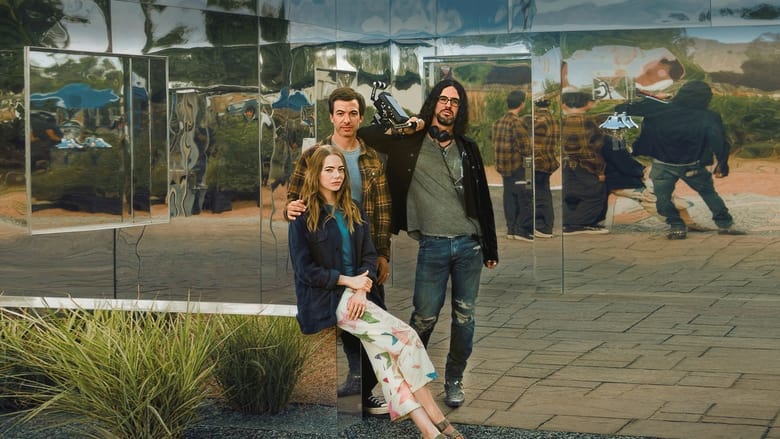
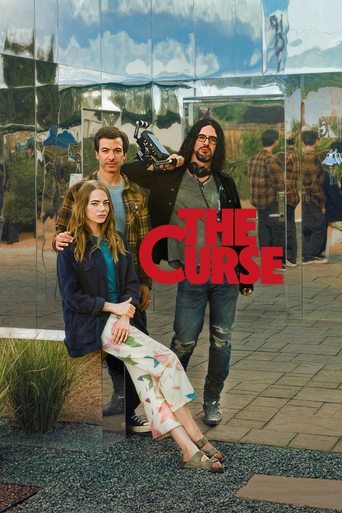
A married couple, Asher (Nathan Fielder) and Whitney Siegel (Emma Stone), are shooting the pilot for an HGTV-style flip show called "Flipanthropy" in Española, New Mexico. Their pitch: passive-solar "mirror homes" they claim will revitalize a low-income community without displacing anyone. Their unscrupulous producer Dougie (Benny Safdie, who co-created the show with Fielder) is filming it. During a staged act of on-camera charity, Asher stiffs a young girl selling sodas outside a hardware store, then takes the money back once cameras cut. She tells him he's cursed. He can't shake it. That's the first act. What follows is ten hours of a marriage, a fake TV show, and a neighborhood all quietly warping around that moment.
The Argument For
Fielder and Safdie shoot this thing like surveillance footage. Long lenses through windows, held way too long, framing that puts you across the street watching two people who don't know they're being watched, even as they're constantly performing for cameras they invited into their lives. It's a formal joke and a thesis at once. Emma Stone is doing career-best work as Whitney, a woman whose entire personality is a rehearsal for being seen as good. Fielder, in his first real dramatic role, plays Asher as a man who is 90% flinch. The dialogue overlaps and stammers in a way that feels closer to a Cassavetes movie than a prestige drama. Composer John Medeski's needling score sits under scenes like a dentist's drill in the next room.
What It Gets Wrong
It's ten episodes, most of them close to an hour, and it moves at the speed of a lease negotiation. Whole scenes exist just to watch Asher fail to finish a sentence. If cringe humor makes your shoulders climb toward your ears, this is a stress position. The satire of gentrification, reality TV, and performative goodness is thick enough that some viewers will feel lectured; others will feel it's the whole point. Middle stretch drifts. Not everything lands.
Who It's For, Who'll Bounce
If you loved "Nathan For You" and "The Rehearsal," or the anxiety-attack pacing of "Uncut Gems," you're already home. Fans of "Enlightened," early "Curb," or Yorgos Lanthimos's colder work will find plenty to chew on. Anyone who wants plot momentum, likable protagonists, or a clean punchline will tap out by episode two. This is not a show you put on to relax. It's a show you put on to feel visited by something.
The Verdict
WORTH IT because the craft is doing something almost nobody else is trying. The direction is genuinely singular — Fielder and Safdie invent a visual grammar for the specific dread of being watched while pretending not to notice. Stone gives a performance that would sweep awards in a more conventional package. On the Lecture Test: the show absolutely has things to say about white liberal guilt, gentrification, and the ethics of televised charity, but it dramatizes them through Asher and Whitney's actual behavior instead of parking scenes to make speeches. The characters embarrass themselves; the writing doesn't step in to explain why. That's the difference between a show about hypocrisy and a hypocritical show. It drags. It's uncomfortable on purpose. Not everyone will make it through. The people who do will be thinking about it for months.
Sources: