
What It Is
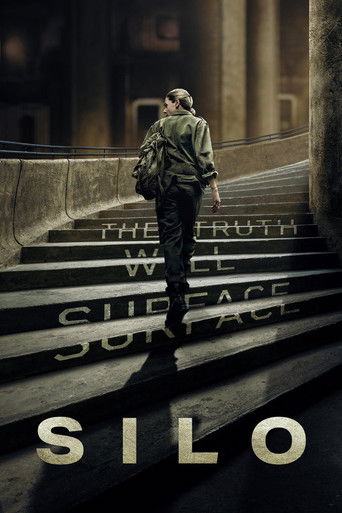
Rebecca Ferguson plays Juliette Nichols, a mechanical engineer working the deep floors of a 144-story underground silo housing the last 10,000 humans on Earth. Nobody remembers who built it. Nobody's allowed to ask. The outside, per the screens on the top floor, is a poisoned brown wasteland, and the one rule everyone lives by is that saying you want to go out there gets you sent out there. Graham Yost (the guy who wrote "Speed" and ran "Justified") adapted it from Hugh Howey's Wool novels for Apple TV+, and the supporting bench is stacked: Tim Robbins, Common, Harriet Walter, Steve Zahn, David Oyelowo. Season one gives you the shape of the world. Something's rotten in the machinery. Juliette starts asking about it.
The Case For
The world-building is doing real work. Production design treats the silo like a character — the spiral staircase that takes days to traverse, the caste system baked into which floor you were born on, the low hum of a place engineered to keep you incurious. Ferguson is the whole engine. She plays Juliette as competent, pissed off, and short on speeches, which is exactly what this material needs. Robbins does menace by underplaying it. Yost's writers' room understands mystery-box discipline better than most of the streaming class: information gets doled out at a rate that feels earned rather than teased. Season two got even better reviews than season one (92% on Rotten Tomatoes), which is not the usual trajectory.
What Doesn't Work
It's slow. That's the honest word. Episodes will linger on procedural silo-life detail when you want the plot to move, and the middle stretch of any season has at least one hour that reads as table-setting. The dialogue occasionally goes stilted in a way "Foundation"-adjacent prestige sci-fi tends to — characters explaining silo rules to each other for the audience's benefit. Season three, currently airing, has drawn "transitional" reviews from critics who felt the show is stalling before its endgame. If you need momentum every week, you'll feel the drag.
Who Should Watch
If you liked "Severance" for the vibe more than the surrealism, if you rewatched "Snowpiercer" for the class hierarchy, if the first season of "Lost" hooked you on rules-of-the-world storytelling — this is for you. If you bounced off "Foundation" because nobody would just say what the show was about, you'll bounce off this for the same reason. Impatient viewers, skip. Book readers get an extra layer; newcomers get to be surprised.
Final Word
WORTH IT is the honest tier. This is a well-made sci-fi drama with a great lead performance, real craft in the design and direction, and a mystery that mostly pays off week to week. It's not "Severance." The dialogue isn't as sharp, the imagery isn't as strange, the ambition is a notch lower. But it's playing a legitimate game and playing it competently. On the Lecture Test: the show does have things to say about class, information control, and who gets to decide what's true, and it mostly says them through Juliette climbing stairs and fixing generators rather than through monologues. The themes ride inside the story instead of driving it. That's the whole trick, and Yost's team pulls it off often enough to earn the verdict. Not appointment television. Good television.
Sources: