What It Is
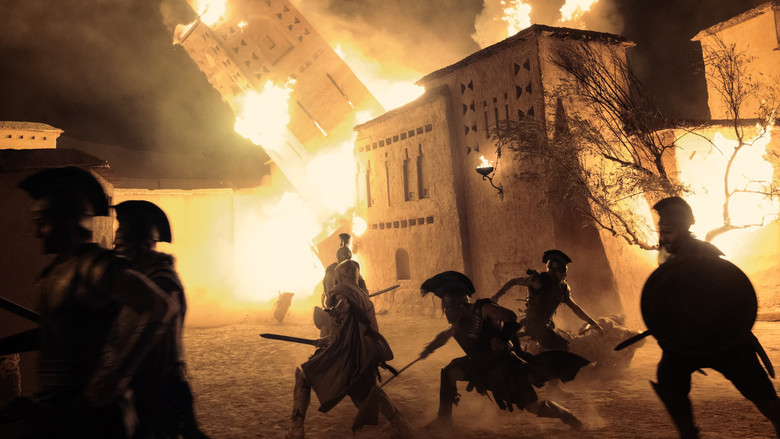
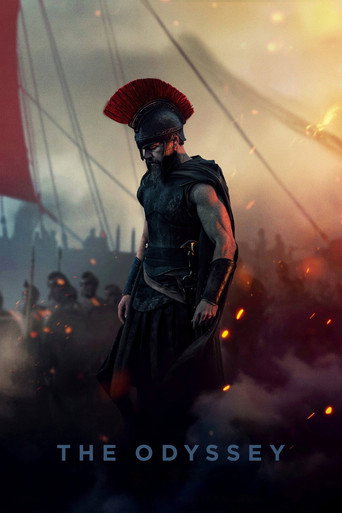
Christopher Nolan's take on Homer, shot on giant-format IMAX film across the Mediterranean, Morocco, Greece, and Sicily. Matt Damon is Odysseus, trying to get home from Troy. Tom Holland is Telemachus, the son who barely remembers him. Anne Hathaway is Penelope, holding Ithaca together against a house full of suitors. Zendaya, Charlize Theron, Lupita Nyong'o, and Robert Pattinson round out the pantheon. The opening act sets up a war-hardened king adrift on the sea, a wife under siege at home, and a boy trying to figure out if his father is myth or man. Everything past that, you already know from ninth grade.
The Case For
The scale is real. Nolan and DP Hoyte van Hoytema shot practical, on water, on cliffs, and it plays huge — the ocean isn't a plate. Damon is doing the best film work of his career, all weariness and calculation, a king who's mostly tired. Hathaway plays Penelope smart instead of long-suffering, which is the correct call. Holland has more to do than the trailer suggests. Ludwig Göransson's score leans on low strings and choir instead of Zimmer-brass, and it's the best thing he's written since Oppenheimer. Nolan structures the myth in overlapping timelines, which sounds like his usual trick but actually earns it here — Ithaca in the present, the journey in memory.
What Doesn't Work
It's long, and you feel it. Nolan is still Nolan, which means dialogue occasionally lands as exposition read aloud, and a couple of the pantheon cameos are more casting event than character. Which gets at the bigger problem: the casting is a Rolodex, not an ensemble. Nolan grabbed whoever was on the A-list in 2025 and airlifted them into Bronze Age Greece, so you've got a king of Ithaca from Boston, a Spider-Man from Surrey as his son, and a rotating door of Hollywood faces who never once let you forget you're watching famous people at a costume party in the Mediterranean. Nobody looks like they're from the same island, let alone the same millennium. The Greeks of 1200 BC did not look like a CAA client list, and every time a new movie star washes ashore you get yanked out of the myth and back into the Deadline casting announcement. Critics who've called it "easier to respect than love" have a point — the movie is emotionally reserved even when Damon is opening a vein. If you want the pulpy, monsters-and-magic Odyssey, this one keeps the supernatural stuff grounded and grim. And Nolan's sound mix is, once again, Nolan's sound mix. Whisper, whisper, CANNON.
The Right Viewer
For you if you liked Dunkirk more than Tenet, if Gladiator and The Northman are in your rewatch pile, if you'll drive to a real IMAX for the right movie. It's a big-swing prestige epic that respects the source. You'll bounce if you need quippy Marvel rhythm, if three hours in a seat sounds like a threat, or if you were hoping for Percy Jackson with a budget. Fans of Nolan's colder, puzzle-box mode (Tenet, Interstellar's third act) will find this warmer; fans of his warmest mode (the Batman films' human beats) will find this cooler.
Final Word
WORTH IT, and specifically worth it in a theater with a screen the size of a building. The craft is the argument: practical photography that doesn't cheat, a lead performance that carries a myth without shrinking it, a score that knows when to shut up. It doesn't quite reach the top shelf of Nolan because the emotional temperature stays a few degrees cooler than the images deserve, and a couple of stretches feel like Nolan solving a structural problem in front of you. But the ambition is enormous and the execution is mostly there. On the Lecture Test: Nolan isn't sermonizing. He's adapting a 2,700-year-old poem about loyalty, hubris, and getting home, and he trusts the story to carry the themes. Characters behave like characters, not like thesis statements. That's what earning it looks like. See it big, see it loud, forgive the last twenty minutes of your bladder.