
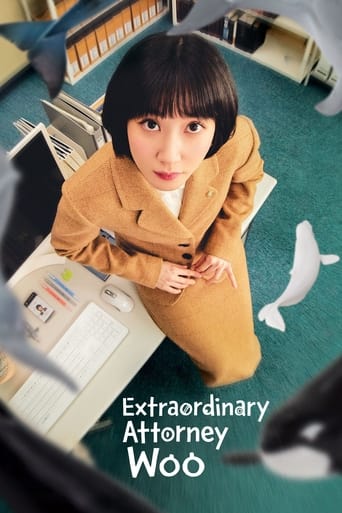
The Premise
"Extraordinary Attorney Woo" is a 2022 Korean legal drama on Netflix, sixteen episodes, created by writer Moon Ji-won and director Yoo In-sik. Park Eun-bin plays Woo Young-woo, a rookie attorney with autism and a photographic memory who joins a big Seoul firm called Hanbada. Early episodes set up the shape of the thing: a case-of-the-week structure inside a workplace ensemble, with Kang Tae-oh as a warm-hearted junior colleague, Ha Yoon-kyung as her friend and rival, and Kang Ki-young as her exasperated senior lawyer boss. Whales come up a lot. She loves them. You will learn things about whales.
The Case For
Park Eun-bin is the whole ballgame. It's a physical performance — specific gait, specific vocal cadence, specific tics — and she never plays for pity or for cute. The show is built around her without ever using her as a prop. Moon Ji-won's scripts are structured cleanly: each episode picks a legal problem with a real ethical wrinkle, and the wrinkles aren't always the ones you'd guess going in. Kang Ki-young's dry, put-upon senior partner is the show's secret weapon. And the direction has a light hand with the sentimentality — cinematography by Park Ji-hoon keeps things bright and legible instead of syrupy. It's paced like people-who-know-what-they're-doing television.
Where It Falls Down
The case-of-the-week engine means some weeks are stronger than others, and a couple of the middle-run cases coast on formula. The romantic subplot is charming but conventional; if you came in hoping for something spikier, you'll notice. Anyone who wants their legal dramas to feel like "The Wire" or "Better Call Saul" — morally grimy, procedurally dense — will find this too soft-lit. And the show's earnestness is a feature, not a bug, so if earnest isn't your gear, sixteen hours is a long sit.
Who It's For, Who'll Bounce
If you liked "Ally McBeal," Sandra Oh in anything, or the gentler Korean workplace dramas like "Misaeng," you're the target. Fans of "Crash Landing on You" who want a lower-heat follow-up will settle right in. People who need cynicism as a baseline flavor — "Succession" heads, "Industry" heads, anyone who considers "The Bear" relaxing — will find this too tenderhearted by episode two. It's also long. Sixteen hour-long episodes is a commitment, and it doesn't reward binge-viewing the way plottier stuff does. Better as a Sunday-night thing.
The Bottom Line
WORTH IT is the honest read. It's a well-made procedural anchored by a career-defining lead performance, and it earns its warmth through craft rather than begging for it. On the Lecture Test, this is the version that passes: the show has clear things to say about how workplaces treat people who process the world differently, and it says them through cases, colleagues, and small daily indignities — not speeches. When a character monologues about disability, it usually backfires on them in-story, which is the sign of a writer who trusts drama over sermon. It's not prestige TV and it doesn't want to be. It's a very good version of exactly what it is, which is rarer than the prestige stuff. Watch it.