
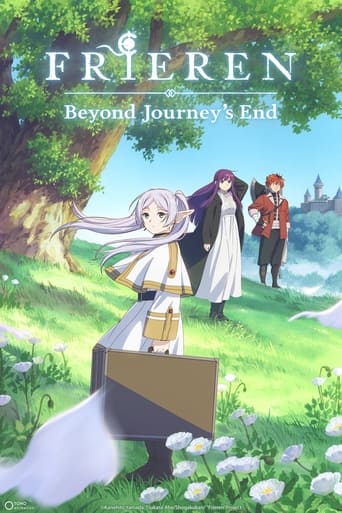
What It Is
Frieren: Beyond Journey's End is a 2023 Madhouse adaptation of the manga by Kanehito Yamada and Tsukasa Abe, directed by Keiichirō Saitō with music by Evan Call. The setup is the part most fantasy stories skip. The hero's party has already won. The Demon King is dead, the kingdom is saved, the credits should roll. Frieren, the elf mage who fought alongside them, watches her human companions age while she barely notices a decade pass. She's a thousand years old. Ten years, to her, is a weekend. When she realizes she never bothered to know the people she traveled with, she sets out again, this time to actually pay attention. She takes on an apprentice, Fern, and eventually a young warrior, Stark. That's it. That's the show.
The Case For
Madhouse spent money. You can see it in the small stuff: the way Fern's hair moves when she turns her head, the weight of a spell hitting stone, backgrounds that look painted rather than assembled. Keiichirō Saitō directs with a stillness most anime won't sit with. Scenes breathe. Evan Call's score does a lot of the lifting without announcing itself, and the opening theme by YOASOBI became a genuine event when it dropped. Atsumi Tanezaki's performance as Frieren is the whole game, dry, flat, occasionally cracked open by something she wasn't expecting to feel. The writing understands that a joke about an elf who can't remember which village she's in only lands if the show also earns the moment where that same forgetfulness is devastating. It does both.
The Case Against
Nothing happens fast. Whole episodes are two characters walking and one flashback. If you need combat every twenty minutes, this show will feel like homework. The mid-season shift into a mage exam arc is more conventional shonen than the quiet stuff around it, and some viewers hit that stretch and bounce, expecting the tone to hold. The comedy leans on a small set of running jokes, Frieren's greed for spellbooks, Fern's exasperation, that a viewer allergic to anime tropes will find twee. And the pacing that rewards patience punishes anyone watching one episode a week while doing dishes.
The Right Viewer
If you liked Mushishi, Vinland Saga's farmland arc, or the melancholy stretches of Violet Evergarden, you're already in. Studio Ghibli people, specifically the ones who prefer Only Yesterday to Mononoke. Readers who cried at the last chapter of a book about someone who died a long time ago. Bouncers: viewers who came for Demon King payoffs, anyone who needs a season arc with a ticking clock, people who find sad elves precious rather than interesting.
The Bottom Line
WORTH IT is where this lands because the craft is unmistakable and the ambition is unusual, but calling it a masterpiece requires ignoring the exam-arc dip and the fact that "quiet fantasy about mortality" is a taste, not a universal. Saitō trusts the audience to sit with silence, Tanezaki delivers a lead who's funny and haunted without ever raising her voice, and the show earns its themes by dramatizing them instead of announcing them. Nobody stops to explain what time means. Characters just live it, and you notice what they missed at the same moment they do. That's writing doing its job. Recommended, with the caveat that you have to meet it where it is.
Sources: