The Premise
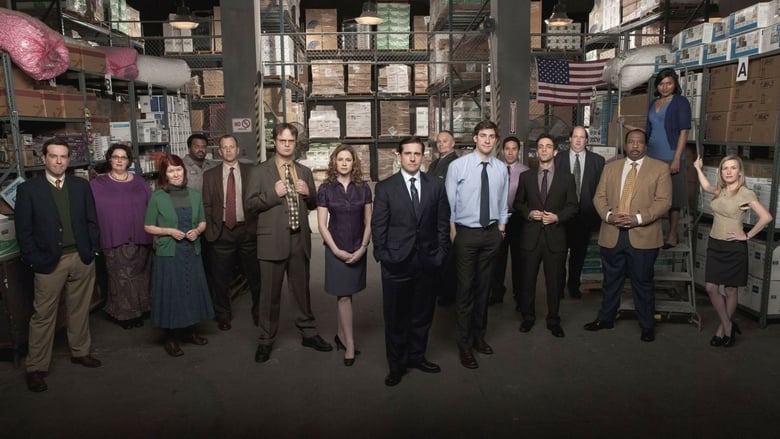
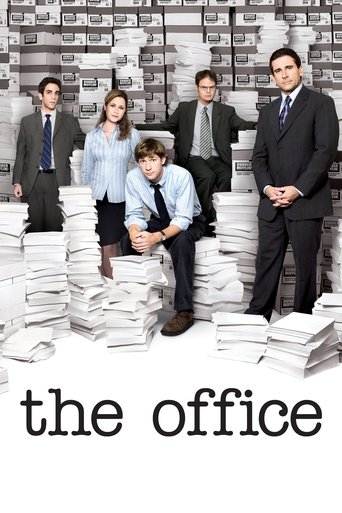
Greg Daniels adapted Ricky Gervais and Stephen Merchant's British series for NBC in 2005, and it settled into nine seasons of mockumentary cringe at Dunder Mifflin, a mid-tier paper company in Scranton, Pennsylvania. Steve Carell plays Michael Scott, the regional manager who thinks he's the star of a documentary about a beloved boss. Rainn Wilson is Dwight, his beet-farming enforcer. John Krasinski and Jenna Fischer are Jim and Pam, the salesman and the receptionist trading looks at the camera while the day falls apart around them. Early episodes establish the format: talking-head interviews, a boss who can't read a room, and a workplace where nothing much happens on purpose.
The Argument For
The writers' room is stacked. Michael Schur, B.J. Novak, Mindy Kaling, and Paul Lieberstein all wrote and acted, and the show benefits from people who understood that comedy lives in the two-second reaction, not the punchline. Carell's Michael is the load-bearing performance, a man whose desperation to be liked keeps curdling into something unwatchable, then pulling itself back. The supporting bench does a lot of quiet work: Phyllis Smith and Leslie David Baker and Creed Bratton get maybe one line an episode and land it every time. The mockumentary conceit ages surprisingly well because the direction trusts silence. Cold opens are still some of the tightest comedy TV has produced.
The Argument Against
It takes a full season to become itself. Season one is six episodes of Carell doing a soft Gervais impression, and it's rough. The show also outstayed its concept by a couple of years, and stretches of the later run coast on affection for characters instead of writing them fresh material. Certain plotlines age poorly — the humor at the expense of a few side characters lands differently now, and the show knows it, which sometimes makes the jokes limp. If you need forward momentum, an episode where Michael buys everyone at a Chili's is going to feel like traffic.
Who'll Love It, Who'll Bail
It's for the person who wants a show playing while they fold laundry, cook, or answer email. If you loved Parks and Recreation, or you rewatch 30 Rock the way other people rewatch Friends, you're already the audience. If you need prestige stakes, a serialized mystery, or anything resembling plot velocity, you'll bounce by episode four of season one and wonder what the fuss was about. It's also a bad first-watch for people who hate secondhand embarrassment, because that's the whole engine.
The Bottom Line
BACKGROUND TV is not a demotion. It's the highest compliment this tribunal gives a show you've already seen four times. The Office is engineered for ambient consumption: episodes are self-contained, the cold opens do the heavy lifting, and the dialogue is dense enough that you can miss thirty seconds looking at your phone and still know what's happening. The writing earns its warmth through character work, not sermons. Nobody's monologuing a thesis. Michael learns nothing durable, which is why he stays funny. The craft is in the reaction shots and the restraint. You have it memorized because it was built to be memorized. That's the feature, not the bug.