The Premise
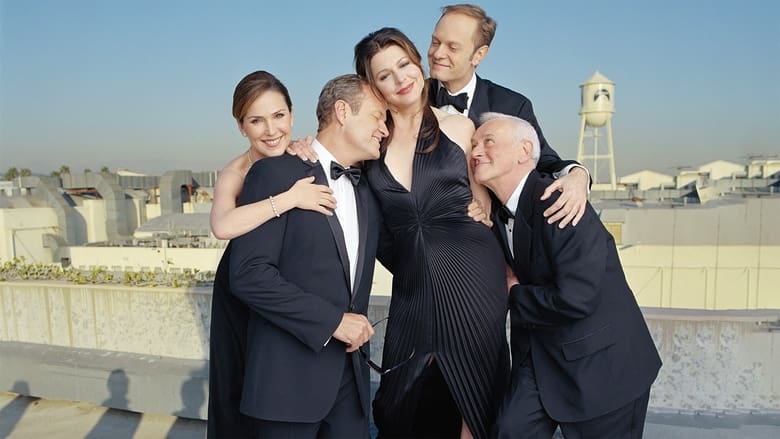
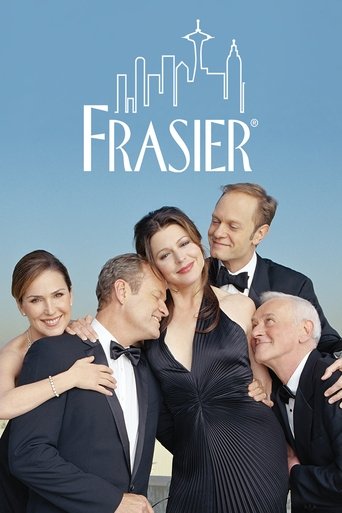
Frasier is the 1993 NBC spinoff of Cheers, created by David Angell, Peter Casey, and David Lee. Kelsey Grammer's Dr. Frasier Crane leaves the Boston bar behind, moves back to Seattle, and takes a job as a call-in radio psychiatrist at KACL. The early episodes set up the whole engine: Frasier's retired cop father Martin (John Mahoney) moves into his son's spotless high-rise apartment along with a scruffy armchair and a Jack Russell terrier named Eddie. Add Frasier's even snobbier younger brother Niles (David Hyde Pierce), a live-in physical therapist named Daphne (Jane Leeves), and Frasier's producer Roz (Peri Gilpin), and the ensemble is set. Eleven seasons of chamber comedy about vanity, taste, and family friction follow.
What It Gets Right
The writing is the reason. The Angell/Casey/Lee room ran this show like a stage farce — three-act builds, misheard phone calls, mistaken identities, doors opening at exactly the wrong second. Half the episodes are basically one-act plays that would work on Broadway if you swapped the couch for a proscenium. David Hyde Pierce's Niles is one of the great sitcom performances, full stop; the man does more with an eyebrow twitch than most actors do with a monologue. Grammer and Pierce play brothers so convincingly you forget they're not actually related. John Mahoney grounds the whole thing. And the show respects its own premise — these are pretentious men, and the writers never once let them win an argument just because they're the leads. The vocabulary is real. The sherry is real. The opera references are real. It's a sitcom that assumes you're smart enough to keep up.
What It Gets Wrong
It's very much a 1990s multi-cam. Studio audience, laugh track, three-wall apartment set, the whole rig. If that format itself makes you itchy, no amount of David Hyde Pierce will fix it. The pacing is deliberately theatrical, which reads as slow next to anything shot after 2010. Some plotlines lean on romantic-misunderstanding machinery that gets repetitive across 264 episodes. And Frasier himself, by design, is a snob you're meant to laugh at — if you can't stand a lead character who's often wrong, pompous, and vain, you're going to be annoyed for eleven seasons.
The Right Viewer
If you love Cheers, 30 Rock, Arrested Development, or basically any comedy where the joke is that the characters are smarter than their own lives can handle, this is your show. If you grew up on single-cam prestige comedy and physically recoil at a laugh track, you'll tap out by episode two. Fans of British farce — Fawlty Towers especially — will feel right at home. People who need a plot-forward hook won't find one; the plot is the family.
The Bottom Line
WORTH IT is correct because the craft holds up thirty-plus years later. The scripts are structurally tight in a way modern sitcoms rarely bother with, the performances are calibrated to the millimeter, and the show has an actual point of view about class, taste, and the ridiculousness of intellectual vanity. It has opinions about its own characters, and it dramatizes them instead of announcing them. Nobody stops the scene to deliver a thesis. The themes live inside the farce, which is the whole trick. Not a top-tier all-timer for everyone, but a genuine one for the right viewer. Worth it.
Sources: