What It Is
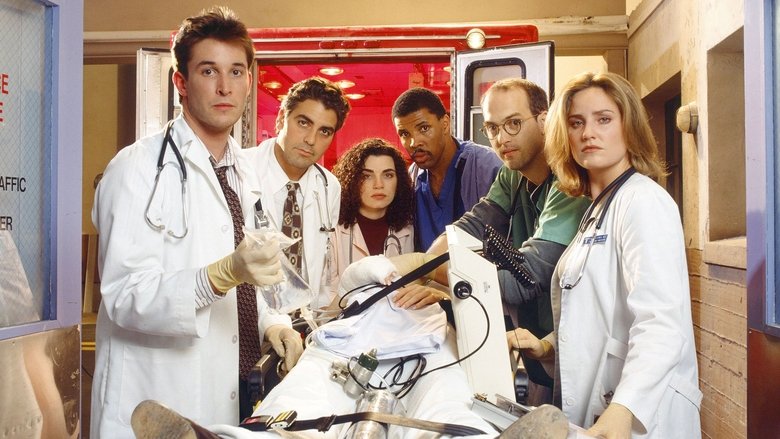
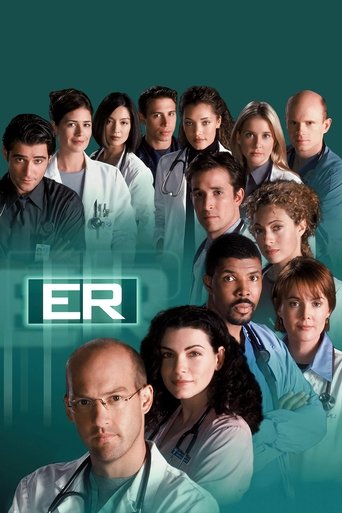
NBC, 1994. Michael Crichton wrote the pilot script years earlier as a movie, dusted it off, handed it to Steven Spielberg's Amblin, and John Wells turned it into a series about the overnight shift at County General, a fictional Chicago public hospital. The pilot drops you into a 24-hour stretch with chief resident Mark Greene (Anthony Edwards), pediatrician-in-progress Doug Ross (George Clooney before he was George Clooney), surgical resident Peter Benton (Eriq La Salle), nurse Carol Hathaway (Julianna Margulies), and third-year med student John Carter (Noah Wyle), whose first day is the audience's way in. Rod Holcomb directs the pilot like a documentary crew got loose in a trauma bay.
The Case For
The pilot is still one of the best hours of network TV ever shot. Holcomb and DP Thomas Del Ruth put the Steadicam on wheels and never stopped moving, and the show's whole visual grammar — walk-and-talks, overlapping dialogue, unexplained medical jargon shouted across a room — got invented right there. Crichton was an actual MD and it shows; the procedures are specific, the mistakes are specific, the exhaustion is specific. The cast is a murderer's row before anyone knew it. Clooney is doing movie-star work on a network budget. Edwards anchors the whole thing with a tired decency that's easy to underrate. Wyle at 22 plays Carter as a rich kid who's in over his head without ever winking at it, and you can draw a straight line from his performance here to what he's doing on The Pitt three decades later. Wells and his writers' room figured out how to run an A/B/C/D/E plot structure inside a single shift without it feeling like a chart.
The Argument Against
It's a 90s network show, which means 22-episode seasons, some romance beats that curdle, and a house style that later medical dramas cribbed until it stopped feeling fresh. The needle-drops date it. A few of the recurring social-issue storylines are handled with the subtlety of a defibrillator. And 15 seasons is 15 seasons — the cast turns over, the tone drifts, and the back half is a different show than the front.
Who This Is Actually For
If you loved The Pitt and want to see where its DNA came from, this is the assignment. If you like Homicide: Life on the Street, early NYPD Blue, or any prestige procedural where the workplace is the point, you'll be at home. Viewers who need cold-open hooks, tight serialized arcs, and a body count that resets weekly will find the pacing slower than they remember. Anyone allergic to shoulder pads and pagers should skip.
The Ruling
WORTH IT because the first five or six seasons genuinely hold up as craft. The camera work still teaches directors how to shoot a hallway. The ensemble writing still teaches showrunners how to juggle. Crichton's medical rigor keeps the stakes real without the show needing to editorialize about them, which is the Lecture Test passing without breaking a sweat — themes ride inside cases, not on top of them, and when the writers do want to say something about American healthcare they say it through a patient, not a monologue. Not an all-timer top-tier drop, but a specific, well-made, foundational show that earned its reputation. Watch the pilot. See if the rhythm gets you.