
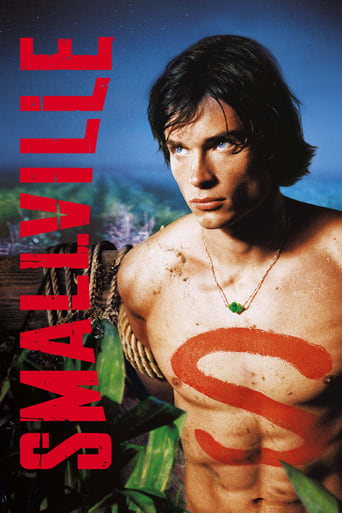
The Premise
Smallville is the ten-season WB/CW show from Alfred Gough and Miles Millar that ran 2001–2011 and asked one question: what if Clark Kent had to survive high school in Kansas before he ever put on the cape? Tom Welling plays a teenage Clark trying to hide his powers from his adoptive parents (John Schneider and Annette O'Toole), his crush Lana Lang (Kristin Kreuk), his best friend Pete, and his new pal Lex Luthor (Michael Rosenbaum), the exiled billionaire's son who just totaled a Porsche off a bridge. The pilot sets the whole engine: a meteor shower, a farm, a hidden ship, and a "no tights, no flights" rule the writers hold onto for a decade.
What It Gets Right
Rosenbaum. That's the whole first paragraph. His Lex is the best live-action Luthor ever put on a screen, a lonely, funny, half-decent guy you can watch slowly rot in real time, and the show's spine is really the Clark/Lex friendship it's daring you to grieve in advance. John Glover as Lionel Luthor is the other reason to show up: a Shakespearean villain in a WB teen soap, chewing every scene he's in. Welling grows into the part, Allison Mack is a genuinely great Chloe Sullivan (a character invented for the show who ended up better than most canonical ones), and Erica Durance's Lois Lane arrives in season four already fully formed. The Mark Snow-adjacent score, the wheat-field cinematography, the Remy Zero theme song — the mood is specific, and the mythology arcs, when the writers commit, actually pay off.
What Doesn't Work
It is a WB teen show first and a Superman show second, and the "freak of the week" formula in the early seasons is exactly as goofy as that implies. A kid gets exposed to green rocks, gains a power, menaces Lana, Clark tackles him into a silo. Repeat. The Lana romance grinds gears for years past its expiration date. Every season finale swears the status quo will change and then it mostly doesn't. Ten seasons is too many, the middle stretch sags hard, and the special effects age like unrefrigerated milk.
Who Should Watch
If you liked Buffy, Dawson's Creek, or early Arrowverse shows and can enjoy comic-book lore on a network TV budget, you're in. If you want the Snyder version of this material, a tight serialized arc, or characters who don't monologue about destiny in a barn, you'll bail by episode three. It's ironing television. Folding laundry television. Comfort rewatch television for people who grew up with it.
The Sentence
Background TV is exactly right because Smallville was engineered to be watched with half your attention across a school year, not binged. The writing is competent network procedural work with a mythology bolted on top, the pacing is 22-episodes-a-year loose, and any given hour has one great Lex scene surrounded by teen melodrama and a monster you'll forget by Tuesday. Nothing here is preachy — Gough and Millar are telling a coming-of-age story about a farm kid learning what kind of man to be, and they let the drama carry the theme instead of speechifying it. The ambition is real, the execution is uneven, and the ceiling is a very good hour of TV surrounded by four okay ones. Put it on while you cook.
Sources: