The Premise
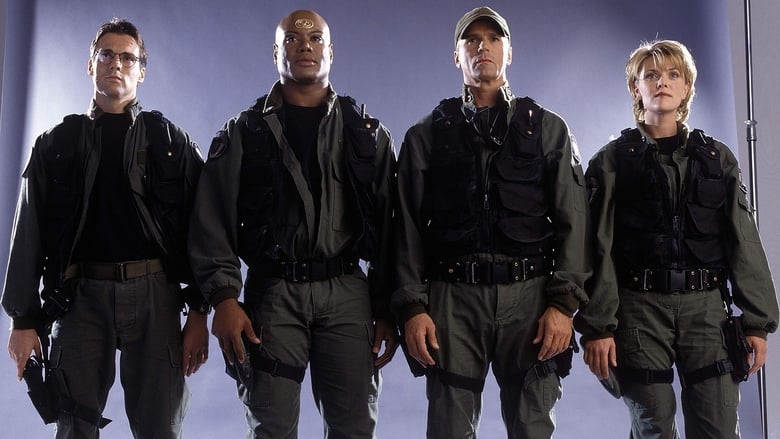
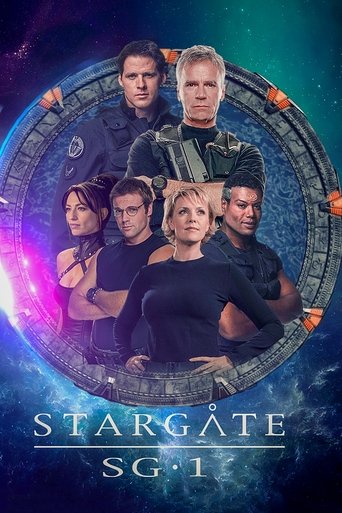
Stargate SG-1 is the 1997 spinoff of the Roland Emmerich movie, developed for TV by Brad Wright and Jonathan Glassner and eventually shepherded by Robert C. Cooper. It ran ten seasons on Showtime and then Sci-Fi, which is a completely deranged number of episodes for anything, and it stars Richard Dean Anderson (yes, MacGyver) as Colonel Jack O'Neill, a smart-ass Air Force officer dragged back into the titular program. He leads a four-person team through a big ring in a mountain in Colorado: Amanda Tapping as astrophysicist Sam Carter, Michael Shanks as archaeologist Daniel Jackson, and Christopher Judge as Teal'c, an alien warrior with excellent posture. The ring goes to other planets. There are bad guys who dress like Ancient Egypt threw up on a Halloween store. That's the shape of it.
In Its Favor
Anderson is the whole engine. He plays a career military guy who is visibly bored by exposition, and the show is smart enough to let him roll his eyes at the physics lecture Carter is legally required to deliver. The chemistry inside SG-1 is the actual show. Judge, in particular, is doing quiet, deadpan work as Teal'c that gets funnier the longer you watch. The writers, especially once Cooper takes over, understand their format cold: monster of the week, planet of the week, a running joke, a real emotional beat, credits. Season 4's "Window of Opportunity" is the platonic ideal of what this show does when it's cooking. It also looks better than a syndicated Canadian sci-fi show has any business looking, and the practical Jaffa armor still holds up.
What Doesn't Work
It is extremely of its era. The pacing is slow by modern standards, the CGI wobbles, and every planet is a British Columbia forest with a fog machine. The first season is the worst season, which is a problem when the first season is 22 episodes long. Some of the villain design leans on "vaguely non-Western civilization equals evil god-king," and it doesn't always land gracefully. And ten seasons is ten seasons. There are episodes that exist because a network needed 22 of them, not because anyone had an idea.
Who Should Watch
If you liked The X-Files, Farscape, or the Berman-era Star Trek shows, you already know the frequency. Procedural sci-fi people, folding-laundry people, "I want a sandbox I can live in for months" people. Anyone raised on prestige serialization will bounce hard in the pilot, which is a mid-budget two-parter about a shirtless villain and some very 1997 hair. If you need every hour of TV to be capital-I Important, this is not that. It is a job the team goes to.
The Sentence
BACKGROUND TV is exactly right, and it's a compliment. SG-1 was built for a specific purpose, which is to be on. The writing is competent-to-good, the leads are charming, the format resets every week so you can miss one and be fine. It never once tries to lecture you about anything. It has opinions, mostly about the military and about hubris, and it delivers them through Anderson's face and Judge's raised eyebrow rather than through a monologue. That's the craft argument for the tier. Nothing here is swinging for greatness. Everything here is swinging for "watchable at 11 p.m. on a Tuesday when you've had a long day," and it connects, over and over, for a decade. Put it on. Fold the laundry. You'll be fine.