
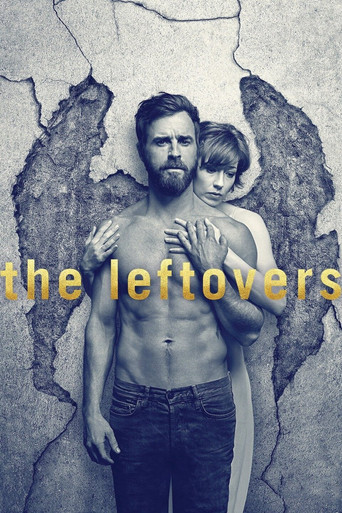
The Pitch
Damon Lindelof and Tom Perrotta adapted Perrotta's 2011 novel for HBO, and the setup is one of the cleanest hooks in prestige TV. Three years ago, 2% of the world's population vanished at the same instant. No warning, no pattern, no explanation. The show isn't interested in solving it. It's interested in what's left. Justin Theroux plays Kevin Garvey, a small-town police chief holding a job and a family together by his fingernails. Carrie Coon plays Nora Durst, whose grief has a specific shape the town can't stop staring at. Around them: Amy Brenneman, Christopher Eccleston, Ann Dowd, Regina King, Scott Glenn, a young Margaret Qualley. The pilot establishes the mood in about ten minutes. Everyone is quietly falling apart, and a chain-smoking cult in white has moved into the neighborhood.
What It Gets Right
Carrie Coon gives one of the great TV performances of the century, and this is where she announced herself. Ann Dowd doesn't so much act as haunt the frame. Theroux does the hardest thing an actor can do, which is play a man who has no idea what he's feeling and let you feel it anyway. Lindelof, chastened by the ending of Lost, writes this one like a man with something to prove, and Mimi Leder directs long stretches of it with a patience most prestige drama has forgotten how to summon. Max Richter's score alone is worth the ticket. The show also does something almost no ambitious drama pulls off — the ambition scales up in season two instead of collapsing.
What Doesn't Work
The pilot is punishing. It's grief soup, on purpose, and if you need a show to hand you a reason to stay by the credits, this one won't. There's a cult that doesn't talk, a protagonist who's dissociating, and a tone that hovers between biblical and nervous breakdown. Some viewers find the metaphysical strand pretentious. Some find the crying quota exhausting. If you want closure on the central mystery, you're in the wrong parking lot — the writers tell you up front they're not answering it.
Who It's For, Who'll Bounce
If Fleabag's second season broke you, if you rewatch Six Feet Under on purpose, if you thought Midnight Mass was undercooked and wanted the harder version, you'll live inside this. If you want plot mechanics, procedural rhythm, or Lost-style theory bait, you'll bounce by episode two. It rewards patience the way Better Call Saul does — a lot of quiet, and then a scene that flattens you.
The Sentence
DROP EVERYTHING is the right call because the craft is doing the thematic work, not the other way around. The show is about grief, faith, and how people rebuild meaning, and it never once stops to explain that to you. Characters don't monologue their worldviews. The camera holds on faces until you break first. Season two relocates and restructures itself in a way that should not work and does. Season three sticks a landing almost no ambitious drama sticks. It never lectures — it dramatizes, then trusts you. When a show this uncompromising builds this much feeling out of restraint, you clear the schedule.
Sources: