The Pitch
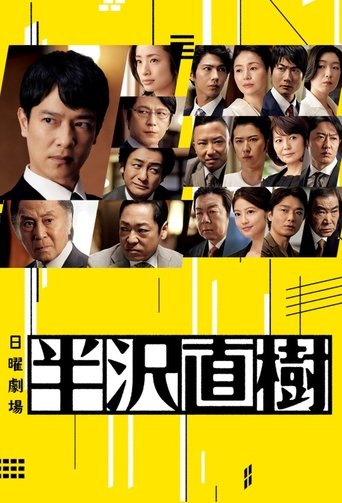
"Hanzawa Naoki" is a 2013 TBS drama out of Japan, adapted from Jun Ikeido's novels, with a second season in 2020. Sakai Masato plays Hanzawa, a mid-level loans officer at a giant Tokyo megabank who carries a grudge against the industry that goes back to his father's small factory. Early episodes plant him at an Osaka branch under a manager who's happy to shove a bad loan onto a subordinate's desk and walk away clean. That's the engine. A guy in a cheap suit, a boss trying to sink him, and a paper trail that has to be worked start to finish.
What Works
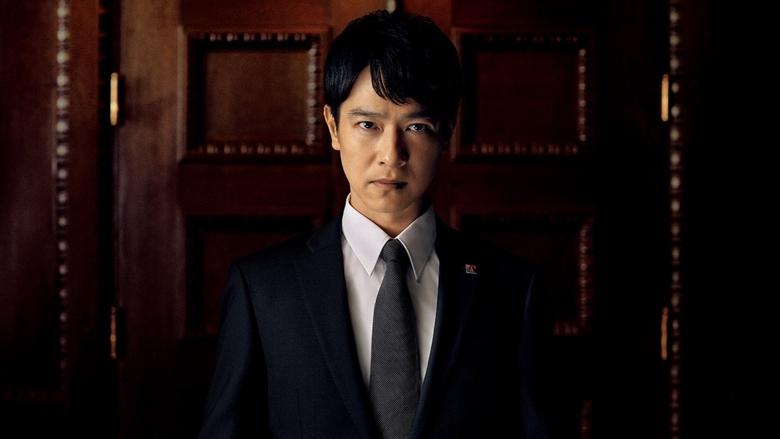
Sakai Masato. That's most of the case. He plays a corporate lifer the way an actor usually plays a swordsman — coiled, watching, then unloading in a single scene that goes for the throat. The signature move is the boardroom monologue, delivered close-up, veins visible, and it should be too much. It isn't. The direction leans in with him: hard zooms, orchestral stabs, cabinets full of villains sweating through their collars. Kōichi Yamauchi shot the first season like a kabuki play crossed with a legal thriller, and it works because the writing gives every antagonist a specific procedural knife to twist. The catchphrase — "double payback" — became a national event in Japan for a reason. It's a show about paperwork that plays like a heist.
The Argument Against
It is deeply, unapologetically hammy. Every confrontation ends with somebody bowing their head to the floor while music swells. Villains are drawn in crayon, all sneers and forehead sweat, and the moral universe has exactly one setting: righteous man versus corrupt suits. There's basically no interiority for anyone who isn't Hanzawa. Women in the cast get thin material. The plotting is formula — humiliation, investigation, comeback — repeated with variations, and if you don't buy the theatrical register in the first episode, you never will. It's also long. Ten episodes of shouting is a lot of shouting.
Who Should Watch
If you like courtroom-style procedurals where a righteous underdog assembles evidence and then lights someone up in a meeting, you're in. Think "Better Call Saul" cross-examinations minus the cool, plus opera. Fans of Korean revenge dramas will recognize the pleasure loop. Subtitle-averse viewers will bounce. Anyone who needs restraint, ambiguity, or characters who talk like real humans will tap out by episode two, when the first villain starts monologuing about crushing Hanzawa's career.
The Verdict
WORTH IT is honest calibration. This isn't quiet prestige work and it isn't trying to be. It's a genre exercise executed at an unusually high level — Sakai's performance is the real thing, the direction commits to the register instead of winking at it, and each arc is built like a well-oiled trap. It doesn't preach. It doesn't lecture. Its politics are populist in the oldest possible sense — small guy against institutional rot — and they live inside the plot, not on top of it. Nobody pauses to explain the theme. The theme is that a spreadsheet, wielded correctly, can end a man. That's craft. Worth the ride.