The Setup
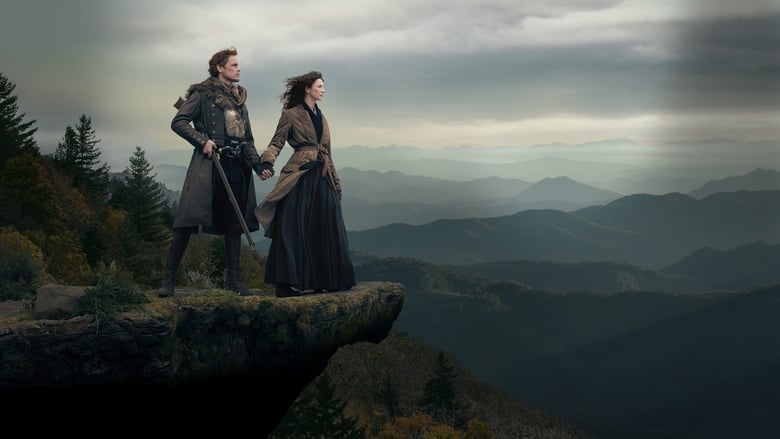
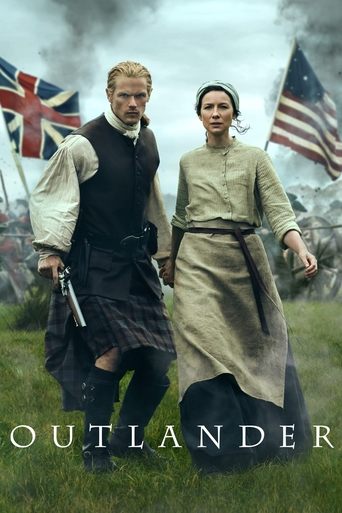
Ronald D. Moore's adaptation of Diana Gabaldon's doorstopper novels, which ran on Starz from 2014 to 2026 across eight seasons and 101 episodes. Caitríona Balfe plays Claire Randall, a former WWII combat nurse on a second honeymoon in the Scottish Highlands in 1945 who touches the wrong standing stone and lands in 1743. Sam Heughan is Jamie Fraser, the young Highlander she gets thrown together with as she tries to survive Jacobite-era Scotland without getting burned as a witch. The early episodes are all setup: clan politics, redcoats, an English wife with knowledge she can't explain, and a marriage of convenience that stops being convenient roughly the moment the two leads share a scene.
The Case For
Balfe is doing real work here. She plays Claire as clinical, stubborn, and often exhausted, and she sells the sci-fi conceit by refusing to be dazzled by it. Heughan grew into the role over the years and their chemistry is the entire load-bearing wall of the show. The production design is nuts for basic cable: Terry Dresbach's costumes, the Glasgow-shot Highlands, Bear McCreary's score doing heavy Gaelic lifting in every cold open. Moore treats the source material seriously, and season one in particular has the patience of prestige drama, letting whole episodes breathe on a single location or negotiation. When the show wants to sit inside a marriage and watch two people argue about money or duty for forty minutes, it's genuinely good at it.
What It Gets Wrong
It is slow. Critics have been polite about this for a decade and it's still true. Plots stall for entire episodes so characters can process feelings that were already processed last week. The show also has a well-documented habit of resolving trauma with more trauma, and the middle seasons in particular have long stretches where the historical plotting exists mostly to keep Jamie and Claire apart for another hour. By the time the story crosses to colonial North Carolina, the world-building thins out and the pacing tips from languid into indulgent.
Who This Is Actually For
If you liked "Poldark," the horny parts of "Bridgerton," or the Scotland-porn stretches of "The Crown," this is your bath. Book readers are the core audience and they're patient in a way network TV rarely rewards. Bounce risk is high for anyone who wants a plot engine: if you tapped out of "The Gilded Age" because nobody would just say the thing, episode two of "Outlander" will finish you. Also not the move if graphic sexual violence is a hard no; the show goes there more than once and doesn't flinch.
The Bottom Line
BACKGROUND TV is honest about what this actually is at this point in its run. It's a beautifully mounted, well-acted, absurdly long romance that rewards a viewer who's already invested and punishes anyone trying to catch up cold. The craft is real. The performances are real. But eight seasons of a story that was built to meander means the show only pays off if you're already in the tank, and the pacing wasn't designed for someone half-watching it on a Tuesday and trying to piece the mythology together. It doesn't lecture, it doesn't posture, it just takes its sweet time. Put it on while you fold laundry, let Balfe and Heughan carry it, and don't try to sprint. Anything more ambitious than that and the show will out-patience you.