Where This Starts
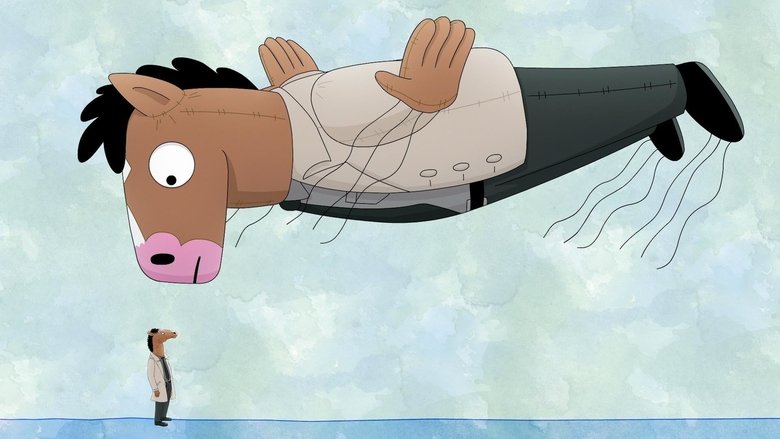
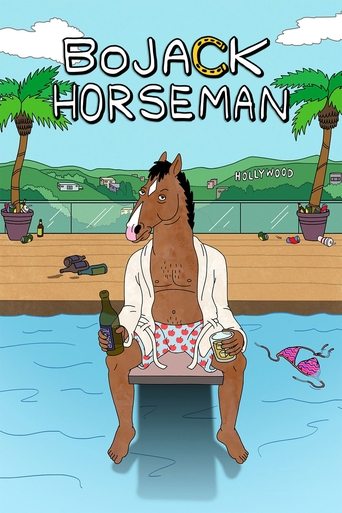
Netflix's animated comedy about a washed-up sitcom star who happens to be a horse, sulking around a Hollywood populated by humans and other anthropomorphic animals. Will Arnett voices BoJack, the has-been lead of a '90s TGIF-style show called Horsin' Around, who now day-drinks in a hilltop house and mostly makes life worse for the people around him. Created by Raphael Bob-Waksberg, with production design by cartoonist Lisa Hanawalt. The early episodes set up the ensemble: Aaron Paul as BoJack's freeloading roommate Todd, Alison Brie as his ghostwriter Diane, Amy Sedaris as his hyper-competent agent Princess Carolyn, and Paul F. Tompkins as Mr. Peanutbutter, a golden retriever who is relentlessly, exhaustingly happy.
In Its Favor
It's the rare show that actually earns the comparison to prestige drama while still delivering jokes per minute. Hanawalt's world-building is doing enormous silent work — every background sight gag rewards a pause. The writers' room, especially Kate Purdy and Joe Lawson, treats depression, addiction, and the celebrity apology cycle with a specificity most live-action drama fumbles. Arnett's voice work is the surprise: he can drop the Gob Bluth boom into something quiet and hollowed-out inside the same line reading. Sedaris and Tompkins are doing pure comedic craft. And the show is structurally inventive — one episode is a eulogy delivered almost as a monologue, another leans on a formal gimmick that a lesser show would break trying.
The Argument Against
The first six episodes are the weakest of the run by a wide margin. It plays like a standard raunchy Netflix animated comedy about a jerk before it figures out what it actually wants to be, and plenty of viewers bounce there and never come back. When it does turn serious, it can slide into monologuing about its own themes. The wordplay-heavy animal puns are relentless. If you don't find Todd's escalating side-plots charming, they'll grind you down. And the show's core question — do we owe the damaged people in our lives infinite patience — gets revisited so many times some viewers will feel lectured by the back half of the series.
Who'll Love It, Who'll Bail
If you liked the sad interior of Mad Men, the ensemble craft of Arrested Development, or the animated melancholy of Undone, you're going to click with this hard. Fans of Rick and Morty who show up for the nihilism will stay for something more emotionally grounded than they expected. Viewers who need a protagonist to root for will bounce. Viewers allergic to talking-animal comedy will bounce in the cold open. Anyone who watches TV to relax after work should know: this is not that.
The Bottom Line
WORTH IT is the correct tier because the craft is genuinely excellent once the show finds itself, but the on-ramp is rough and the tonal whiplash is real. The writing earns its heavy themes through character behavior — you watch people make decisions, then live with the consequences across seasons. That's drama, not lecture. When the show does get preachy, it's usually a character being preachy at another character who calls them on it, which is a very different thing than the writers grabbing a megaphone. Arnett, Sedaris, and Brie are doing performance work that would win Emmys if the Academy took animation seriously. Not ESSENTIAL — the pun density and animal-world whimsy are load-bearing, and if that stuff doesn't land for you, nothing later will fix it. But for the people it's for, it's one of the best things Netflix ever made.