The Premise
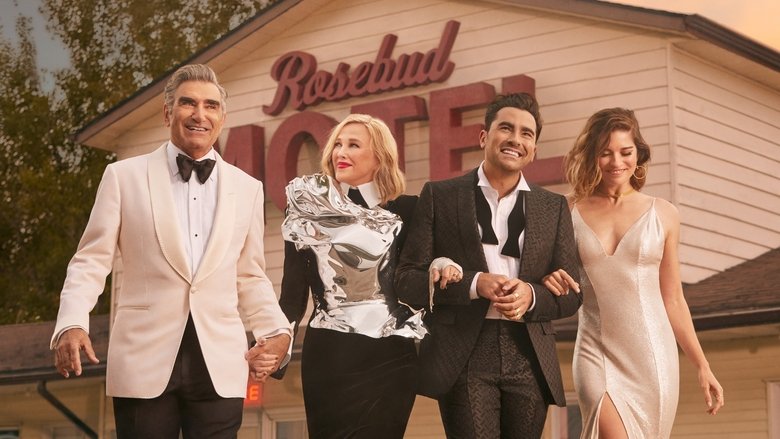
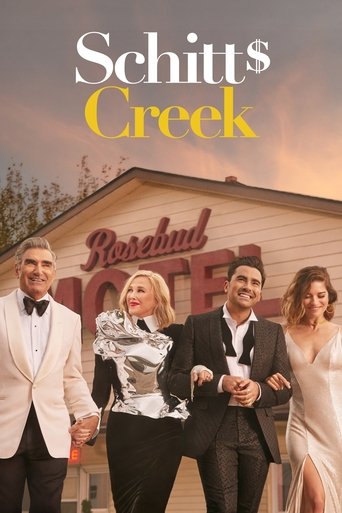
Schitt's Creek is a Canadian sitcom created by Eugene Levy and his son Dan Levy, running six seasons on CBC from 2015 to 2020. The Roses were rich — video-store fortune rich, Moira-has-a-wig-room rich — until their business manager stole everything and the government seized the assets. All they've got left is a small town Johnny once bought as a joke gift for David: Schitt's Creek. The family relocates into two adjoining rooms at the Rosebud Motel and tries to metabolize being poor while remaining, in every measurable way, insufferable. Eugene Levy plays the deflated patriarch Johnny. Catherine O'Hara plays Moira, former soap actress, current dictionary attack. Dan Levy is David, the pansexual son with a wardrobe budget bigger than the town. Annie Murphy is Alexis, whose backstory involves the phrase "Ibiza" a lot. Chris Elliott plays the mayor. Emily Hampshire runs the motel.
The Argument For
Catherine O'Hara. That's the case. She's doing something with Moira's vowels that belongs in a museum — a fake mid-Atlantic warble filtered through a hostage negotiation, and it never stops being funny across 80 episodes. Eugene Levy underplays everything and makes it work; he's the straight man holding the whole cartoon down. Dan Levy writes David like someone who understands that specificity is what makes a sitcom character stick, right down to the sweater choices. And Noah Reid, once he shows up, quietly becomes the best thing in the show. The writing patient-builds its jokes over seasons instead of episodes, so callbacks land months later. The Rosebud Motel set is one of the great sitcom spaces of the last decade.
What It Gets Wrong
The pilot is rough. The first six episodes are pretty rough. The Roses are written as monsters in season one and the show hasn't figured out its tone, so you get broad fish-out-of-water bits that feel like a lesser Canadian import. If you bail in episode three, no jury would convict you. The town-quirk stuff (Roland the mayor, the vet named Ted) can feel thin. And the show is aggressively gentle — no real stakes, no antagonists, no consequences that stick. For viewers who want their comedy with teeth, it's basically decaf.
Who'll Love It, Who'll Bail
If you loved Parks and Recreation post-season-two, Ted Lasso before it got sanctimonious, or Detectorists, you're the target. If your comedy diet is Veep, It's Always Sunny, or Curb, the Roses will feel like a Hallmark card in a smoking jacket. It's the show you put on when the news is bad.
The Bottom Line
WORTH IT is right, and the tier discipline matters. This isn't The Sopranos. It's an extremely well-executed sitcom that takes a season to find itself and then coasts on great performances and a specific, generous worldview. On the Lecture Test: the show has a queer romance at its center and never once sermonizes about it. Dan Levy's choice was to write it as a relationship, not a statement, and the writing carries the theme through character work instead of dialogue-as-op-ed. That's what "earned" looks like. The knock against it is softness, not preachiness — sometimes you want a sitcom to draw blood and this one refuses. But for what it's trying to do, the craft is real. Push through the cringe pilot, meet Catherine O'Hara at full power, and you'll get why people won't shut up about it.
Sources: