Where This Starts
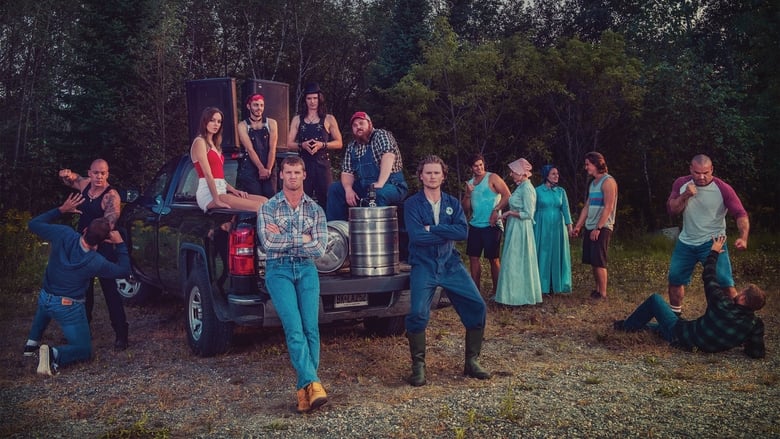
Created by Jared Keeso and co-written with director Jacob Tierney, "Letterkenny" is a Canadian sitcom that ran on Crave from 2016 to 2023 and streams in the US on Hulu. It grew out of Keeso's YouTube shorts "Letterkenny Problems" and takes place in a fictional rural Ontario town of 5,000 people split into three warring tribes: the Hicks (produce farmers), the Skids (meth-adjacent goth kids), and the Hockey Players (exactly what it sounds like). Wayne (Keeso), the toughest guy in town, runs a produce stand with his sister Katy (Michelle Mylett) and his buddies Daryl (Nathan Dales) and Squirrelly Dan (K. Trevor Wilson). Every episode opens with the four of them out front of the stand, riffing.
The Argument For
The dialogue. That's the whole pitch. Keeso and Tierney write in a rat-a-tat, alliterative, pun-laced patter that sounds like David Mamet got drunk at a Tim Hortons. K. Trevor Wilson's Squirrelly Dan, adding "s" to every verb ("I appreciates that"), is a small miracle of comic voice. The cold opens are self-contained standup routines about pitter-patter, dry counties, and produce. Mark Forward as Coach and the Playfair/Herr/Johnston hockey-bro trio commit to bits harder than almost anyone on TV. When a joke lands, it lands with a specificity most sitcoms won't touch — hyper-local Ontario references, weird verb tenses, absurd tangents about ostriches.
What It Gets Wrong
It's structurally lazy on purpose. Plots barely exist. Episodes are essentially sketch showcases stitched together with a beer at MoDean's. If you don't lock into the rhythm of the dialogue in the first fifteen minutes, you never will, because that's the entire show. Later seasons lean harder on the same rhythms and the runners start to feel like the writers' room enjoying itself more than you are. The tribal-warfare setup means the show recycles the same beats: someone insults the Hicks, someone gets their ass kicked out back, credits. Charming for a while. Repetitive across twelve seasons.
Who This Is Actually For
If you liked "Trailer Park Boys," early "It's Always Sunny," or you've ever quoted "Slap Shot" unprompted, you're in. Anyone who needs plot momentum, character arcs, or stakes will tap out fast. Non-Canadians will miss maybe 20% of the references and that's fine — the cadence carries it. People who watch TV to feel something will find nothing here to feel. People who watch TV to hear four idiots argue about whether a mouse counts as livestock will never leave.
The Ruling
BACKGROUND TV because the show is engineered for it. The plots don't demand your eyes, the jokes reward your ears, and any given ten-minute stretch is roughly as good as any other ten-minute stretch. That's a compliment and a ceiling. Keeso and Tierney are genuinely gifted dialogue writers, and Wilson and Forward are giving performances you'd remember on a better-structured show. But nothing accumulates. No arc pays off harder than the joke you heard three minutes ago, because the whole enterprise is allergic to consequence. The show occasionally pauses to note that a character is gay, or Indigenous, or trans, and mostly does it the right way — quick, unfussed, folded into the ribbing everyone else gets. It's not lecturing. It's also not building toward anything. Perfect folding-laundry television. Put it on, laugh twice a scene, get on with your night.
Sources: