What It Is
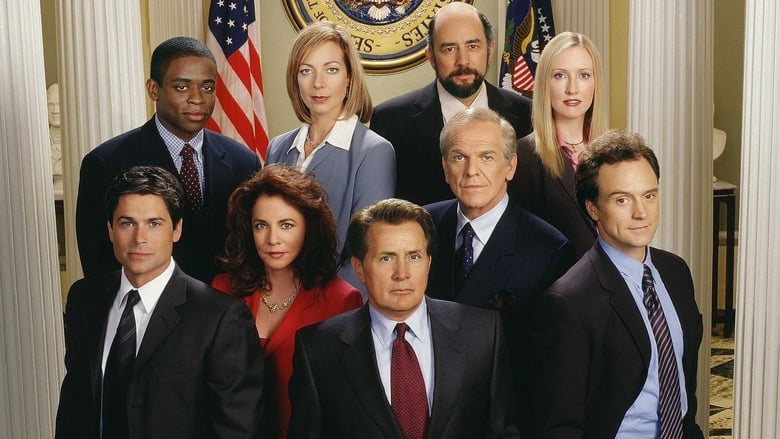
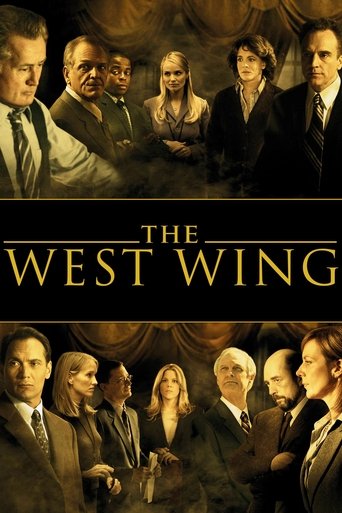
Aaron Sorkin's 1999 NBC drama about the senior staff of a fictional Democratic White House under President Josiah Bartlet, a Nobel-winning economist from New Hampshire played by Martin Sheen. The ensemble is the show: Bradley Whitford as deputy chief of staff Josh Lyman, Allison Janney as press secretary C.J. Cregg, Richard Schiff as communications director Toby Ziegler, Rob Lowe as speechwriter Sam Seaborn, John Spencer as chief of staff Leo McGarry, Dulé Hill as the president's body man Charlie, and Janel Moloney as Josh's assistant Donna. The pilot establishes the ecosystem in about forty minutes: a policy crisis, a personal one for each principal, and Sheen's late entrance that reframes everything.
What Works
Sorkin's dialogue, at its peak, is the reason people still quote this show a quarter-century later. He and director Thomas Schlamme invented the walk-and-talk as we know it. Steadicam moving backward through corridors while three characters hand off exposition like a relay baton. It looks easy. It isn't. The performances are the other half. Janney won four Emmys for C.J. and every one is earned. Schiff plays Toby like a man trying to swallow a migraine. Spencer's Leo is the quiet spine of the ensemble, and Whitford is doing screwball comedy with legislative math. The composer W.G. Snuffy Walden's main theme still lands. The season 1 and 2 writers' room, including Lawrence O'Donnell and Eli Attie, built episodes around procedure and moral argument instead of shock beats, which is why the reruns hold up.
The Argument Against
Sorkin's tics show up early and never leave. Women who exist to be gently corrected by smarter men. Speeches that resolve messy questions too cleanly. A romantic view of institutional Washington that reads as fantasy now, and read as fantasy then to anyone who worked there. The show also cliffs. Sorkin left after season 4, John Wells took over, and seasons 5 through 7 are a different program with the same cast, more plot-driven and less musical on the page. Some of it is very good. None of it sounds like Sorkin.
Who This Is Actually For
If you loved "Sports Night," "Mad Men," or any procedural where competent people out-argue each other in hallways, you'll settle in fast. Fans of "Veep" who need the cynicism dial turned up will find this insufferable by episode three. Anyone allergic to earnest civics-class monologues about the flag, the office, or the Constitution should go watch "The Thick of It" instead. It rewards patience with the pilot's info-dump and generosity toward its own optimism.
The Ruling
WORTH IT is the honest call, and the qualifier is the calibration. Seasons 1 through 4 are legitimately great television with a specific craft argument behind them: Sorkin's rhythm, Schlamme's camera, and an ensemble operating at the top of their range. When it lectures, and it lectures often, it mostly earns it by staging the argument as drama between characters who disagree in good faith, not by handing one person the microphone. The pilot's closing scene works because Sheen's entrance is blocked, written, and performed as a scene, not a sermon. Where the show slips into speechifying, usually late in Sorkin's run and periodically after, it slips into WORTH IT rather than anything higher. Watch the first four seasons. Treat the rest as optional.
Sources: