
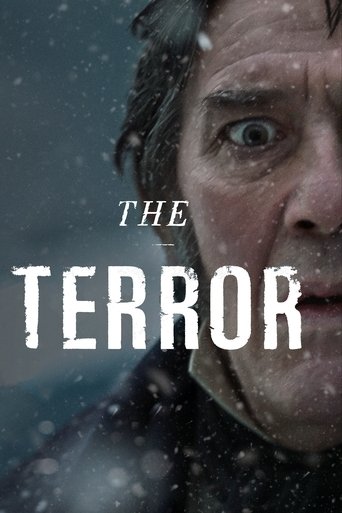
The Premise
AMC's 2018 limited series, developed by David Kajganich and Soo Hugh from Dan Simmons's novel, fictionalizes the real 1845 Franklin Expedition: two Royal Navy ships, HMS Erebus and HMS Terror, sent to chart the Northwest Passage. Ridley Scott produced. Jared Harris plays Francis Crozier, the second-in-command with a drinking problem and a colder read on the ice. Ciaran Hinds is Sir John Franklin, the pious commander who thinks God and good rations will carry them through. Tobias Menzies is James Fitzjames, the aristocratic officer trying to out-perform his own résumé. The early hours set the machine in motion: ships stuck fast, provisions ticking down, and something out on the ice that the sailors can't quite account for.
The Case For
It's a period piece that respects the period. The production design is obsessive about brass, wool, hardtack, and lamplight, and the show shoots the Arctic like a slow-motion crime scene. Harris is the anchor performance and he's playing at the top of his career — every glance and pause is doing work. Menzies underplays Fitzjames into something genuinely moving. Hinds gives Franklin a warmth that makes the man's Victorian certainty land as tragedy instead of caricature. Kajganich and Hugh trust the audience to sit with dread. Silence, wind, and the creak of wood do more heavy lifting than any score would.
What Doesn't Work
It's slow. Deliberately, unapologetically slow. Episodes will spend twenty minutes on a captains' dinner and expect you to care about the seating chart. The supernatural element is more suggestion than spectacle, so viewers hoping for creature-feature payoff will feel undernourished. The Victorian formality of the dialogue is a wall for some — everyone's calling everyone "Sir" and speaking in full paragraphs. And the tribunal's tier key is doing real work here: Season 2 (Infamy) is a separate story, told with a different creative team, and it doesn't hit the same. Do not judge Season 1 by what came after.
Who This Is Actually For
If you loved Chernobyl's cold procedural dread, Master and Commander's rigging-and-rope obsessives, or the first season of True Detective's willingness to be quiet, you'll settle in fast. Fans of doomed-expedition nonfiction — Endurance, In the Heart of the Sea — will find their bag. If you need a mystery-box hook every 12 minutes, you'll tap out by episode two. If you can't tell the officers apart in muttonchops and frost, that's a real problem the show doesn't solve for you.
The Sentence
WORTH IT is the right call because the craft is doing serious work but the show demands a specific viewer to meet it. The writing earns its themes — command, class, colonial arrogance, faith running out of runway — through character and situation, not speeches. Nobody stops to explain the moral of an episode. The critique of empire is baked into who these men are and how their assumptions fail them, which is the opposite of a lecture. Direction and design pull their weight. The pacing is the honest cost of the ambition, not a flaw. It's not GREAT-tier because the back half asks more patience than most viewers will give, and the supernatural strand is a gamble that won't land for everyone. But as a piece of prestige horror about men who cannot admit they're beaten, it's the good version of itself. Season 1 only.
Sources: