What It Is
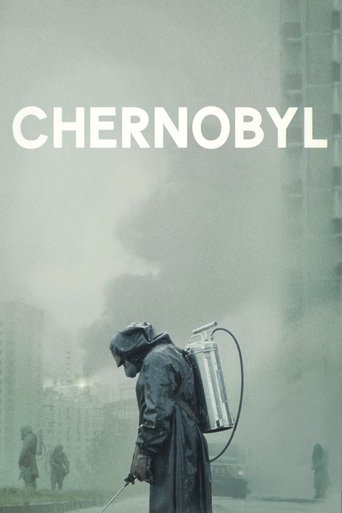
Five episodes, HBO, 2019. Craig Mazin wrote it, Johan Renck directed every hour of it. It opens on the night of April 26, 1986: reactor four at the Chernobyl Nuclear Power Plant in Soviet Ukraine goes wrong during a safety test, and the first act follows three parallel tracks — the control room refusing to believe what the dials are saying, the firefighters walking toward a glow they've been told is nothing, and a young mother (Jessie Buckley) whose husband is one of them. Jared Harris plays nuclear physicist Valery Legasov, pulled into a Kremlin meeting he'd rather not be in. Stellan Skarsgård plays Boris Shcherbina, the party apparatchik shoved onto a helicopter with him. Emily Watson plays a Belarusian scientist who starts asking the wrong questions. That's the setup. Everything else is what the state does about it.
The Case For
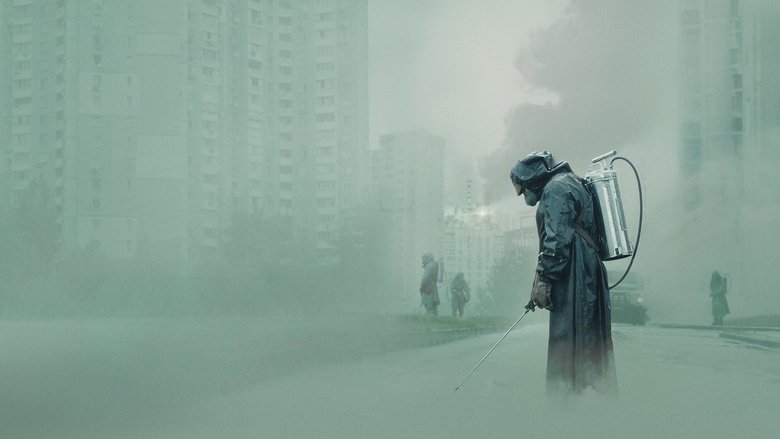
Harris is the whole argument by himself. He plays a man doing math in his head that keeps arriving at answers he isn't allowed to say out loud, and you can see it on his face before he opens his mouth. Skarsgård starts the show as a bureaucrat you'd want to slap and slowly, without a redemption montage, becomes something else. Renck shoots it like a horror movie — long lenses, tungsten light, faces held a beat too long — and Jakob Ihre's cinematography makes concrete stairwells feel radioactive before anyone tells you they are. Hildur Guðnadóttir's score isn't music, it's field recordings from an actual decommissioned nuclear plant, tuned into dread. And the production design is obsessive: the Ignalina plant in Lithuania standing in for Chernobyl, the exact wallpaper, the exact cigarettes, the exact bad haircuts.
What It Gets Wrong
It's grim on a level most people don't voluntarily sign up for. There's very little relief, no B-plot to breathe in, no romance, no charm offensive. Some of the accents wander — the choice to have Soviet characters speak in British RP is defensible but takes an episode to stop noticing. Emily Watson's character is a composite invented to represent the wider scientific community, and if you're allergic to that kind of dramatic license, you'll clock it. And Paul Ritter's Dyatlov is written close to villainy in a story that's actually about systems, which flattens him a little.
Who Should Watch
If you liked the procedural dread of Zodiac, the institutional rot of The Wire season five, or the you-are-there docudrama of United 93, this is your thing. If The Last of Us was too bleak for you, run. If you need a hero arc, a needle drop, or anyone to crack a joke inside the first hour, run faster. This is closer to a five-hour funeral than a thriller.
Final Word
WORTH IT because the craft is doing the talking. Mazin's scripts have an obvious thesis — lies compound, institutions protect themselves, the truth costs somebody — and the show never once stops the story to underline it. The message is inside the pacing, inside Harris's hesitations, inside a bureaucrat asking how much a roof costs. That's the Lecture Test passed cleanly: themes carried by drama, not delivered by megaphone. Five hours, no filler, no sag, ends when it should. It doesn't reach ALL TIME territory only because it's a punishing rewatch and the composite-character shortcut keeps it from being airtight history. But as television built for a specific job — making a policy failure feel like a house fire — it lands every hit it swings.