
The Setup
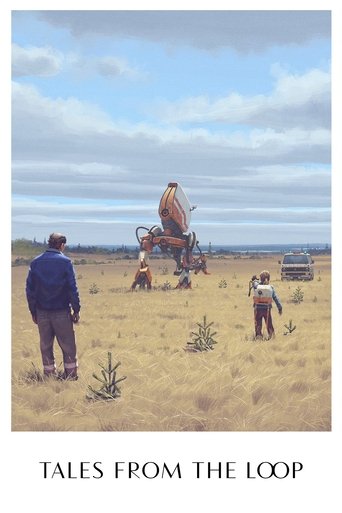
An eight-episode anthology on Prime Video, developed by Nathaniel Halpern from Simon Stålenhag's Swedish sci-fi art book of the same name. It's set in a slightly-off version of Mercer, Ohio, a town built above the Mercer Center for Experimental Physics — nicknamed the Loop — a facility whose stated mission is to "make the impossible possible." Rusting robots stand in cornfields. Weird machines hum on the horizon. Nobody in town finds this remarkable. Each episode drifts to a different resident and their brush with some quiet piece of Loop-adjacent weirdness. Jonathan Pryce runs the place. Rebecca Hall, Paul Schneider, Daniel Zolghadri, Duncan Joiner, and Ato Essandoh anchor the rotating stories.
What It Gets Right
The first thing you'll notice is how the show refuses to explain itself. There are no exposition dumps, no scientist scribbling equations to catch you up. A device does what it does, and the camera stays on the person's face while they figure out what it costs them.
The craft is the reason to show up. Jeff Cronenweth shot the pilot and set a hushed, painterly template every subsequent director follows. Directors include Mark Romanek, Jodie Foster, Andrew Stanton, Ti West, and Charlie McDowell, and each brings a distinct hand while keeping the tone unified. Philip Glass and Paul Leonard-Morgan wrote the score, and it does a lot of the heavy lifting — pulsing arpeggios doing what dialogue won't. Pryce and Essandoh are the standouts in a cast that plays everything two clicks below normal volume.
Where It Falls Down
It's slow. Genuinely slow. Halpern trusts silence to the point where some episodes barely have a plot in the traditional sense — a person encounters a strange object, sits with what it means, and the credits roll. If you want mystery-box escalation or season-long arcs, this show actively refuses to give them to you. The anthology format means every episode is a soft reset, so momentum never really builds. A couple of the middle installments coast on vibe when they needed one more turn of the screw. The stories that don't land feel like short films that got polite notes and no cuts.
Who Should Watch
If you loved Severance for the mood more than the mystery, if you rewatch Arrival because of how it feels, if Station Eleven or the quieter stretches of The Leftovers is your idea of good TV — you'll sink into this. If your patience for sci-fi is measured in how fast the plot moves, if Black Mirror's punchline structure is what you want from an anthology, you'll be checking your phone by episode two. Kids with headphones and Marvel expectations: not for you.
The Verdict
WORTH IT because the ambition and the execution actually meet. Halpern set out to make televised Stålenhag — melancholy, spacious, adult — and the show is what it says it is on every page. It's earning its themes about time, memory, and small lives near big machines through image and performance, not monologue. Nobody in Mercer stops the story to explain what it all means. That restraint is the whole trick, and it's why the show works. Not a masterpiece. A real thing, made on purpose.
Sources: