The Setup
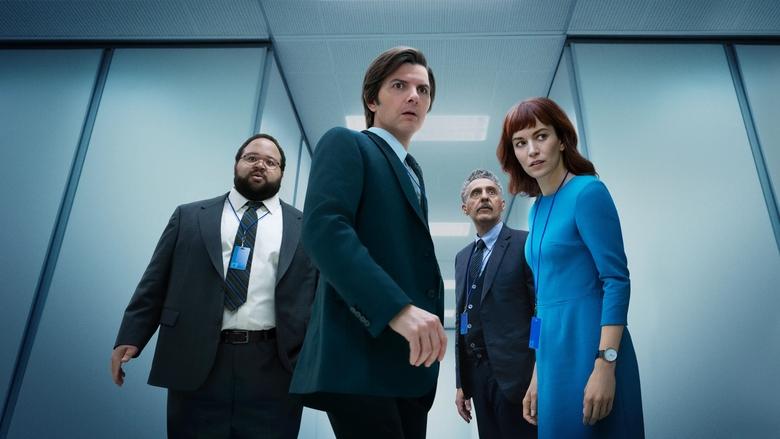
Mark Scout works at Lumon Industries, a shadowy biotech company with beige carpets, fluorescent lights, and a hallway that never seems to end. Mark and his floormates have been "severed": a surgical implant splits their consciousness so the version of them at work has no memory of life outside, and the version at home has no memory of what they do all day. Adam Scott plays Mark. Zach Cherry, Britt Lower, and John Turturro round out the department. Tramell Tillman plays their smiling manager Milchick, Patricia Arquette runs the floor above them, and Christopher Walken turns up down the hall. Dan Erickson created it. Ben Stiller directs most of it. The pilot sets the rules and the tone; the rest of the show is what happens when the people inside those rules start asking questions.
What It Gets Right
The craft is the argument. Every frame is composed within an inch of its life — Jessica Lee Gagné's cinematography, Jeremy Hindle's production design, and Theodore Shapiro's score turn a corporate office into a real place with real weather. Adam Scott is doing the best work of his career playing two versions of the same man who share a face and nothing else; you can tell which Mark you're watching before he opens his mouth. Tillman's Milchick is one of the great TV creations of the decade, a middle manager whose smile does more damage than a raised voice ever could. Turturro and Walken are quietly devastating. Erickson's scripts are patient and funny in a very specific dry way, and Stiller directs the office scenes like a horror movie and the outside scenes like a Sunday afternoon that won't end. The show earns its slow burn because the burn is the point.
The Argument Against
It is deliberate. Sometimes very deliberate. Season two in particular takes detours into character histories that pay off later but test you in the moment. If you need a plot engine that hums every week, this hums, then idles, then hums again. The mystery-box structure means answers come on the show's schedule, not yours, and a real chunk of the fanbase spends the off-weeks writing theories on Reddit. If that's a bug for you, it's a bug.
Who It's For, Who'll Bounce
If you loved the mood of "Mad Men," the dread of early "Lost," the Kubrick geometry of "The Shining," or the corporate absurdism of "Office Space" filtered through a nightmare, you're the target. Viewers who bounced off "Twin Peaks: The Return" for being too still, or who checked out of "Westworld" once the puzzle turned on itself, will probably tap out around episode three.
The Ruling
DROP EVERYTHING because the show is doing something almost nobody else on television is doing well: using premium-TV craft in service of an actual idea. The severance procedure is a metaphor for work-life balance, alienated labor, grief, dissociation, the self you put on for your boss, and it never once stops the story to explain any of that. The themes arrive because the characters do. Nobody makes a speech. Nobody performs a thesis. Milchick's cheerful corporate cruelty says more about modern management than a dozen think-pieces. The politics, such as they are, are baked into how Lumon speaks and how its people cope, which is what good writing looks like. Passes the Lecture Test cleanly. This is a show that trusts its audience, its actors, and its own weirdness. Worth every dollar of the subscription.