In this piece · 9 sections+
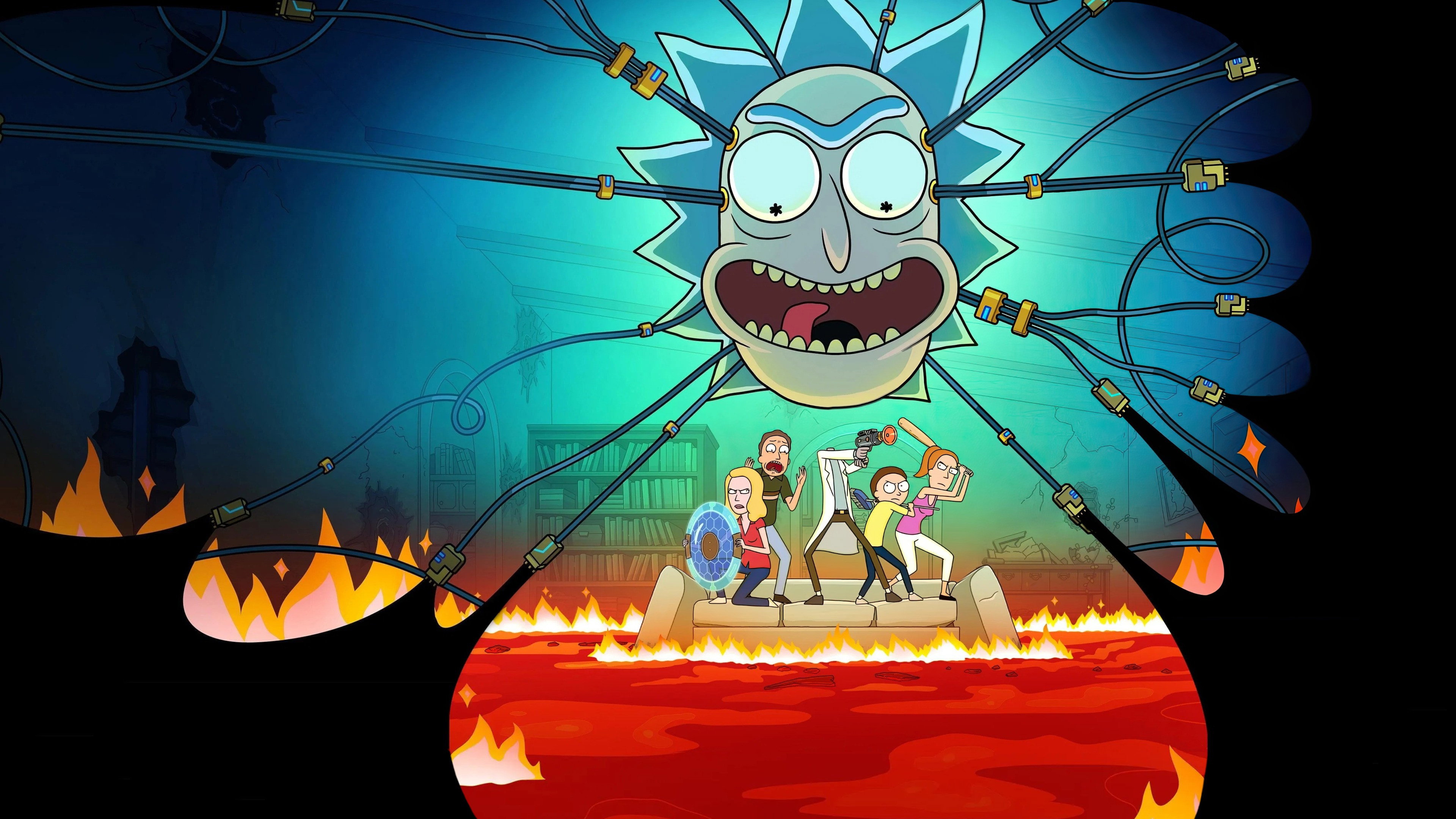
Yes. If you've never seen it and you like sci-fi with teeth, watch it. Start at season 1, commit through season 4, and treat everything after as optional homework.
That's the honest answer. Rick and Morty is one of the smartest half-hours American television has produced in the last twenty years, and it's also a show that's been actively decaying in public since 2020. The trick is knowing when you're watching the good version and when you're watching the version made by a writers' room trying to reverse-engineer its own genius after firing its co-creator. Both versions exist on the same streaming page. This guide sorts them out.
The quick verdict
Worth watching, with a giant asterisk. Seasons 1 through 4 are some of the best animated sci-fi ever put on cable — genuinely inventive, emotionally rough in a way cartoons aren't allowed to be, and funny in the specific way that hurts the next morning. Seasons 5 through 9 are more uneven. If you're a person who liked Community, Futurama, or the darker corners of The Simpsons before it got polite, you'll like this. If you need your protagonists likable or your endings clean, you won't.
What Rick and Morty is actually about
Rick Sanchez is the smartest man in the universe. He's also an alcoholic, a nihilist, and the worst grandfather anyone's ever had. He drags his 14-year-old grandson Morty across dimensions to help with schemes that Morty barely survives, and the show spends 91 episodes asking whether being the smartest person in the room is worth anything if you use that intelligence to torture your family and yourself.
That's the premise. The execution is anthology sci-fi comedy — every episode is a self-contained genre riff (heist, body horror, prison break, love story, dating show, whatever) filtered through Dan Harmon's obsession with structure and the writers' room's obsession with never letting a plot end where you thought it would. It's a comedy that ambushes you with real grief, then covers the grief with a fart joke, then makes the fart joke about mortality. Nothing about the show respects your emotional bandwidth. That's the appeal.
The math on time
Nine seasons. 91 episodes. About 22 minutes each. Round it up with credits and you're looking at roughly 35 hours to finish everything currently available.
Don't finish everything. The honest recommendation: watch seasons 1 through 4. That's 41 episodes, around 15 hours. A committed week or a lazy month. Every episode in that stretch either advances the show's argument about Rick or delivers a self-contained banger, and several do both. If you love it after season 4, keep going. If you're lukewarm, stop. The show does not reward completionism the way something like Breaking Bad does. There's no finale waiting to pay off your patience. It just keeps generating episodes forever, some good and some not, until Adult Swim runs out of money or Dan Harmon runs out of interest.
What it gets right
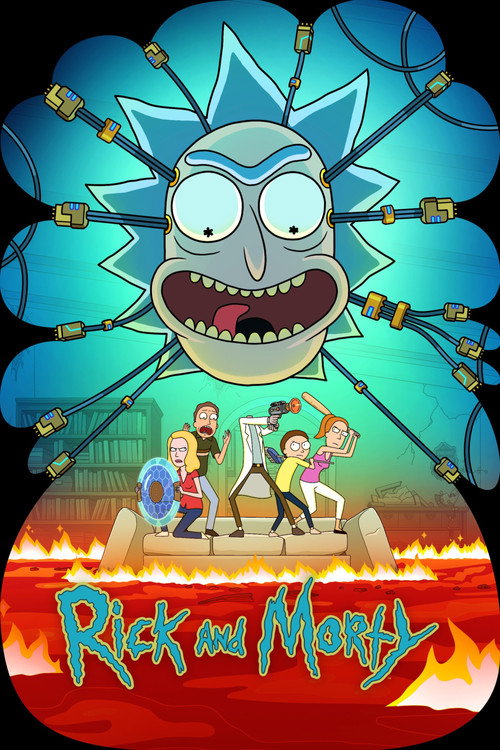
The writing, mostly. Dan Harmon runs the room the way he ran Community — story circles on the whiteboard, characters have to change or the episode dies, no one gets to just deliver information. That's why an episode about Rick turning himself into a pickle to avoid family therapy also ends up being the most honest thing anyone's ever said about avoidant personality disorder on television. The premises are ridiculous. The emotional bookkeeping under the premises is not.
Justin Roiland's original voice performance was a huge part of the show's identity — the improv, the burps, the way Rick's sentences collapse mid-word into slurred nonsense. He was fired in 2023 after domestic violence charges, which were later dropped, and the show recast both Rick and Morty starting in season 7. The replacement performers do a technically impressive impression. It's still an impression. Something specific left the show when Roiland did, and pretending otherwise would be dishonest.
The animation deserves its own paragraph. This is a show that will spend forty seconds building an entire alien ecosystem, complete with three tiers of predator-prey dynamics, just to make one joke about a guy named Glenn. The background gags are denser than most feature films. Pause any random frame in a season 3 episode and you'll find at least one detail the writers put there for their own amusement, knowing full well no one would notice on first watch. That kind of care doesn't happen by accident. It happens because the people making the show actually respect the audience, which is rarer than it sounds.
What doesn't work
The drop-off is real. Season 5 is where the wheels start to wobble — episodes feel like the writers' room brainstorming what a Rick and Morty episode is supposed to sound like, rather than actually writing one. Season 6 partially recovers. Season 7 is the recast, and while the voice work is fine, the scripts feel written by people terrified of losing what made the show special, which is exactly how you lose what made the show special. Seasons 8 and 9 are working in that shadow. There are still good individual episodes. There are also a lot of episodes you'll forget within a week.
The fandom is its own problem, and it's fair to warn you about it before you start posting takes. The show attracted a specific kind of viewer around season 3 who decided Rick's cynicism was a personality trait to adopt rather than a critique. That crowd tanked a lot of the cultural goodwill and made it uncool to admit you liked the show in polite company for a while. Ignore them. The show is better than its worst fans.
Also: there's no ending coming. Adult Swim greenlit 70 episodes back in 2018 and has kept renewing. If you're the kind of viewer who needs a finale to feel the journey mattered, this isn't that show. It's a sitcom that occasionally remembers it's a tragedy.
Who should watch it
If you liked Community, Futurama, or Bojack Horseman — yes, immediately, you're the target. If you liked Solar Opposites (Roiland's other show) — you've already found the diet version, upgrade to the real thing. If you're a hard sci-fi reader who enjoys Ted Chiang or vintage Philip K. Dick, the show is smarter than the animation format suggests and you'll be surprised. If your favorite comedies are earnest and warm (Ted Lasso, Parks and Rec, Schitt's Creek), you will hate this. If you can't stand shows where the main character is genuinely a bad person and doesn't get redeemed, skip. If you need TV that respects your time, the anthology structure will frustrate you — some episodes are perfect, some are Meeseeks and Destroy tier, some are just okay.
One specific tell: watch the pilot. If the tone lands, keep going. If Rick's opening bit reads as annoying rather than funny, the show is not going to convert you. It gets deeper, but it doesn't get gentler.
Where to watch
All nine seasons stream on Hulu in the US. HBO Max also carries the back catalog through Adult Swim's licensing deal, though windows shift, so check before you commit. Individual seasons are available to buy on Prime Video if you'd rather own than rent, which is a reasonable move for a show you'll rewatch. Blu-ray sets exist for the collectors and the people who don't trust streaming rights.
FAQ
Is Rick and Morty overrated?
The first four seasons aren't. They earned every piece of praise they got and then some. The show became overrated around season 5 when the discourse got louder than the actual quality, and the fandom's worst tendencies made it embarrassing to defend in public. Judge the show by the episodes, not the Reddit threads.
Does it get better after season 1?
Yes, significantly. Season 1 is the show finding its footing — the sci-fi mechanics are there but the emotional weight isn't fully wired in yet. Season 2 is where it becomes the thing it's known for. If you finish season 1 and think "that was fine," push through the first three episodes of season 2 before you decide. If season 2 doesn't land either, the show isn't going to.
Is it too dark or too weird?
Dark, yes. Weird, absolutely. There are episodes about parasitic memories, cronenbergs, self-loathing, suicide, and one very rough sequence involving a purge planet. If those descriptions make you uncomfortable, the show will make you uncomfortable. The weirdness is the point — it's a comedy that uses sci-fi absurdity to smuggle in real ideas about consciousness and family. The tone can whiplash inside a single scene. That's a feature, not a bug, but it's not for everyone.
Is it worth watching after the recast?
Qualified yes. If you're a fan already, keep going — the new voice actors are respectful and the scripts are still trying. If you haven't started yet, treat everything through season 6 as the core show and everything after as bonus content. You're not missing critical plot by stopping earlier, because the show doesn't really have critical plot. It has themes and a body count, and both peak before the recast.
Watch the pilot tonight, then knock out the first four episodes of season 2 this week. If you're not hooked by the end of "Mortynight Run," bail without guilt — this isn't the show for you and no amount of grinding will change that.
✅ WORTH IT
Related guides
- The Best Background Shows to Have On When You're Sick, Sad, or Just Rotting
- Where to Watch The Walking Dead: Daryl Dixon (2026)
- Shows Like The Walking Dead: Daryl Dixon: 10 Crime Dramas Worth Your Weekend
- Best Late Night Shows to Fall Asleep To: 11 Picks That Work Every Time
- Best Shows to Watch When Stressed: 11 Cozy Picks That Actually Work
Some links above are affiliate links (we're an Amazon Associate) — if you buy through them we may earn a commission. It never changes a verdict.