In this piece · 9 sections+
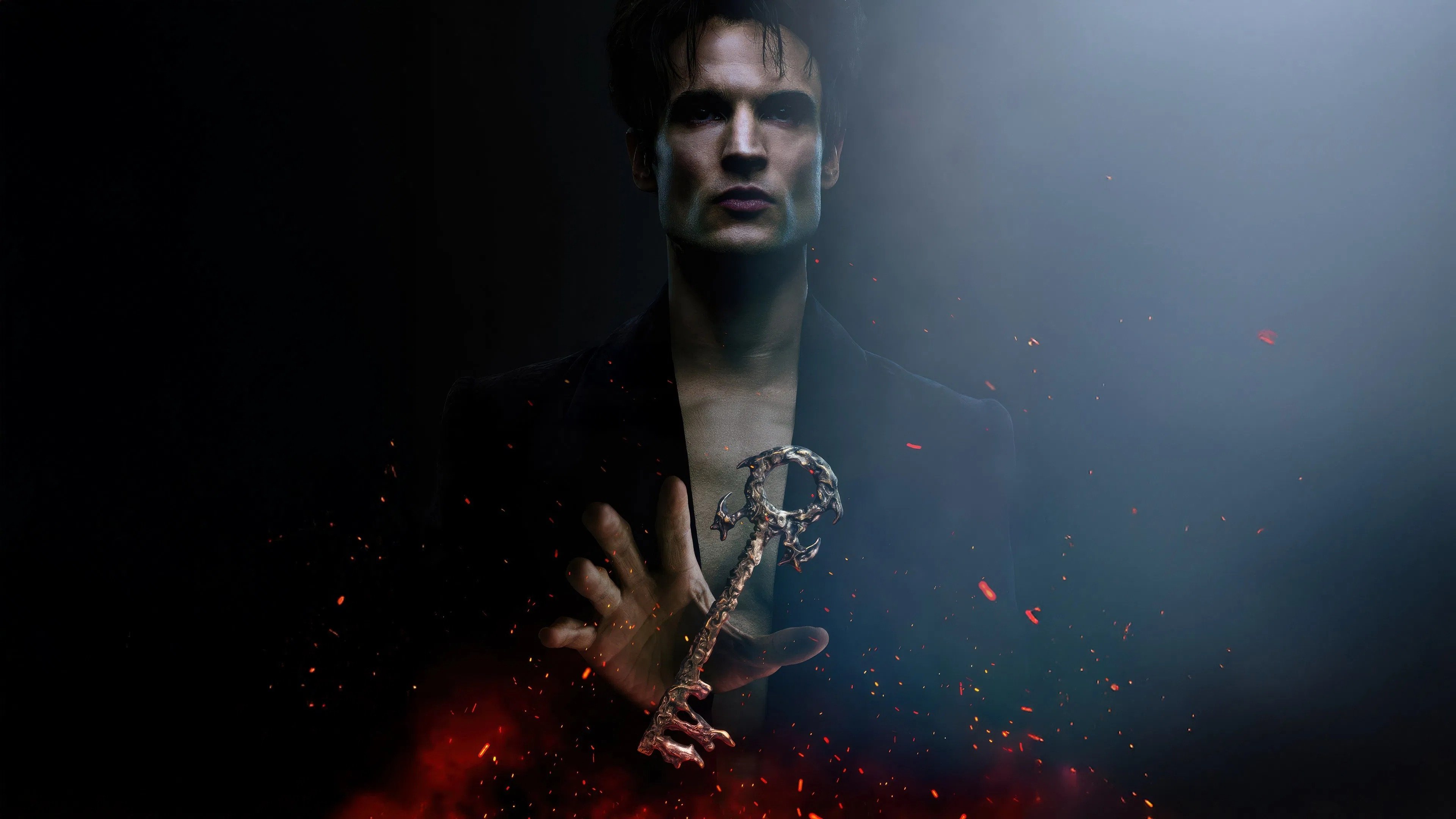
Yes, with an asterisk. The Sandman is a gorgeous, uneven Netflix fantasy that earns the price of admission on its best episodes and tests your patience on its worst.
If you've read Neil Gaiman's comic and you can stomach a couple of dud arcs, this is one of the more faithful and better-cast adaptations Netflix has ever coughed up. If you've never read the comic and you want a fast, plotty binge, this isn't it. It's slow, it's ornate, it's mythological, and the main character is a very tall sad goth in a black bathrobe whose face barely moves. That's the show. Decide accordingly.
The quick verdict
Yes if you like your fantasy slow, weird, and painted like an oil canvas. No if you need a propulsive plot or you bounced off Gaiman's book-that-thinks-it's-a-comic vibe. It's finished — two seasons, done, no cliffhanger to strand you — which now counts as a rare mercy from Netflix. Tom Sturridge is genuinely great as Dream. Everything around him is a bell curve.
What The Sandman is actually about
Morpheus, the King of Dreams, gets kidnapped by an English occultist in 1916 and locked in a glass ball for about a century. When he escapes, he's weak, his kingdom is falling apart, and he has to go collect his stolen tools and clean up the mess a hundred years of his absence made in the waking world. That's season one in one paragraph. Season two moves into a family reunion with his siblings — the Endless, seven cosmic beings with names like Desire and Despair and Death — and slowly builds toward a very sad, very inevitable ending.
Tonally it's a dark fantasy anthology masquerading as a serialized epic. Some episodes are hell tours. Some are quiet two-handers in a diner. One is basically a bottle episode about a cat. The show is at its best when it stops trying to be Game of Thrones and lets itself be a series of eerie fables tied together by one melancholy immortal in a big coat.
The math on time
Two seasons. 23 episodes. Episodes run roughly 45 minutes for season one and creep toward an hour in season two. Call it 20 hours of your life, give or take.
That's a long weekend if you go hard, or three casual weeks if you're a functioning adult. For context, that's shorter than one season of Stranger Things and longer than the entire run of Fleabag. The good news is the show is finished, so you're not signing up for a nine-year monk vow waiting on renewals. The bad news is not all 20 hours pull their weight. Realistically you're getting maybe 13 hours of great television and 7 hours of "this looks expensive." Whether that ratio is worth it depends on how much you like the great parts, which are very great.
What it gets right
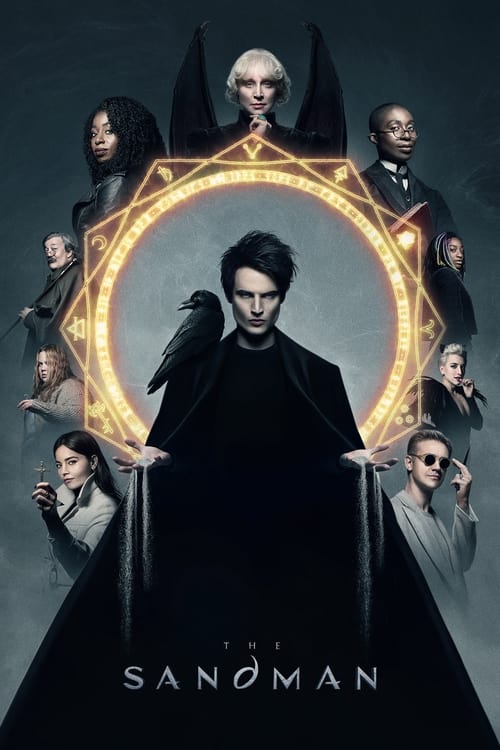
Casting, first. Tom Sturridge does something almost impossible — he plays a character whose defining trait is not emoting, and he still manages to be magnetic for 23 episodes. Kirby Howell-Baptiste as Death walks in for one episode in season one, delivers the best half hour of the show, and basically hands you the reason to keep watching. Boyd Holbrook as the Corinthian is a genuinely nasty villain, the kind that makes you nervous every time he's on screen. Gwendoline Christie as Lucifer feels like she was grown in a vat specifically for the part.
The production design is the other real thing. The Dreaming — Morpheus's kingdom — actually looks like a place someone imagined instead of a place a Unity asset store assembled. Hell is properly biblical. The 1916 séance flashbacks are shot like a Gothic horror film someone smuggled onto a fantasy show. When Netflix throws real money at a director who cares, you can see it, and here you can see it.
The standalone episodes are where the show is at its ceiling. "The Sound of Her Wings" (season one, episode six) is basically a short film about Death and it's a legitimately moving piece of television. "24/7" (episode five) is a nasty little diner-set psychological horror episode that has no business being on the same show as the epic fantasy stuff. When The Sandman lets itself be small and weird instead of big and mythic, it's some of the best television Netflix has funded.
What doesn't work
The pacing in season one is uneven and season two is worse. The first three episodes of season one are Morpheus collecting his three MacGuffins, which is exactly as thrilling as it sounds — a fantasy fetch quest with mood lighting. If you're bailing early, you're bailing here. Push through to episode five and six and you'll see what the show can actually do. If those don't land for you, they're not going to.
Season two has a bigger problem. It's trying to compress a huge chunk of comic book across two half-seasons, and you can feel the elision. Arcs that took years on the page get compressed into two episodes, side characters show up already fully explained by exposition, and the emotional beats sometimes have to hit before the show has earned them. The finale in particular is faithful to the source material in a way that might feel weightless if you haven't read the book and inevitable-but-rushed if you have. Some viewers will find the ending devastating. Others will find it a lot of ceremonial goodbye for a character we spent 23 episodes watching stand very still.
And the tone can be a lot. The show takes itself extremely seriously. There are stretches where every character speaks in portentous half-whispers about fate and dreams and duty, and after 90 minutes of that you might crave a fart joke. The show does not provide a fart joke. It provides another monologue about the nature of stories, delivered by someone with excellent cheekbones.
Who should watch it
If you liked American Gods (the good first season, not the collapse), yes. If you liked Good Omens or the tone of What We Do in the Shadows crossed with a lot more crying, yes. If Interview with the Vampire on AMC was your speed — slow, ornate, character-driven, gothic — this is in the same key.
If you bounced off Wheel of Time or the Rings of Power because fantasy exposition puts you to sleep, this isn't going to fix that. If you need Ted Lasso levels of warmth or Reacher levels of forward momentum, skip it. If you want a hangout show, skip it — this is a show where the main character has approximately three friends and one of them is a raven.
If you've read the Sandman comics: watch it. It's not perfect but it's the most respectful, best-cast adaptation you were ever going to get, and it exists in a finished form, which is a small miracle in 2026.
Where to watch
Both seasons are on Netflix, exclusive, and that's the only legit way to stream it. No wandering options on Prime, no random Apple TV+ rental. Netflix owns it, Netflix made it, Netflix finished it. If you want the source material to read alongside, the Sandman graphic novels are on Amazon and the first collection is a good pairing with season one — it's the arc the show adapts most closely.
FAQ
Is The Sandman overrated?
Depends who's rating it. Comic fans overrated the show out of relief that it wasn't a disaster, and casual viewers underrated it because they wanted a plottier fantasy. The truth is in the middle. It's a good-to-very-good show with a few genuinely great episodes and some real dead weight. Not a masterpiece, not a disaster, closer to the good end.
Does it get better after season 1?
Not really. Season one is more uneven early but hits higher peaks. Season two is more consistent in tone but the pacing is rushed and the ending is polarizing. Most people's favorite episodes are in season one. If you love season one, you'll like season two. If season one leaves you cold, season two won't rescue it.
Is it too dark or too slow?
Both, sometimes, on purpose. There's a serial killer convention episode that is legitimately grim, and there are dream-logic episodes that unfold at their own pace. If you need constant plot momentum, this show will feel glacial. If you can sit with mood and let a scene breathe, the slowness is a feature.
Do I need to have read the comics?
No, but they help. The show does a decent job of onboarding new viewers, especially in season one. Season two moves fast enough that comic readers will fill in gaps unconsciously and new viewers might feel a step behind. You don't need to read the books, but if you're on the fence, reading the first volume beforehand doubles the payoff.
Watch season one, episode one tonight. If you're not sold by the end of episode six, "The Sound of Her Wings," you never will be — bail with a clean conscience and go watch something with more jokes.
✅ WORTH IT
Related guides
- Is The Walking Dead: Dead City Worth Watching? An Honest Take
- The Best Shows to Watch After a Breakup (2026): 11 Picks That Actually Help
- The Best Shows to Watch for Mental Health When You're Barely Holding It Together
- Best Late Night Shows to Fall Asleep To: 11 Picks That Work Every Time
- The Best Mindless Shows to Watch When Your Brain Is Cooked
Some links above are affiliate links (we're an Amazon Associate) — if you buy through them we may earn a commission. It never changes a verdict.