In this piece · 9 sections+
Yes, but only the first five seasons. After that, it's a commitment that tests your patience, your couch, and your relationship with AMC's ad breaks.
The Walking Dead is one of the defining shows of the 2010s, and seasons 1 through 5 are genuinely great television. Tense, character-driven post-apocalyptic horror with at least three episodes that belong in a TV hall of fame. Then it gets stuck. The show ran for 11 seasons and 177 episodes, which is roughly twice as many as it had story for, and most of the back half is people standing in fields arguing about whose camp has more canned beans. If you watch the first five seasons and stop, you've watched a great show. If you push through all eleven, you've watched a great show plus six seasons of homework.
The quick verdict
Yes, watch it, through the end of season 5 at minimum, season 6 if you're invested. It's the best zombie show ever made, and probably the only one that ever really mattered. It's for people who like character drama with horror around the edges, not splatter fans looking for nonstop gore. If you need tight plotting and a satisfying ending, the back seasons will frustrate you. If you can treat seasons 7-11 as optional DLC, you'll be fine.
What The Walking Dead is actually about
Sheriff's deputy Rick Grimes wakes up from a coma in a hospital and the world has ended. Zombies (the show calls them walkers because saying "zombies" was apparently embarrassing in 2010) have eaten most of America. Rick goes looking for his wife and son and ends up the de facto leader of a small group of survivors trying not to die in rural Georgia. That's season 1. Easy.
The twist that made the show big is that the zombies are the boring part. The Walking Dead figured out very early that the actual horror of the apocalypse is other people. What regular humans become when there are no laws, no cops, no consequences, and one bad guy with a barbed-wire baseball bat. So the show settles into a rhythm where each season the survivors find a new community, and that community is either a paradise hiding something dark or a nightmare run by a charismatic psychopath. Sometimes both. Tonally it's grim, sometimes operatically so, with the occasional quiet character beat that reminds you why you're still watching.
The math on time
Let's do the math, because it's brutal. 11 seasons. 177 episodes. Roughly 43 minutes each without ads. That's about 127 hours of television. Five and a half full days of your life, awake, staring at people in dirty flannel.
For comparison, you could watch all of Breaking Bad twice and still have time left over. You could read three Russian novels. You could learn conversational French, not well, but enough to embarrass yourself in Paris. The honest version: budget the first five seasons, which is roughly 78 episodes or 56 hours. That's a real but reasonable commitment for a show this good. If you're still hooked at the end of season 5, the show earns more of your time. If you're not, congratulations, you got out clean.
What it gets right
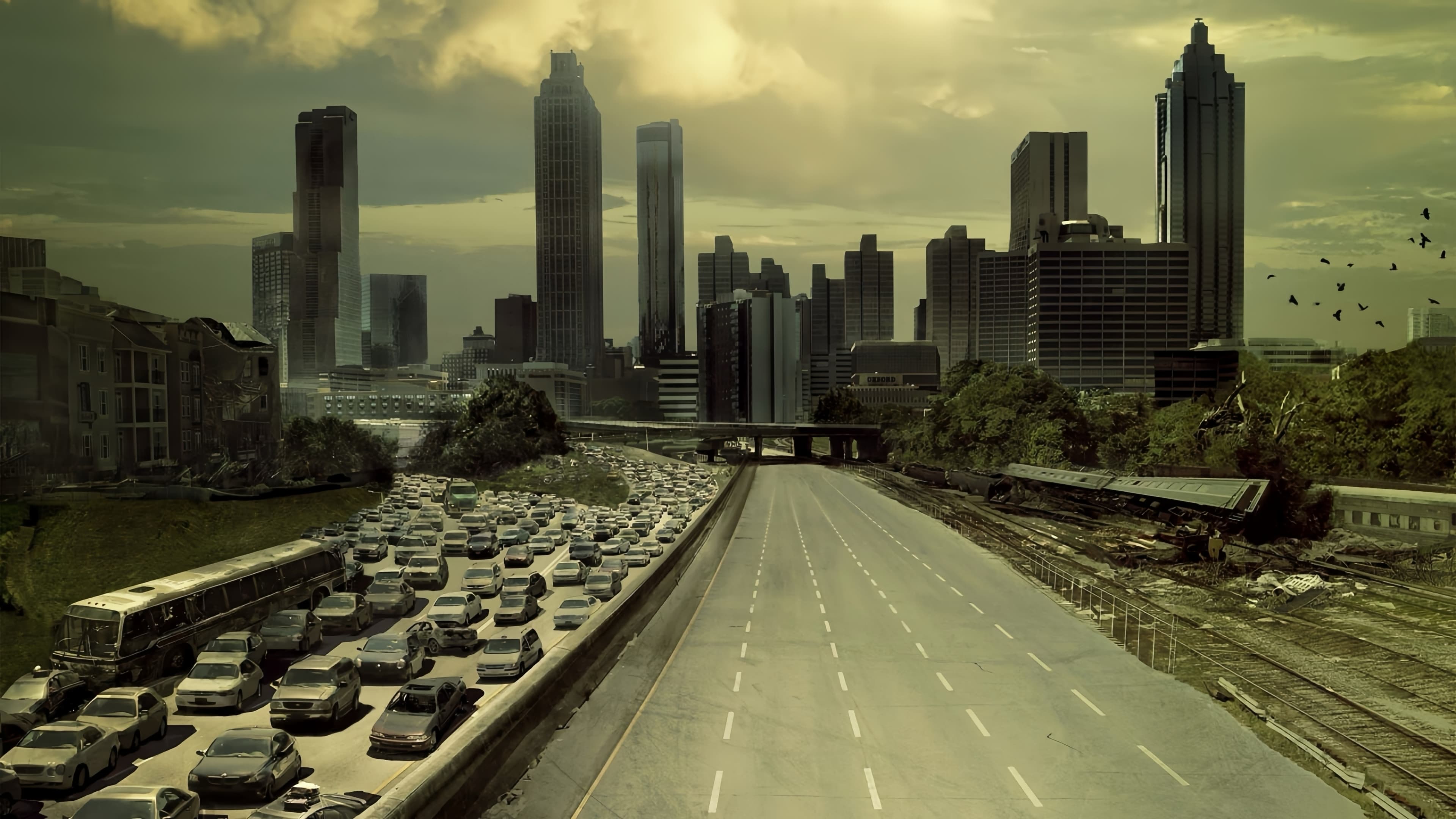
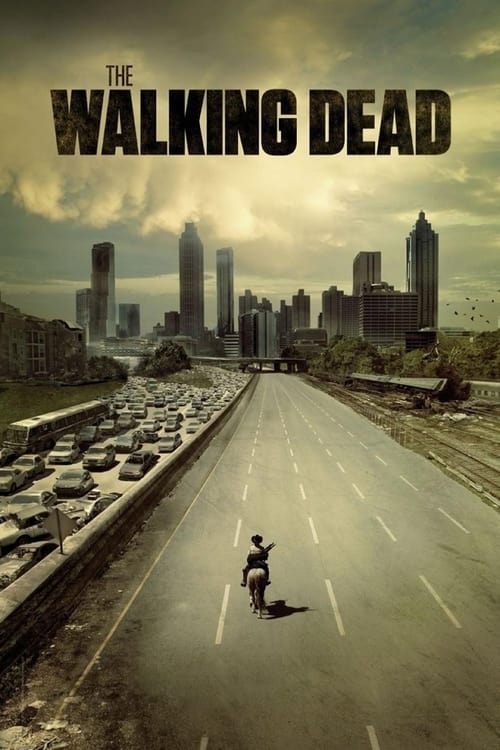
The pilot is a small miracle. Frank Darabont, who made The Shawshank Redemption, directed it before he was unceremoniously fired by AMC over a budget dispute, which is its own AMC-being-AMC story. But that pilot (Rick riding a horse into a dead Atlanta, the tank scene, the deliberate quiet) is one of the best openings any TV show has ever had. The first season is six episodes and feels like a tight indie horror movie that someone accidentally networked.
The performances carry the show way past where the writing should've taken it. Andrew Lincoln is doing real, sweaty, broken-cop work as Rick. Melissa McBride turns Carol from a background extra in season 1 into one of the most quietly devastating characters on television. Norman Reedus made Daryl Dixon, a character who didn't exist in the comics, into the most popular guy on the show by basically grunting and shooting a crossbow with conviction. And then there's Jeffrey Dean Morgan as Negan, who shows up in the season 6 finale and immediately becomes the best villain the show ever had. Which is also when the show starts to lose its plot, because of course.
Craft-wise, the makeup and practical effects are still incredible. Greg Nicotero's zombie work holds up better than most prestige-show CGI from the same era. And the early seasons understand something a lot of horror shows don't: the scariest scene in any episode is often two people sitting on a porch talking quietly about what they've had to do. The show is at its best when nothing's chasing anyone.
What doesn't work
Fair warning, because this is what you came for. The show has a pacing problem that becomes structural starting around season 7. Episodes get padded. Characters stand in doorways and look meaningfully at each other. There's a stretch in seasons 7 and 8, the Negan war, where the writers stretched maybe twelve episodes of plot across nearly thirty, and you can feel every minute of the dilution. People started leaving in droves and the ratings collapse is a matter of public record.
Key deaths land badly. The show kills off major characters in ways that feel either gratuitous or, worse, contractually obligated. One specific moment in season 7 (the comic readers know) is so brutally drawn out that it broke a chunk of the audience's relationship with the show, and not in the good "this is upsetting art" way. More in the "this feels like the writers room is punishing us" way. The CGI tiger is real and it is bad and it is on screen for multiple seasons.
And the ending. Eleven seasons in, the finale is fine. Just fine. It's not a betrayal like some endings, but it doesn't feel like a culmination either. It feels like the show stopping because AMC finally let it stop, while immediately spinning off three more shows because the corporate brain cannot let a property die even when its actual narrative has been begging for euthanasia for four years. If you watch all 177 episodes hoping for catharsis, you'll get a polite handshake instead.
Who should watch it
If you liked Lost for the character-driven mystery and the survivors-versus-each-other dynamic, yes, the early seasons scratch the same itch. If you liked Breaking Bad's slow-burn moral decay and you're okay with a slower pace, yes. If you bounced off Game of Thrones because the body count made you stop caring about anyone, you'll bounce off this harder.
If you need horror to be scary in a jump-scare way, skip it. This is dread horror, not haunted-house horror. If you need a show with a tight ending, skip it or stop at season 5. If you've been zombie-ed out by a decade of zombie content the show itself is responsible for creating, that's fair, but the original is still the best version of the thing.
Where to watch
All 11 seasons of The Walking Dead are streaming on Netflix in the US, with the full run also available on AMC+ if you've got that subscription for some reason. Individual seasons are available to rent or buy on Prime Video, Apple TV, and the usual digital storefronts. The comics by Robert Kirkman that the show is based on are also worth a look if you finish the series and want to see how it was supposed to end (the comic series on Amazon). Kirkman's ending in the books is, by most accounts, sharper than the show's.
FAQ
Is The Walking Dead overrated?
No and yes. Seasons 1-5 aren't overrated. They're some of the best genre television of the 2010s, and the cultural footprint is earned. Seasons 7-11 are absolutely overrated by the people who kept watching out of inertia and won't admit they wasted their time. Both things can be true.
Does it get better after season 1?
Yes, significantly. Season 1 is great but short and a little stiff. Season 2 is divisive (a lot of farm), but season 3 introduces the prison and the Governor and the show locks in. Seasons 3, 4, and 5 are the peak. If season 1 didn't grab you, give it through episode 4 of season 2. If you're still bored, you're not the audience.
Is it too dark or too violent?
It's very dark and very violent, but the violence has weight. It's not Saw-style spectacle, it's meant to mess you up. That said, there are specific scenes (the season 7 premiere, a moment in season 4 involving a child) that are legitimately upsetting in a way some viewers never recover from. If you're sensitive to on-screen brutality, this isn't your show. If you can handle prestige-TV-level violence, you'll be fine.
Should I watch the spinoffs?
Mostly no. Fear the Walking Dead has good moments but loses the plot. The Daryl Dixon spinoff is fine if you really love Daryl. The Rick-and-Michonne show, The Ones Who Live, is the closest thing to a real ending the franchise has ever produced and is worth watching if you finished the original series. The rest is AMC trying to keep a corpse warm.
✅ WORTH IT
What to do tonight: start with the pilot. Give it through the end of season 1. Only six episodes, you can do it in a weekend. If you're hooked, push through season 2's slow patch and you'll be locked in for the good stuff. If the pilot doesn't move you, the show isn't going to.
Related guides
- Shows Like The Walking Dead: 11 Picks Worth Your Time
- The Walking Dead Universe Ranked: Every Show From Best to 'Why Did You Make This'
- Best Shows to Watch if You Love The Walking Dead: 11 Picks That Actually Hit
- Is The Bear Worth Watching? An Honest Take
- The Best Shows on Prime Video Right Now (April 2026): What to Actually Watch
Some links above are affiliate links (we're an Amazon Associate) — if you buy through them we may earn a commission. It never changes a verdict.