In this piece · 9 sections+
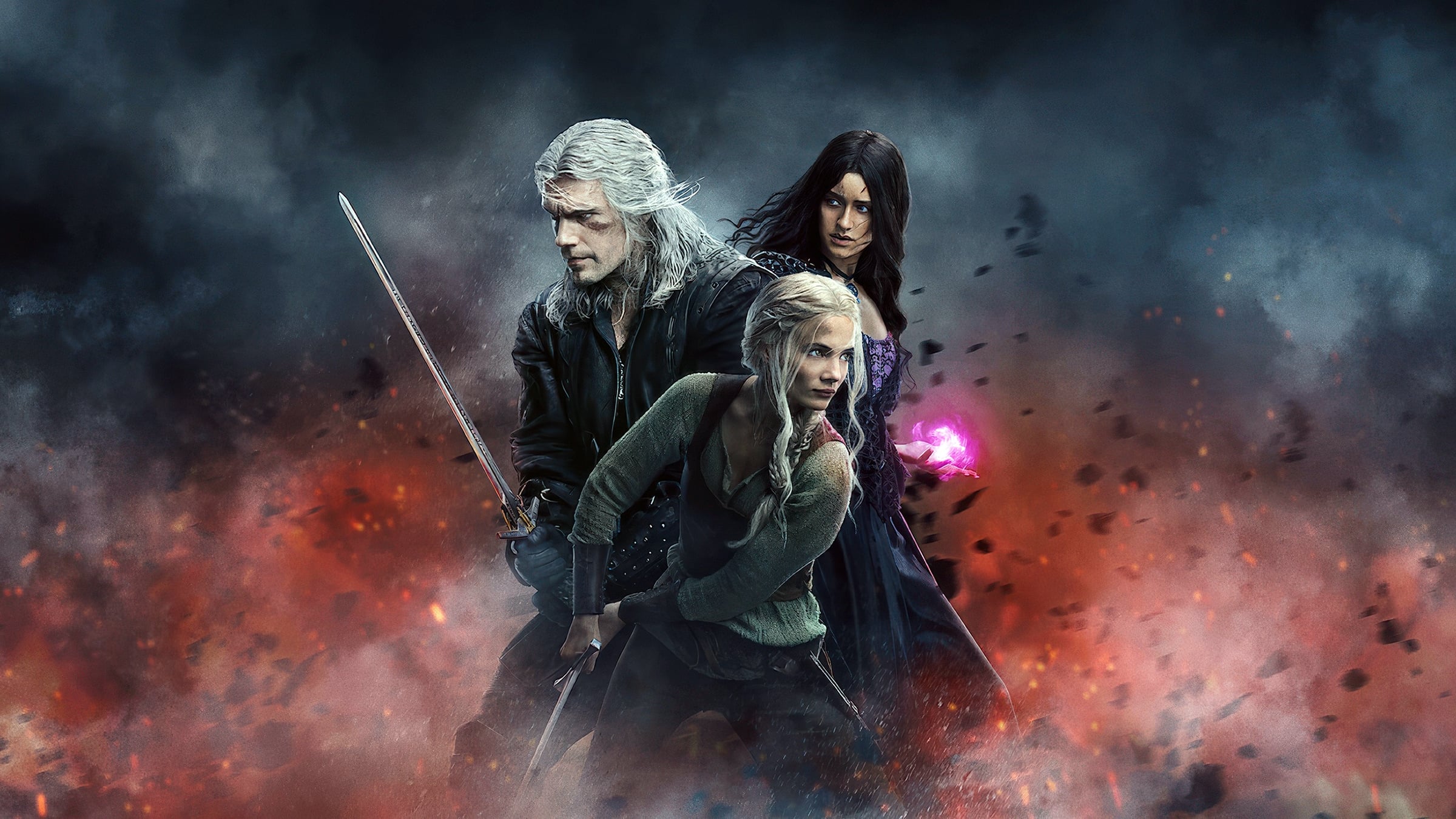
Short answer: yes for seasons 1 and 2, a qualified yes for season 3, and a wait-and-see for season 4 with a new Geralt. If you like grim fantasy with a moody swordsman muttering at a bard, press play. If you need a show that respects your time and never confuses you, this isn't it.
The Witcher is Netflix's biggest fantasy swing, based on the Polish novels by Andrzej Sapkowski that also spawned the video games your friend won't shut up about. Henry Cavill carried the first three seasons on sheer commitment. Then he left. Liam Hemsworth is Geralt now. That's the situation, and whether it's worth 32 hours of your life depends entirely on how much you care about that sentence.
The quick verdict
Yes, if you want dark fantasy with monsters, sex, sword fights, and a lead actor who clearly read the books. The first two seasons are genuinely strong television with real craft behind them. Season 3 wobbles. Season 4 is a soft reboot with a new face in the wig, and the jury is out. It's for people who liked Game of Thrones and don't need everything wrapped up neatly.
What The Witcher is actually about
Geralt of Rivia is a monster hunter. He was mutated as a child into a witcher, which basically means he's a genetically engineered killing machine with white hair and a soft spot for horses. He wanders a fantasy continent that's been carved up by warring kingdoms, elves who got the short end of every stick, and an empire from the south called Nilfgaard that would like everyone to please stop existing. He kills monsters for money, growls, and gets pulled into a much bigger story about a princess named Ciri with world-breaking magic and a sorceress named Yennefer who is his on-again off-again everything.
The tone is medieval and mean. Muddy villages, court intrigue that ends in someone's throat, magic that costs something to use. It looks expensive because it is expensive. And it borrows the moral grayness of the books, where the monster is often the guy who hired you and the guy you were hired to kill is just a lonely creature trying to eat. When it works, it works. When it doesn't, you're watching three timelines you can't keep straight while a wizard explains a portal.
The math on time
Four seasons, 32 episodes, most of them running an hour or more. Call it 34 to 36 hours all in. That's a real commitment. A weeknight-only viewer looking at three weeks minimum. A weekend binger, maybe two long Saturdays and you're through season 2.
Here's the honest chunking: seasons 1 and 2 are 16 episodes and worth every minute. That's your baseline commitment, about 16 to 18 hours, and if you bail there you've had a complete experience. Season 3 is another 8 episodes and it splits into two halves that feel like two different shows. Season 4 is the new-Geralt reboot, another 8 episodes. If you're the kind of person who can't leave a show unfinished, know what you're signing up for.
What it gets right
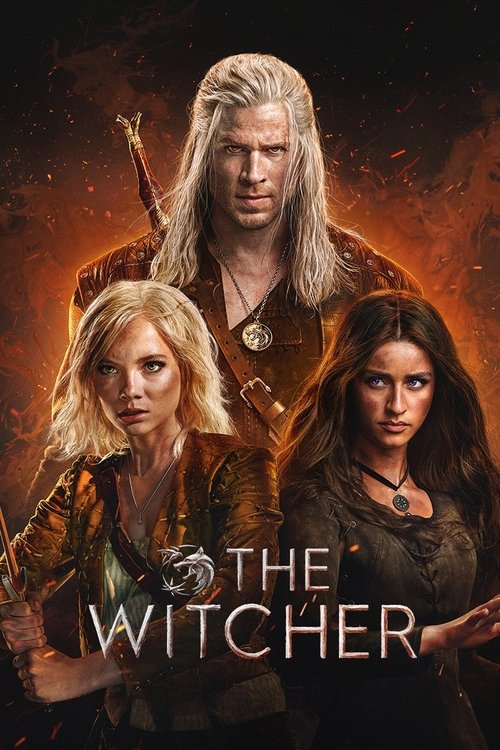
Henry Cavill was the show. Say what you want about the writing, the timelines, the choices — the man showed up with a low growl, a book in one hand and a sword in the other, and made you believe a genetically engineered mutant would in fact spend most of his time being annoyed at people. His fight scenes are the best in TV fantasy since prime Game of Thrones. There's a corridor fight in season 1 and a castle sequence in season 2 that are worth the price of admission by themselves.
The monster-of-the-week structure in season 1 is quietly the best thing the show ever did. Each episode is basically a fairy tale gone wrong, and the writers understood that the interesting thing about a monster hunt isn't the monster. It's the deal that led to the monster. The striga episode is a masterclass. The djinn episode gave us Geralt and Yennefer, which is either the best or worst thing that ever happened to this show depending on the day.
The supporting cast pulls real weight. Anya Chalotra as Yennefer gets an actual arc, not just a love interest slot. Joey Batey as Jaskier the bard is somehow the show's secret weapon, and "Toss a Coin to Your Witcher" is a song that colonized brains for a full calendar year in 2020. Freya Allan as Ciri grew into the role by season 2. When The Witcher lets its ensemble breathe, it's genuinely great television.
What doesn't work
The timelines. Season 1 tells three stories in three different eras and refuses to tell you which is which for about six episodes. Some people found this clever. Most people found it deeply annoying. If you're the second kind of person, keep a wiki open or just trust that it eventually converges. It does. But you'll want to throw the remote at least twice.
Season 3 is where things get shaky. The showrunner and Cavill reportedly disagreed about how faithful to the books the show should be, and you can feel that fight bleeding into every episode. Plot lines get compressed. Character motivations get muddy. The season splits into two volumes because Netflix loves nothing more than making you wait a month for four more episodes. And then Cavill announced he was leaving, and the whole thing took on the vibe of a wedding where everyone knows about the affair.
Season 4 with Liam Hemsworth is a question mark. He's a fine actor. He is not Henry Cavill. The show tries to hand-wave the recast with in-world logic and mostly hopes you'll go along with it. Some viewers will. Some won't. The larger issue is that the show started drifting away from the source material's texture and toward a more generic epic-fantasy shape, and once you notice it you can't unnotice it. Beyond the recast, there are stretches where the writing forgets that the reason we cared was the small moments, not the CGI battles.
Who should watch it
If you liked Game of Thrones before it ate itself, yes. If you liked The Last Kingdom or Vikings or any adult fantasy where the swords have weight and the politics have teeth, yes. If you played the Witcher 3 game and want to see the wider world of Geralt and Yennefer and Ciri in live action, absolutely.
If you need a show to explain itself in the first episode, no. If you bounced off Game of Thrones because it was too dark, too horny, too willing to kill your favorite, this will do the same things to you. If you can't stomach a recast midway through, skip it entirely and just watch the first two seasons as a self-contained thing. Nobody will arrest you.
If you're a purist about the books, brace yourself. The show respects them in season 1 and takes bigger liberties as it goes. That's either fine or unforgivable depending on your temperature.
Where to watch
All four seasons stream on Netflix. That's the only place. Netflix owns this thing top to bottom, which is part of why every creative decision on it has felt like it was routed through a spreadsheet in Los Gatos. There's no rent-or-buy option because Netflix doesn't play that game. You need a subscription, or you need a friend with one who hasn't figured out the password crackdown yet.
The books by Andrzej Sapkowski are worth your time if the show grabs you — start with The Last Wish on Amazon, which is the short story collection that season 1 pulls from directly. Reading it after watching is a fun exercise in seeing what the show got exactly right and what it flattened.
✅ WORTH IT
FAQ
Is The Witcher overrated?
No, but it's inconsistent. Season 1 earned its hype through a killer lead performance and inventive fight choreography, and season 2 tightened up the storytelling. Where the overrated charge lands is in the assumption that the whole run holds that quality. It doesn't. Rate seasons individually and you'll be closer to the truth.
Does it get better after season 1?
Yes, in the sense that season 2 is more coherent and easier to follow. The three-timeline puzzle-box of season 1 gets dropped, the characters converge, and the show settles into a groove. If season 1 frustrated you with its structure, season 2 fixes that specific complaint. Whether it stays good past that is where the argument starts.
Is it worth watching without Henry Cavill?
Honest take: seasons 1 through 3 are worth it because he's in them. Season 4 with Liam Hemsworth is a genuine unknown, and early word is mixed. If you loved the show for Cavill specifically, treat the first three seasons as the real run and consider season 4 a bonus you can take or leave.
Is it too dark or too violent?
It's dark and violent, but it's not gratuitous in the way some prestige fantasy gets. There's on-screen sex, blood, monster gore, and one specific childbirth scene in season 1 that people still bring up. If you handled Game of Thrones, this is a step down in brutality. If Game of Thrones was your ceiling, you're fine.
What to do tonight: watch the first episode. If the timeline structure loses you, give it until episode 4 when things start clicking. Bail after season 2 if the shine is off. That's a complete, satisfying viewing and you can go live your life.
Related guides
- The Best True Crime Shows: A Ranked Guide for People Who Are Tired of the Bad Ones
- Best Shows to Watch When Stressed: 11 Cozy Picks That Actually Work
- Shows Like Breaking Bad: 11 Picks That Actually Match the Vibe
- The Best Hangover Shows: 12 Picks for When You Feel Like Death
- The Best Shows to Binge in One Weekend When You Have 48 Hours and a Couch
Some links above are affiliate links (we're an Amazon Associate) — if you buy through them we may earn a commission. It never changes a verdict.