In this piece · 10 sections+
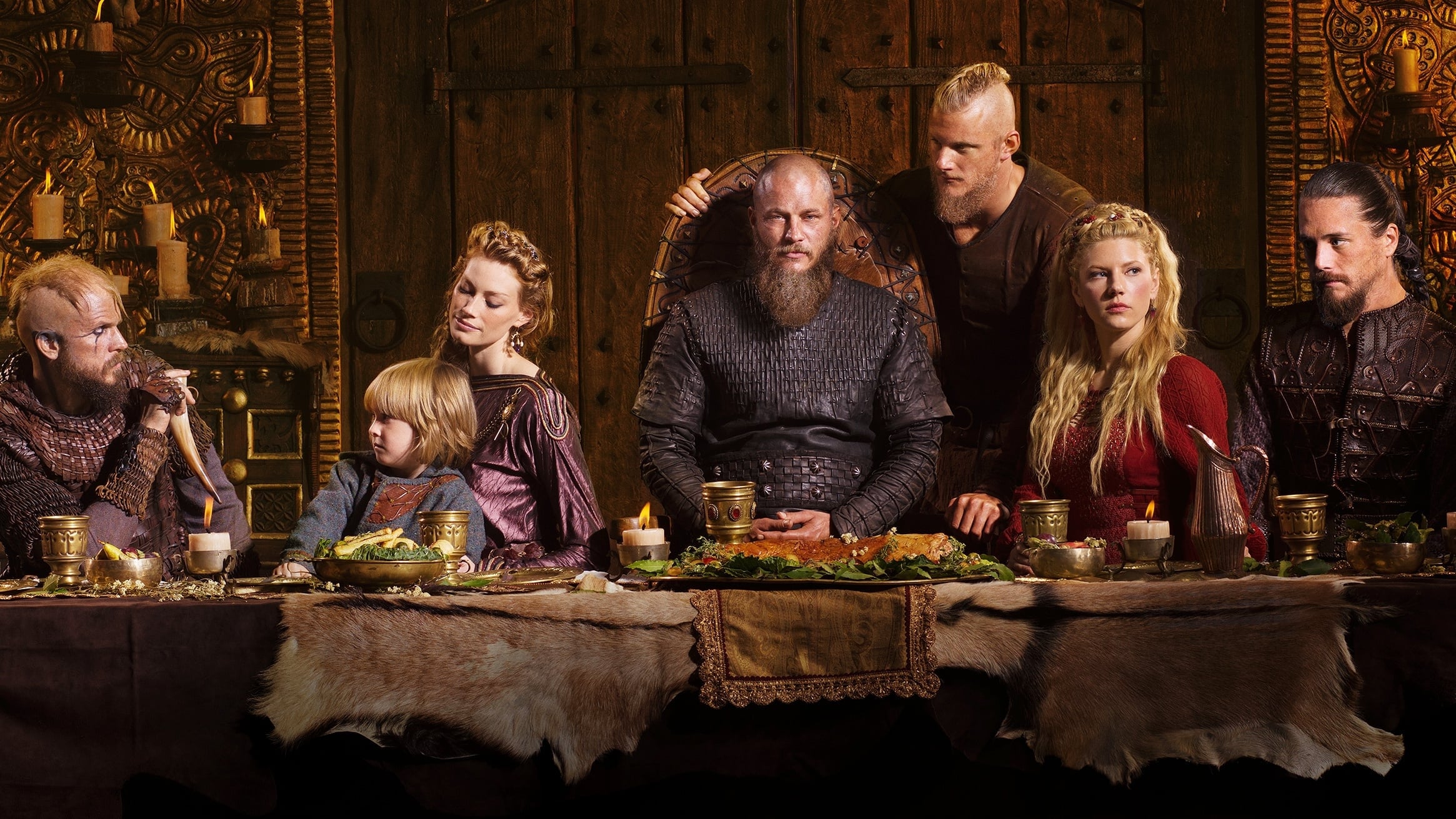
Short answer: watch it. Start at season 1, episode 1, all 89 episodes are on Netflix, and the first four seasons are as good as anything cable has ever produced. This is a show about a farmer who looked at the edge of the known world and decided everyone else was lying about what was out there. It has one of the great lead performances of the 2010s in it. It also runs six seasons and does not stay at that altitude the whole way, and this guide tells you exactly where the road changes and what to do about it.
A correction, first
We previously filed Vikings under BACKGROUND TV on the verdict board. Called it disposable. Said you'd fold laundry through the raids.
That ruling was wrong and it's vacated. The error was judging 89 episodes by their weakest stretch instead of their best, which is a stupid way to judge anything. Seasons 1 through 4 are not laundry television. They're the reason half the prestige-adjacent historical drama of the last decade exists. New ruling: DROP EVERYTHING. The rest of this guide is the argument.
Where to watch Vikings
All six seasons stream on Netflix with a standard subscription. That's the whole answer — no hunting across four apps, no "seasons 1-3 here and 4-6 there" nonsense.
If you don't have Netflix, seasons are available to buy on Amazon Video starting around $11 each. There is currently no free ad-supported option in the US, so anyone promising you Vikings on Tubi is selling something else.
Time commitment: 89 episodes at roughly 45 minutes each. Call it 65-plus hours for the whole thing, or about 26 hours if you run the four-season arc this guide recommends. That's a real winter, not a weekend.
What the show is actually about
Ragnar Lothbrok is a farmer in ninth-century Scandinavia who is bored of raiding east into the Baltic because everyone raids east into the Baltic. He believes there's land west across open ocean. His chieftain says no. Ragnar builds the boat anyway, sails west without permission, and finds England — specifically the monastery at Lindisfarne, undefended, stacked with gold, staffed by men who have never seen anything like him.
Everything else in the series comes off that one decision. The raids become invasions. The invasions become settlements. The settlement becomes a question about whether the sons of a farmer can hold what he took, and whether the gods he sailed for were ever listening.
Michael Hirst created it — the same guy who wrote Elizabeth and ran The Tudors — and he understands something a lot of historical dramas don't: the politics only land if you buy the people first.
The cast that carries it
Travis Fimmel as Ragnar is the whole ballgame. He plays a conqueror as a curious man — quiet, sideways, half-smiling, watching everyone in the room. When he finally moves, it lands because he spent four episodes not moving. It's a genuinely strange choice for a basic-cable action lead and it's why the show outgrew its slot.
Katheryn Winnick as Lagertha is the shieldmaiden, and Winnick does her own fight work with enough conviction that the camera doesn't have to cut away to hide a double. She's not a love interest with a sword. She's a separate power center with her own claim.
Gustaf Skarsgård as Floki is the boat-builder, a true believer in the old gods who slowly curdles into something dangerous. Clive Standen as Rollo is Ragnar's brother and permanent second place, which is its own kind of poison. George Blagden as Athelstan, the captured monk, is the show's conscience and the hinge of its best material — the collision between two faiths that both think the other is damned.
Watch for Gabriel Byrne as Earl Haraldson in season one and Donal Logue as King Horik. Byrne in particular gives the early episodes a weight the budget didn't pay for.
Every season, ranked
Explicit hierarchy, because "watch it all, it's great" is not advice.
Tier 1 — essential
Season 2 — the best season. Peak Ragnar, peak politics, and "Blood Eagle" (S2E7), which contains the single most infamous scene in the series and earned the show a directing nomination. The Jarl Borg arc is the show at its most controlled. If someone tells you Vikings is dumb, this is the season you put on.
Season 1 — nine episodes, no fat. The Lindisfarne raid in episode 2 is a genuinely great sequence: fog, longships, a shock cut into a hall full of unarmed monks. Ends before it can wear out its welcome.
Season 4 — twenty episodes and the widest swings in the series. Contains "The Last Ship" (S4E10), the Ragnar-versus-Rollo naval battle the show had been building toward for three years, and "All His Angels" (S4E15), which is the end of an era and one of the best-acted hours cable produced that decade.
Tier 2 — strong, with drag
Season 3 — the Paris siege is spectacular and the Wessex material is sharp. Sags in the middle stretch. Still essential because it sets up everything season 4 pays off.
Tier 3 — for the committed
Season 5 — twenty episodes, and the show is now running four storylines across three countries without its center of gravity. Real material in here. Also a lot of people announcing what the gods want.
Season 6 — lands the plane better than it had any right to, and the final stretch gives the saga a genuine ending. Getting there requires patience the earlier seasons never asked for.
The Ragnar problem — read this before you start
Here's the thing nobody tells you up front, and it's the single most useful fact in this guide.
Ragnar dies in season 4, episode 15, "All His Angels." Aired December 2016. Ecbert's brother Ælle tortures him for days and drops him into a pit of vipers, and Ragnar goes into it giving a speech about drinking in Valhalla that Fimmel plays as pure defiance. It's a great hour of television. Ciarán Donnelly directed it. It is also, structurally, a cliff.
The show does not end there. It runs another season and a half — 45 more episodes — following his sons. And this is where Vikings splits its audience:
- Some people stop at S4E15 and treat it as a complete four-season story about one man. This is a legitimate way to watch it. You get a beginning, middle, and end, and you never watch the show search for a new center.
- Some people keep going and get invested in Bjorn, Ivar, and the succession war. Alex Høgh Andersen's Ivar is a genuinely great villain, and the back half has real payoffs.
Our call: watch through S4E15 first and stop there for a bit. If you're still thinking about it a week later, keep going — you'll go in knowing the show is a different animal now, which is exactly why most people who quit at season 5 quit. They expected Ragnar. Ragnar's dead.
What you should not do is let someone talk you out of the first four seasons because the last two are uneven. Twenty-six hours of Fimmel is worth it on its own.
Who'll love it, who'll bounce
You'll love it if you liked Spartacus for the swing of a sword or The Tudors for the court knives, and you want something that sits exactly between them. If The Last Kingdom worked for you, this is its pulpier, hornier, better-looking older cousin — same century, opposite side of the shield wall.
You'll bounce if you need documentary rigor. Ragnar Lothbrok is semi-legendary, and Hirst compresses people who lived generations apart into the same room on purpose. The hair and makeup is 2014 undercut, not archaeology. If that's going to sit in your teeth for six seasons, this isn't your show and no amount of good performance will fix it.
You'll also bounce if you want tight eight-episode seasons. Seasons 4 through 6 are twenty episodes each. The show sprawls. That's the deal.
Status: complete. Six seasons, ended March 2021, full ending, nothing cancelled mid-arc. You are not walking into a cliffhanger that never resolves.
Is Vikings: Valhalla worth watching?
Short version: it's a different show, and you should treat it as one.
Vikings: Valhalla is on Netflix, runs three seasons and 24 episodes, and finished on July 11, 2024. It's set roughly a hundred years after the original — new cast, new characters, Leif Erikson and Freydís and Harald Sigurdsson instead of Ragnar's family.
The good news: Netflix ordered all 24 episodes up front, so it was built to end and it does end. No mid-story execution.
The honest news: it's slicker, faster, and less strange than the original. What it doesn't have is Fimmel doing that quiet unreadable thing that made the first show feel like it might do anything.
Watch it if you finish the original and want more of that world. Don't start here — the original is better and Valhalla means less without it.
Frequently asked questions
Do I need to know anything about Norse history first? No. The show explains what it needs to. Knowing more history will actually make you angrier, not happier — Hirst plays loose on purpose.
How historically accurate is it? Loosely. The broad strokes of the Viking Age raids on England are real; the Lindisfarne raid genuinely happened in 793. The specific people are compressed, mythologized, or invented. Watch it as saga, not as documentary.
Is it too violent? It's a show about raiding. There's a blood eagle in season 2 and a snake pit in season 4. It isn't gratuitous — the violence has consequences and the show tracks them — but it does not look away.
Where should I actually start? Season 1, episode 1, "Rites of Passage." If you want to know within one hour whether this show is for you, watch through episode 2, "Wrath of the Northmen" — the Lindisfarne raid. That's the show's thesis statement. If that doesn't get you, nothing later will.
Should I watch Vikings or The Last Kingdom first? Vikings. It's the bigger, wilder, more foundational show. The Last Kingdom is tighter and more disciplined, and it plays better as the follow-up.
The bottom line
Vikings is a show about a man who was told the world ended at the horizon and went to check. It has one great performance at its center, three or four all-time sequences, and a fourth-season finale that earns every hour that came before it.
Yes, it sprawls. Yes, the last two seasons ask more of you than the first four. That's a real tradeoff and this guide isn't going to pretend otherwise.
Do this tonight: open Netflix, start season 1 episode 1, and watch two episodes back to back. By the end of "Wrath of the Northmen" you'll know. Most people know about eleven minutes into the raid.
Sources: Vikings on Netflix · List of Vikings episodes (Wikipedia) · JustWatch US streaming availability · "All His Angels" (Wikipedia) · Vikings: Valhalla final season (Variety)
Some links above are affiliate links (we're an Amazon Associate) — if you buy through them we may earn a commission. It never changes a verdict.