
Where This Starts
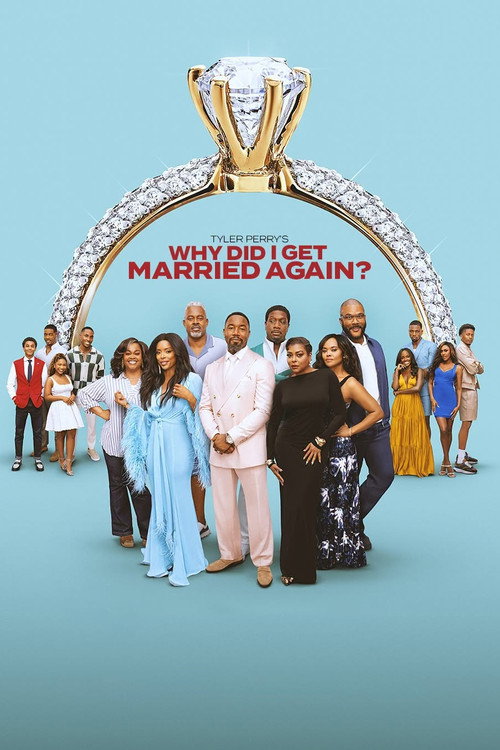
This is Tyler Perry's 2010 sequel to Why Did I Get Married?, and the setup is exactly the sequel of that title. The four couples from the first film reconvene, this time for a Bahamas retreat instead of a Colorado one, to check the temperature on their marriages a few years later. Janet Jackson and Malik Yoba are Patricia and Gavin, the polished therapist couple whose whole brand is telling everyone else what's wrong. Jill Scott and Lamman Rucker are the softer newlyweds. Tasha Smith and Michael Jai White are Angela and Marcus, the volume knob. Sharon Leal and Tyler Perry round out the group, and early on Sheila's ex Mike (Richard T. Jones) turns up uninvited to make trouble. That's the first act. Everyone arrives with a suitcase full of grievances and the film starts unpacking them.
The Argument For
Tasha Smith is the reason to sit through this. Her Angela is the loudest thing in any room she enters, and Smith commits to every syllable with the kind of comic timing you cannot fake. Michael Jai White is a genuinely good scene partner opposite her, and their fights have a rhythm the rest of the movie doesn't. Jill Scott is warm and lived-in whenever she's on. Janet Jackson gets one big grief scene late in the second act that shows what the movie could've been if Perry trusted his actors to whisper. Cicely Tyson and Louis Gossett Jr. cameo with more gravity than the material earns.
What Doesn't Work
Perry writes with a megaphone. Characters announce their feelings in complete paragraphs, then a second character restates the same feeling in case the row behind you missed it. Fights escalate to screaming within three lines and stay there. Scenes end when Perry runs out of dialogue, not when a beat lands. The plotting is a soap-opera checklist (infidelity, infertility, money, secrets, the ex) and each subplot is resolved by a monologue instead of a decision. The final ten minutes take a swerve so tonally weird it has its own Wikipedia paragraph. And the direction is flat, sitcom-lit, cut like a stage play with a camera pointed at it.
The Right Viewer
If you loved the first one and you're here for the couples, not the filmmaking, you'll be fine. If you enjoy Tasha Smith going nuclear, there's forty good minutes of that. Fans of ensemble domestic melodrama in the Diary of a Mad Black Woman lineage will find their brand of comfort food. Anyone who bounced off the first film, or who needs subtext, restraint, or a director who cuts a scene short, quits by the poolside argument.
The Ruling
SLOP because the craft can't keep up with the ambition. Perry wants ensemble Cassavetes and shoots ensemble talk-show. Every argument is pitched at eleven, so nothing lands. The performers who could carry quiet moments (Jackson, Scott) get buried under speeches. There's no lecture problem here, just a writing and directing problem: the movie tells instead of shows, resolves instead of dramatizes, and mistakes volume for feeling. Passable if it's on. Not worth choosing.