What It Is
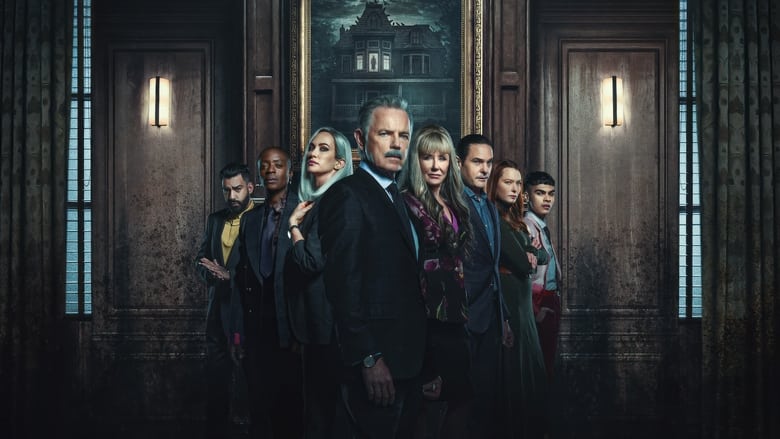
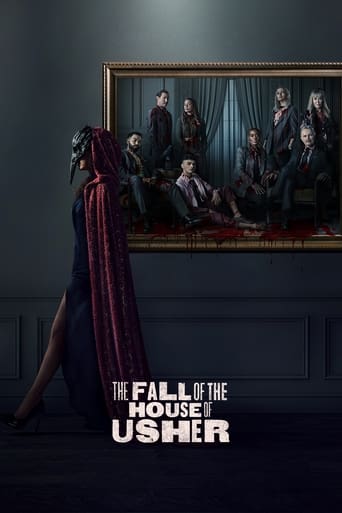
Mike Flanagan's eight-episode Netflix limited series, loosely adapted from Edgar Allan Poe by way of the opioid crisis. Bruce Greenwood plays Roderick Usher, the aging patriarch of Fortunato Pharmaceuticals, a company that made billions off a painkiller called Ligodone. In the pilot, Roderick summons prosecutor C. Auggie Dupin (Carl Lumbly) to a rotting family house and starts confessing. The rest of the show is that confession, told in flashbacks across Roderick's six adult children and his sister Madeline (Mary McDonnell). Carla Gugino shows up as a strange woman named Verna who has known the Ushers a long time. Flanagan's regular company is stacked in here: Henry Thomas, Kate Siegel, Rahul Kohli, T'Nia Miller, Samantha Sloyan, Zach Gilford, Willa Fitzgerald, plus Mark Hamill as the family's lawyer, speaking almost exclusively in a rasp.
What Works
Greenwood is doing the best late-career work of his life, and he only got the part because Frank Langella was fired mid-shoot. He plays Roderick as a man who knows exactly what he is and cannot stop being it. Carla Gugino is the engine of the show. She glides between scenes like she's auditing your soul, funny one minute and terrifying the next. Flanagan structures each episode around a different Poe piece — "The Masque of the Red Death," "The Black Cat," "The Tell-Tale Heart," "The Pit and the Pendulum" — and the format lets him swing at a wildly different set piece every hour. The Sackler-shaped pharma satire is sharper than it needs to be. Mark Hamill's whole performance is a bit, and the bit lands. The house itself, all cracked plaster and green light, looks incredible.
What Doesn't Work
Flanagan loves a monologue, and this show loves them more than usual. Characters stop dead to deliver two-page speeches about capitalism, addiction, and mortality, and a couple of them do read as thesis statements bolted onto scenes rather than growing out of them. The six-siblings structure means at least two of the kids are thinner than the others and function mostly as delivery mechanisms for their assigned Poe reference. If gothic melodrama at maximum volume isn't your setting, the pitch never really varies. Also: an orangutan.
The Right Viewer
If you liked Midnight Mass or The Haunting of Hill House, you already know whether you're in. Fans of prestige horror who don't mind Flanagan's talkiness will eat this. People who want their horror lean and quiet — Hereditary crowd, early Ari Aster — will find it overwritten. If you came for a straight Poe adaptation, you'll bounce; if you came for a Succession-with-ghosts sicko binge, you're home.
Final Word
It's WORTH IT because the craft holds up the swing. The show has a clear thesis about the opioid industry, and yes, characters occasionally deliver it in paragraphs, but Flanagan mostly earns it through story: the Ushers are specific, damned people making specific, damned choices, and the drama does the arguing before the speeches do. Gugino and Greenwood are giving performances that would carry a weaker script, and this isn't a weaker script. Overwritten in patches, absolutely, but never lecturing at the expense of the story. Eight episodes, one strong hook per hour, a pharma-dynasty structure that gives the horror somewhere real to land. Not a masterpiece. A very good binge.