What It Is
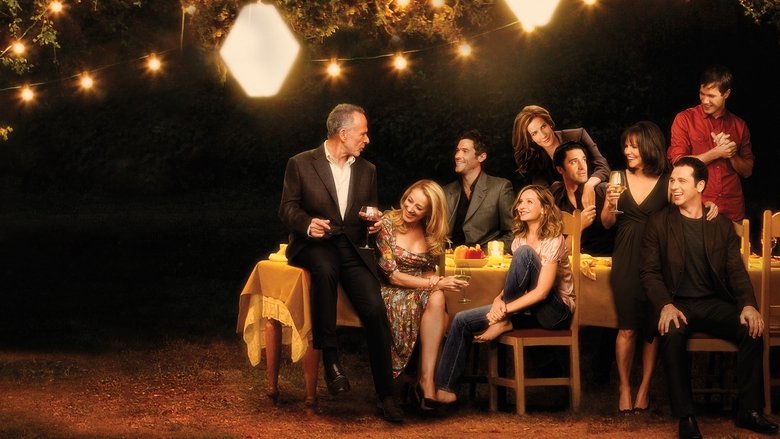
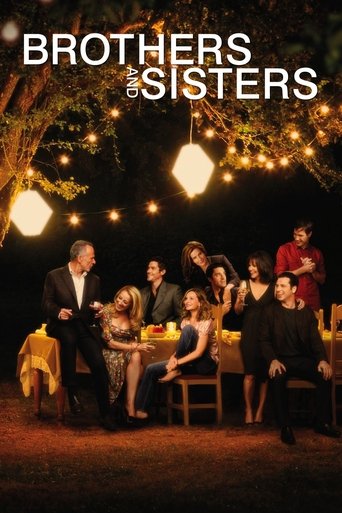
"Brothers & Sisters" is a five-season ABC family drama (2006-2011) from creator Jon Robin Baitz about the Walkers, a big Pasadena clan orbiting matriarch Nora (Sally Field). The pilot opens with the family's produce empire in a wobble and forces the five adult siblings back into each other's business. Calista Flockhart plays Kitty, a conservative pundit dragged home from New York. Rachel Griffiths is Sarah, the daughter running the company. Matthew Rhys, Balthazar Getty, and Dave Annable fill out the brothers. Ron Rifkin is the uncle. Rob Lowe and Patricia Wettig show up early as complications. Everyone yells across a long dining table. There is a lot of red wine.
The Case For
The cast, mostly. Field won an Emmy for Nora and deserved it, at least for the first stretch, when she's playing a widow figuring out that her marriage wasn't what she thought. Griffiths does the same sharp, prickly work she did on "Six Feet Under," just in Ann Taylor. Matthew Rhys, years before "The Americans," gets one of TV's better gay-lawyer-with-a-mother arcs and plays it with actual dryness. Baitz is a real playwright ("The Substance of Fire"), and when he's running the room in season one, the dialogue has snap and the family fights sound like family fights, not writers' room approximations. Ken Olin directs a lot of it and knows how to shoot people arguing over food.
What Doesn't Work
Baitz left after season one, and the show never fully recovered its bite. What's left is a network melodrama that runs at network melodrama speed: setup, commercial, revelation, commercial, hug. Storylines get recycled. Characters get pregnant or sober or engaged on a schedule you can set your watch to. The political stuff, mostly Kitty's career, ages into a museum piece about a bipartisan pundit class that no longer exists. And 109 episodes is 109 episodes. You will feel every one.
Who It's For, Who'll Bounce
If you loved "Parenthood," "This Is Us," or late-period "Grey's" when it was doing family instead of hospital, this is your comfort food. Anyone raised on a big loud Italian, Irish, or Jewish dinner table will nod at the cross-talk. If you need prestige-era pacing, cinematic direction, or plots that resolve in fewer than three episodes, you'll tap out during the first dinner scene when the swelling piano cue kicks in over Sally Field's tearful close-up.
The Ruling
SLOP because it's exactly what network drama was in 2006 and nothing more. The craft is competent, sometimes better than competent when Rhys or Field gets a real scene, but the machine around them is pure ABC assembly line: A-plot, B-plot, needle drop, act break, resolve. Kitty's conservatism gets treated as a character trait for a while and then softens into whatever the plot needs that week, which is the show's real tell. It's not lecturing anybody. It's not really arguing anything. It's just filling 44 minutes with pretty houses, wine, and a cast too good for the material they're being handed after the pilot glow wears off. Watchable. Forgettable. Perfect for folding laundry.