
The Premise
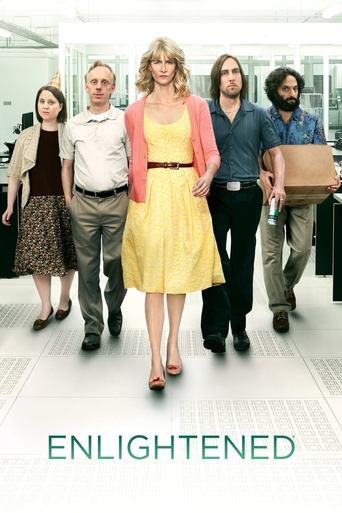
"Enlightened" is a half-hour HBO dramedy from Mike White that ran two seasons between 2011 and 2013. Laura Dern plays Amy Jellicoe, a cosmetics executive who has a public meltdown at the office, ships herself off to a New Age retreat in Hawaii, and comes back convinced she's a new person on a mission. The company demotes her to the basement, into a data-entry crew of weirdos. Mike White plays one of them. Luke Wilson is her sad, still-using ex-husband. Diane Ladd, Dern's actual mother, plays her actual-feeling mother. That's the setup: a woman with a fresh spiritual vocabulary trying to force it onto the exact life she had before, and everyone around her wincing.
In Its Favor
Dern is doing career-best work here, and it's not close. She plays Amy as genuinely trying, genuinely insufferable, and genuinely sad, sometimes inside the same sentence, and she never begs you to like the character. Mike White writes every episode, and he's already doing the thing he'd later get famous for on "The White Lotus": handing rich, cringing monologues to people who don't realize they're the joke. The voiceover — Amy narrating her own life like an affirmation card — is the show's secret weapon, because it keeps telling you one story while the camera shows you another. Luke Wilson is quietly devastating. Diane Ladd is a gift. And the whole thing is shot small and warm, in strip malls and cubicle rows, so the spiritual-awakening comedy has somewhere real to land.
What It Gets Wrong
Amy is a lot. She interrupts, she preaches at her coworkers, she hijacks conversations to talk about her growth, and the show is committed to sitting inside that with you. If you need a protagonist who's charming or improving on a clean arc, you'll want to throw the remote. The pace is slow on purpose. Plot happens in millimeters. Season two pivots toward corporate whistleblowing and picks up momentum, but you have to earn it by getting through a first season that's basically a character study of someone repeatedly stepping on the same rake.
Who'll Love It, Who'll Bail
If you loved "The White Lotus" and want to see the workshop where Mike White figured out how to write privileged self-delusion, this is the ur-text. Fans of "Better Things," "Fleabag," "Somebody Somewhere," or the quieter stretches of "Six Feet Under" will click in fast. People who want jokes per minute, likable leads, or a redemption arc that stays redeemed will not make it past episode three. It's a hangout show about a person you'd cross the street to avoid.
The Bottom Line
WORTH IT holds because the craft is doing something almost nobody else on TV was doing. White writes Amy as a true believer without ever endorsing her, and the show never once stops the story to make sure you got the point. It has real things on its mind about corporate rot, wellness culture, and the American habit of turning any private failure into a brand, but it delivers all of that through Amy behaving badly and Dern making you feel it. No megaphone, no press-release dialogue, no character parked in a doorway to explain the theme. The cancellation hurt it — you can feel a longer show inside these 18 episodes — and the pace will lose people. But the writing is precise, the performances are the real thing, and it's short enough to actually finish. That's a WORTH IT, not a masterpiece shelf-placement. Watch it.