What It Is
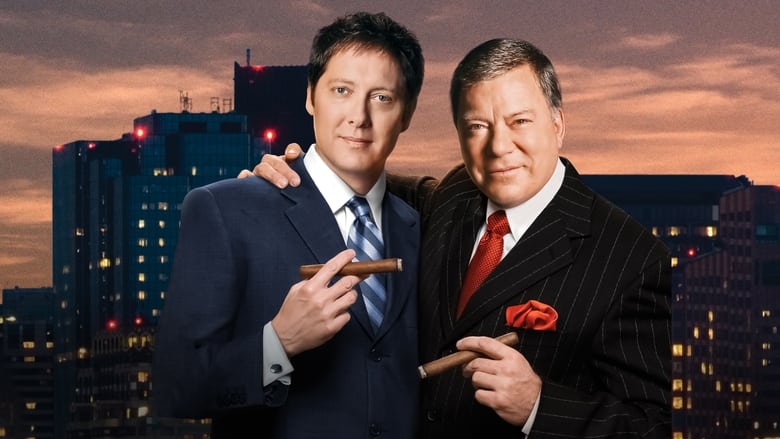
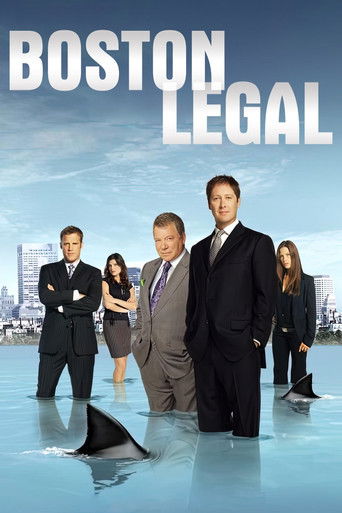
David E. Kelley's spin-off of "The Practice," which aired on ABC from 2004 to 2008. James Spader is Alan Shore, a brilliant, ethically porous litigator at the white-shoe Boston firm Crane, Poole & Schmidt. William Shatner is Denny Crane, the firm's name partner and legend, who mostly announces his own name and sometimes shoots things. Candice Bergen runs the place as Shirley Schmidt. Every week: a case of the week, a courtroom closing argument that turns into a monologue, and two men on a balcony drinking scotch.
The Case For
Spader is the reason to watch. He won three Emmys for this part and you'll see why by episode four, when he starts sliding out closing arguments the way other actors sip water. Shatner leans directly into the Shatner of it all and Kelley writes to that instead of around it. They won lead actor and supporting actor the same year for a legal comedy on network TV. The dialogue is Kelley in full David E. Kelley mode — clocked, rhythmic, willing to be silly one scene and courtroom-serious the next. Bergen is the pro who keeps the room from tipping over. And the guest bench is stacked: Betty White, Michael J. Fox, Parker Posey, John Larroquette, Christian Clemenson all pass through.
The Case Against
It's a 2004 network procedural, which means broadcast pacing, sitcom lighting, and act breaks you can set your watch to. Kelley uses the courtroom as a soapbox and the closing arguments regularly become op-eds on whatever was in the news that week — tort reform, gun policy, drug pricing, the FDA. When it works, it's electric; when it doesn't, you can feel the writers' room typing. The tone whiplashes hard. One scene is a genuinely tender monologue about aging, the next is Denny Crane in a flamingo costume. Some plotlines are cartoons. And season five got cut short and rushed, so the back half is uneven.
Who Should Watch
If you liked "Ally McBeal," "The Practice," or "Suits" back when it was fun, you're already in. If you enjoy watching an actor at the top of his game do monologues — think "The West Wing" or Sorkin generally — Spader will feed you. Bounce risk: anyone who hates a case-of-the-week format, anyone who wants prestige-drama seriousness the whole way through, anyone who finds Shatner-being-Shatner exhausting rather than the joke. If courtroom speechifying makes you roll your eyes, this show speechifies constantly and on purpose.
The Verdict
WORTH IT because the craft holds the sermon. Kelley is absolutely using this show to argue with the culture, loudly, but he writes the counterargument too, gives it to actors who can play it, and lets Denny Crane deflate the whole thing with one line. That's the difference between a show with a point of view and a show that stops for a lecture. When Spader closes, you're watching a performance, not a press release, and the episodes that go furthest out on a political limb are usually the ones where the opposing character gets the best writing. Add the Spader-Shatner two-hander on the balcony, which is one of the great odd-couple friendships network TV ever produced, and you have a show that earns its runtime even when individual episodes wobble. Not prestige. Not trying to be. It's a smart, weird, funny hour that respects your time.
Sources: