What It Is
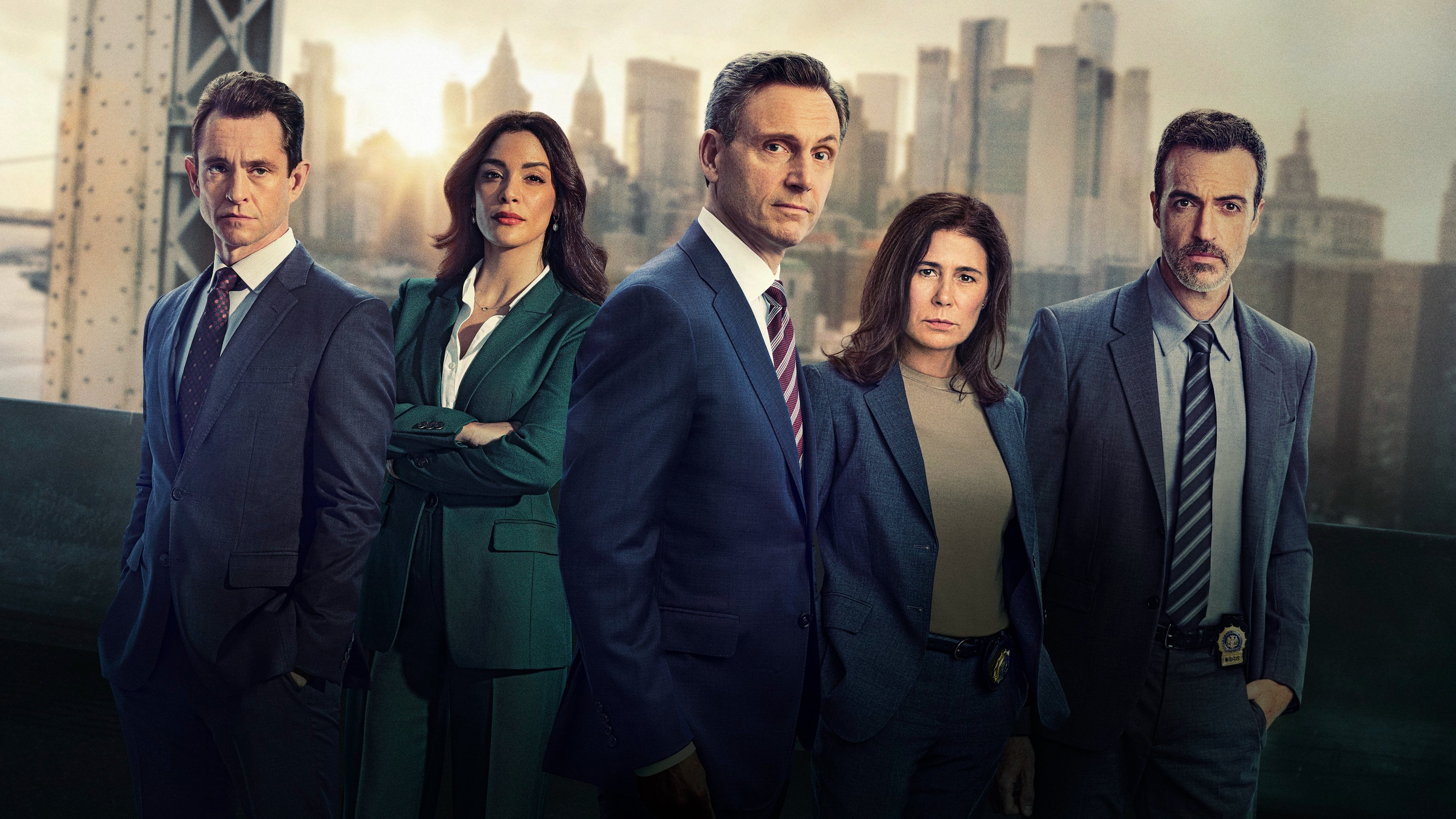
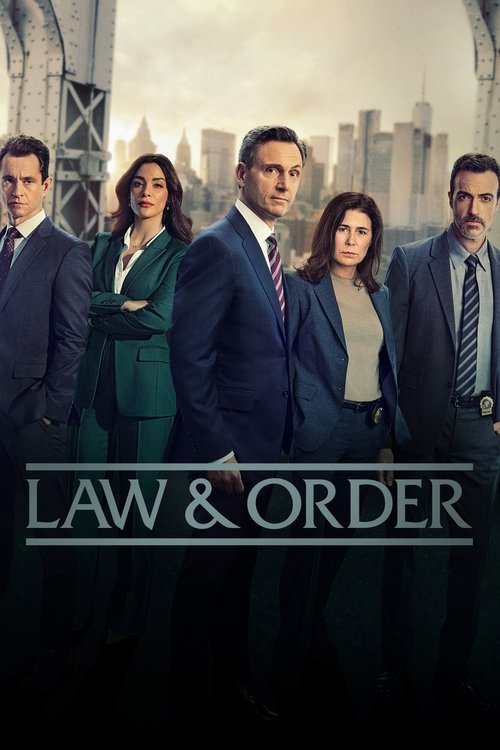
"Law & Order" is the Dick Wolf procedural that's been on NBC on and off since 1990, now deep into its revival run with Season 26. Format hasn't budged: thirty minutes of cops working a case, thirty minutes of prosecutors trying it. Mehcad Brooks and Reid Scott carry the squad room half. Hugh Dancy and Odelya Halevi work the courtroom as ADAs Price and Maroun. Tony Goldwyn plays DA Nicholas Baxter, frowning at his own prosecutors from behind a desk. Each episode opens on a body, pulls its premise from something you half-remember reading, and wraps the whole thing before the hour's up.
What Works
The machine. This show has been engineered for 35 years to not waste your time, and it doesn't. Scenes are short. Transitions are the chung-chung and a location card. Nobody has a tortured backstory you need to track across arcs because there basically are no arcs. Hugh Dancy is quietly the best thing in the current era — a buttoned-up courtroom presence that gives the prosecution half real teeth. Reid Scott, playing it straight after years of being the worst person on "Veep," turns out to be a very good TV detective. The writing room still knows how to construct a case that pivots cleanly at the forty-minute mark, which is a dying craft.
What Doesn't Work
There's no interiority. You will not learn anything about these characters past their job title and their general vibe. If a show without a serialized hook sounds like watching the same episode 22 times, that's because it kind of is. The ripped-from-the-headlines gimmick lands with a thud when the episode is obviously about a specific real person and the writers want to litigate it both ways by episode's end — you can feel the committee. The direction is competent and anonymous. Nothing here will ever be your favorite scene of television.
Who This Is Actually For
People who fold laundry while watching TV. People who want a case closed by 10 p.m. Anyone who grew up with Jerry Orbock reruns on TNT and treats this as audio comfort more than appointment viewing. If you need serialization, character growth, or a visual style, you'll bail by the second commercial break. If you liked "Blue Bloods" or any of the other Wolf shows, you already know whether you're in.
The Ruling
BACKGROUND TV is exactly what this is, and the show knows it. The craft here is pacing and construction, not depth. Dancy and Scott are doing real work inside a format that doesn't ask them to, and when the writing lets a case breathe, you can see what a sharper version of this would look like. But most weeks it's a well-oiled template, and the headline-chasing episodes occasionally forget to be stories and start reading like op-eds with warrants — the courtroom closers get speechy, the character beats go flat, and the hour starts delivering positions instead of drama. That's a writing problem, not a politics problem. The show is at its best when it trusts the procedure and lets Dancy do the heavy lifting. It's at its worst when someone decides an episode needs to Say Something. Either way, you can safely glance up from your phone and still follow what's happening. That's the tier.