The Pitch
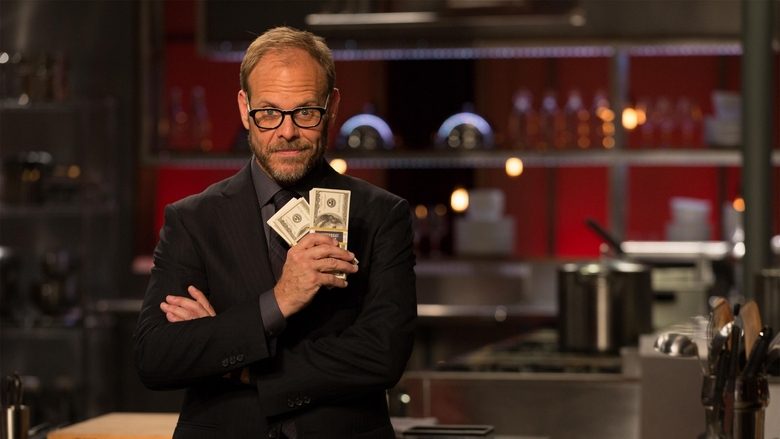
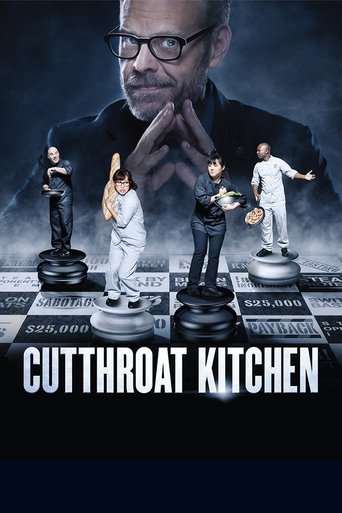
Alton Brown hands four chefs $25,000 each and a pantry, then auctions off ways to ruin their lives. Cook a gourmet burger using only a waffle iron. Prep on a rotating lazy Susan. Trade your knives for a plastic spork. The chef who spends the least on sabotages and survives three elimination rounds keeps the leftover cash. It ran fifteen seasons on Food Network from 2013 to 2017, spawned Camp Cutthroat, and got a 2025 reboot with Brian Malarkey called Knives Out. This is about the original.
What It Gets Right
Alton Brown, mostly. He's the whole show. He wanders around in a velvet smoking jacket cackling at grown adults trying to julienne carrots on a moving carousel, and he sells every second of it because he actually knows what he's talking about. When a chef gets handed a sabotage, Brown can explain exactly why it's cruel in food-science terms, which gives the gag weight. The auctions are the format's real trick, because they force chefs to blow their prize money before they've cooked a bite, so the "winner" often walks away with $612. That's a genuinely clever twist on the standard Food Network elimination grind. Judges rotate in blind, unaware of the sabotages, so the deadpan critique of a "risotto" made in a Mr. Coffee lands.
What Doesn't Work
The show is loud. Everything is loud. Brown yells the auction prices, the chefs yell about their strategy in confessionals, the sabotages are announced with brass-heavy stings, and after two episodes the rhythm never varies. You're watching the same three-act structure fifteen seasons deep. The cooking is beside the point, which is fine until you actually want to see cooking, at which point you should watch a different show. And the sabotages plateau. Once you've seen someone cook on a Barbie grill, the next twist has to top it, and the writers' room clearly ran dry around season nine.
Who'll Love It, Who'll Bail
If you liked Chopped but wished it had more slapstick, you're home. Fans of Alton Brown from Good Eats will tolerate more than they should just to hear him narrate. It's perfect for folding laundry or eating dinner while half-watching. You'll bail if you want actual food porn, chef backstories that matter, or any stakes beyond "this person spent $18,000 to make their rival cook in a phone booth." Top Chef people will find it insulting to the craft. That's the point, and it's also the problem.
The Ruling
BACKGROUND TV is exactly what this is. The verdict isn't a knock on the craft, because the craft is real. Brown is a specific, weird performer doing a bit nobody else could do, the auction mechanic is smarter than it needs to be, and the sabotage design has genuine imagination behind it. But the show is built to be dipped into, not watched. Every episode is a self-contained loop with no memory, no character arc, no reason to see episode seven before episode three. Pacing is one gear, volume is one setting, and once you've clocked the trick you've clocked the whole run. It's competent, it's funny in small doses, and it asks nothing of you. That's the definition of the tier. Put it on, fold something, laugh twice, move on.