
The Premise
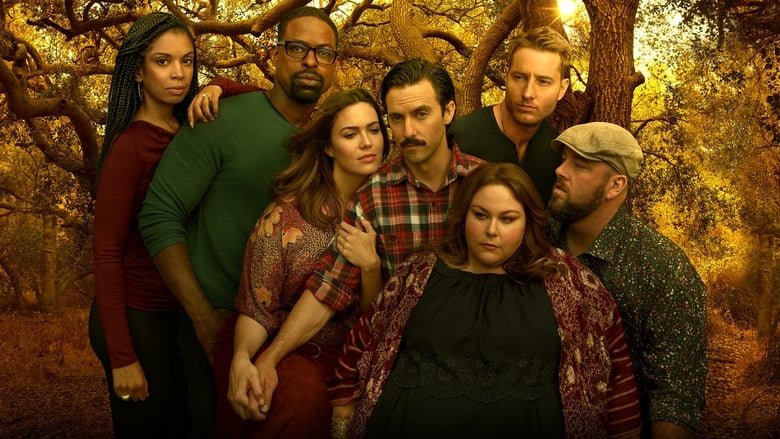
"This Is Us" is Dan Fogelman's six-season NBC family drama (2016–2022, now parked on Hulu) built on a time-hopping gimmick: three siblings sharing a birthday — Kevin, Kate, and Randall Pearson — followed across childhood, adulthood, and their parents' young marriage. Milo Ventimiglia and Mandy Moore play mom and dad Jack and Rebecca in the past. Sterling K. Brown, Chrissy Metz, and Justin Hartley play the grown kids. The pilot sets up a jock-turned-actor, a woman wrestling with her weight and her mother, and a Black son adopted into a white family searching for his biological father. Isaac Aptaker and Elizabeth Berger run it with Fogelman.
What Works
Sterling K. Brown. He's the reason the thing earned its Emmys. Randall's panic attacks, his code-switching between boardroom and family dinner, the way he looks at Ron Cephas Jones in their two-handers — that's acting you can rewind. Ventimiglia and Moore have genuine era-of-your-life chemistry, and Moore's aging makeup across decades holds up better than it has any right to. Fogelman's structural trick, cutting between a 1980 kitchen and a 2016 therapy session so a line in one scene lands on a face in the other, is genuinely clever for the first season or two. Siddhartha Khosla's score does half the emotional work and knows it.
What It Gets Wrong
The emotional engineering is bare in the drywall. You can see every manipulation coming three scenes out: slow push-in, piano chord, callback object, cry. By season three the show stops trusting its actors and just hands them monologues about Grief and Family and Legacy — the writing confuses sincerity with depth. Chrissy Metz's Kate gets stuck in a loop of story beats about her weight that the show keeps framing as revelations. Hartley's Kevin is written as the brother the writers remembered to include. And the timeline sleight-of-hand becomes a crutch — any flat scene gets juiced by cutting to a sadder one thirty years earlier or later.
Who'll Love It, Who'll Bail
If you watched "Parenthood" and wanted more of that register — Katims-adjacent, big feelings, dinner tables — this is your drug. People who like crying on a predictable schedule will love it. People who bounced off "A Million Little Things" or found "Grey's Anatomy" too engineered will bail by episode four. If you need plot propulsion, prestige-TV ambiguity, or jokes that aren't warm-hug jokes, you're already out. It's a Sunday-night, folded-laundry show, which is a compliment and a warning.
The Bottom Line
BACKGROUND TV is the right verdict because the craft is real but the show doesn't trust it. The performances — Brown especially — deserve full attention; the scripts, by season two, are so engineered they play just as well when you're half-looking at your phone. It's not preachy in a political sense; it's preachy about Feelings. Characters stop and announce their arcs. Themes get italicized by the music cue instead of earned by behavior. That's the lecture test failing on emotion rather than ideology: a show telling you what to feel because it's not quite confident the scene did. Watch it while you fold laundry at 10 p.m. Don't watch it at 3 a.m. after a breakup. The blurb was right about that part.
Sources: