The Pitch
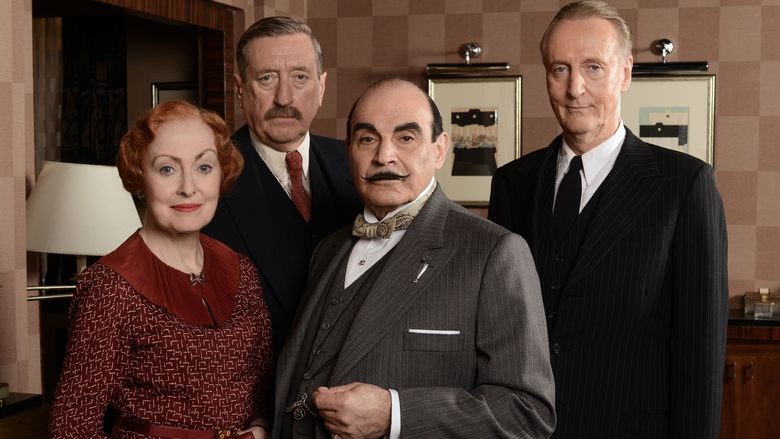
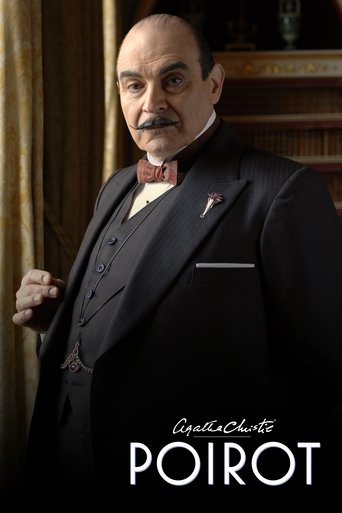
Agatha Christie's Poirot ran on ITV from 1989 to 2013, with David Suchet playing Hercule Poirot across 70 films covering nearly every story Christie wrote about the man. Hugh Fraser plays Captain Hastings, Philip Jackson is Inspector Japp, Pauline Moran is Miss Lemon. Early episodes are self-contained hour-long mysteries set in a lovingly reconstructed 1930s England — country houses, London flats with green marble bathrooms, ocean liners, the occasional trip to Egypt. A body turns up, Poirot happens to be nearby, everyone in the drawing room becomes a suspect.
The Argument For
Suchet. That's most of it. He built the walk, the mustache-touch, the little exhalations, the specific Belgian fussiness that makes Poirot Poirot, and he held it for 24 years without letting the performance curdle into camp. Nobody else has been in the part since, and nobody's likely to try. Around him, the production design is genuinely something — hats from Hugh Skillen, cars from private collectors, tea sets that match the wallpaper. Christopher Gunning's theme is one of the great TV themes, all clarinet and menace. The Art Deco fixation does real work: everything gleams, everyone smokes, no one says quite what they mean. Directors like Ross Devenish and Hettie Macdonald push the later films into darker, more novelistic territory once Suchet had earned the room to do it.
What It Gets Wrong
It's uneven. The early hour-longs get repetitive if you watch them straight through — the puzzle is often thin, the guest cast is doing panto, the mystery clicks together too neatly at the drawing-room reveal. Some of the middle-series adaptations trim Christie's plots down to gristle to fit the runtime. And the tonal shift in the later feature-length episodes will annoy people who came for the cozy version. Suchet and the writers get more interested in Poirot's Catholicism and his loneliness, which is either the best thing about the run or a betrayal of the source, depending on your priors.
Who It's For, Who'll Bounce
If Midsomer Murders and Foyle's War already live on your watchlist, this is the mothership. If you liked Knives Out for the puzzle-box mechanics and want 70 more, you're set. Anyone raised on Fincher-pace prestige TV will find the first three series glacial — Poirot doesn't run, he doesn't shout, he explains things to Hastings while eating a pastry. The subgenre where nothing bloody happens onscreen and the tension is entirely in who's lying at dinner isn't for everyone, and it doesn't apologize for that.
The Ruling
WORTH IT because it's the definitive filmed version of a body of work that gets adapted every ten years by someone who thinks they can improve it, and nobody has. Suchet's performance is the case; the production keeps up; the writing is at its best when it lets him sit still and think. It's not prestige TV and doesn't want to be. It's a craft object, an actor and a design department locking arms for a quarter century to serve the same character faithfully. That's rare, and it holds up on rewatch in a way most mystery series don't.