In this piece · 12 sections+
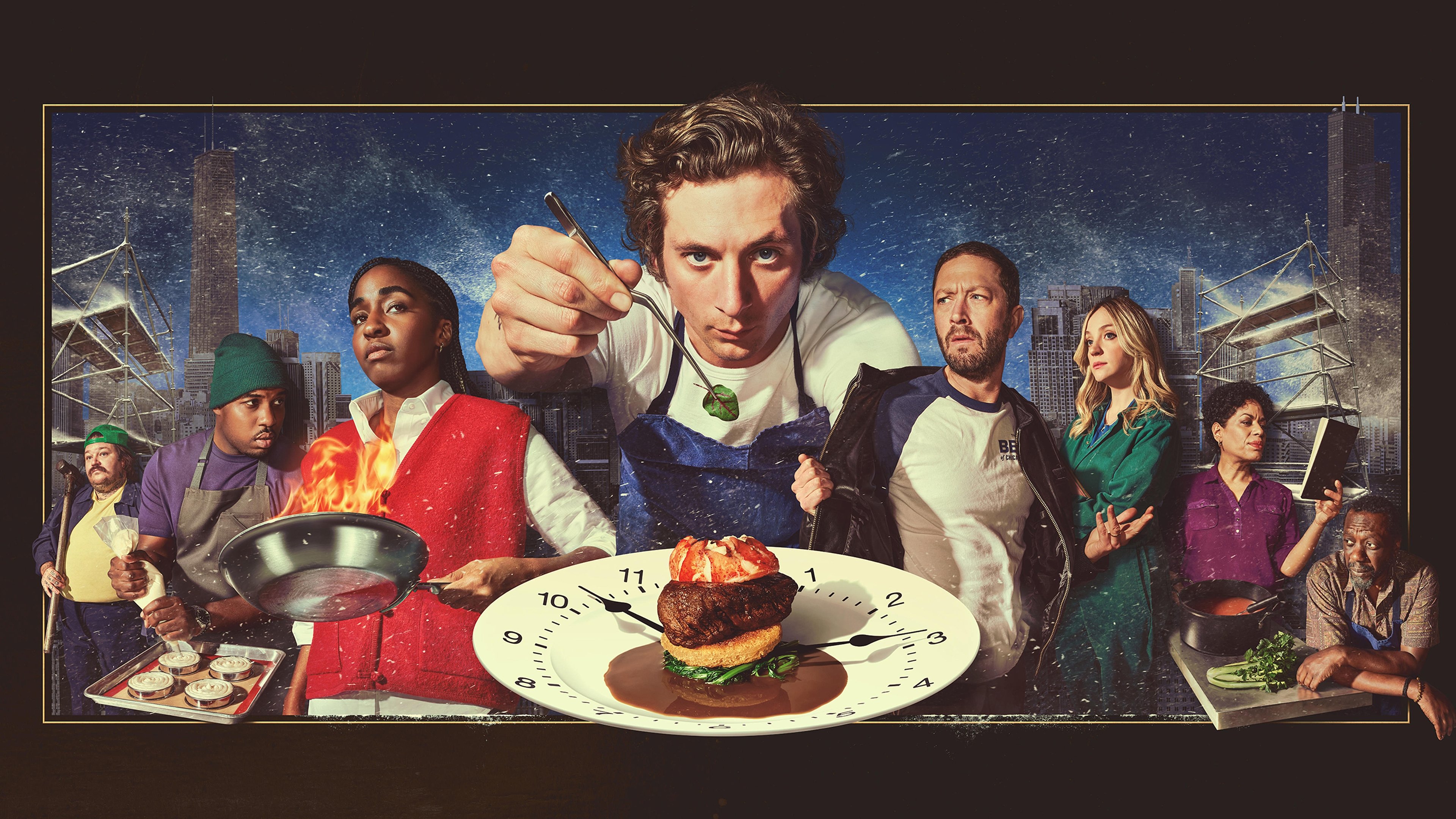
Short answer: yes, watch The Bear — but only seasons 1 and 2 are non-negotiable. Seasons 3 and 4 are optional. If you only have one weekend, watch the first two seasons, treat the ending of season 2 as the ending of the show, and you'll have seen what made everyone lose their minds in 2022. The later seasons are fine if you want to keep hanging out with these people. They are not why The Bear is on every "best of the decade" list.
If you want to bail early, the moment to do it is episode 1. If it's not for you in twenty minutes, it's not for you in eight hours. The Bear declares itself fast.
The full breakdown is below — what it is, who it's for, the episode-by-episode skip guide, the season 3 problem, where to watch, and what to put on after if you finish it.
The 30-second verdict
| Question | Answer | |---|---| | Is it worth watching? | Yes, especially seasons 1–2 | | Total time | ~24 hours across 4 seasons / 38 episodes | | Where to start | Season 1, Episode 1 ("System") | | Where to bail (if it's not working) | After S1E1, or after S2 finale | | Stop point if you're picky | Season 2 finale ("The Bear") | | Best single season | Season 2 | | Most overrated season | Season 3 | | Where to watch | Hulu (U.S.) / Disney+ bundle | | Genre, technically | Drama (filed as comedy for Emmys) | | Stress level | High. This is not a show to fall asleep to. |
What The Bear is, in one paragraph
Carmy Berzatto, a young decorated fine-dining chef, leaves the best kitchen in the world to come home to Chicago and run his dead brother's failing sandwich shop. The shop is a disaster. The staff is a disaster. Carmy is in the middle of a slow-motion nervous breakdown. Over four seasons the show tracks his attempt to turn the place into a real restaurant — and turn himself into a person who can survive what's left of his family. It's about food, grief, labor, and what it costs to want something. It's also, when it's working, very funny.
It is filed as a comedy. It is not a comedy. The category exists for awards reasons. Anyone who calls The Bear "comforting" or "cozy" has not seen it. The show is loud, profane, and shot like a panic attack. That's the appeal.
Who's actually in this thing
- Jeremy Allen White as Carmy. White does a specific thing where he communicates four conflicting feelings per scene without appearing to do anything. Won the Golden Globe twice for it. Was almost certainly going to win a third before the season 3 reception dragged.
- Ayo Edebiri as Sydney, the sous chef who shows up because she's read about Carmy and stays because she shouldn't have to. Edebiri is the show's emotional engine and the reason the kitchen scenes don't feel like a man's solo breakdown.
- Ebon Moss-Bachrach as Richie, the cousin (not actually his cousin, this is Chicago) who runs the front of house. Moss-Bachrach has the single best character arc on television in the last ten years. Full stop. If The Bear has a thesis, it's Richie.
- Lionel Boyce as Marcus the pastry chef, Liza Colón-Zayas as Tina, Matty Matheson (yes, the YouTube chef) as Neil. The supporting kitchen is stacked.
- Jamie Lee Curtis, Bob Odenkirk, John Mulaney, Sarah Paulson, Olivia Colman, Will Poulter all turn up for various episodes. The guest casting is absurd.
Season-by-season: what to watch and what to skip
Season 1 — 8 episodes, ~4 hours
This is the best entry point in television. Season 1 is what The Bear is famous for: short, mean, propulsive, and shot like the camera operator is having a bad day in a real kitchen. The full season is a one-weekend watch.
Best episodes: "System" (E1) is the show's mission statement. "Brigade" (E3) is where it announces itself — if you're not hooked here, you won't be. "Review" (E7) is the legendary one-take real-time meltdown that won every award it was eligible for and probably should have won some it wasn't.
Skip nothing. Season 1 doesn't waste a minute.
Season 2 — 10 episodes, ~6 hours
The peak. The show opens up, lets the supporting cast breathe, and earns the optimism it's been sitting on. If you watched season 1 and liked it, season 2 will blow your head off. If you watched season 1 and were lukewarm, season 2 might be the one that converts you.
Best episodes: "Fishes" (E6, the Christmas flashback with Jamie Lee Curtis) is one of the most sustained nervous breakdowns ever broadcast. "Forks" (E7, the Richie episode) is the half-hour of TV from the last decade. The finale, "The Bear," is the closest the show ever gets to a real ending — if you wanted to stop here, you could, and the show would still feel complete.
Skip nothing. Season 2 is also airtight.
Season 3 — 10 episodes, ~7 hours
Here's where the discourse went off a cliff. Season 3 is the slow one. The kinetic kitchen show downshifts into a meditative character piece. Long silent montages. Repeated flashbacks to things you already saw. Subplots that don't pay off. A finale that ends on a cliffhanger that isn't really a cliffhanger.
Some of it is beautiful. A lot of it is indulgent. Critics protected it. Reddit revolted. Both sides have a point.
Best episodes: "Tomorrow" (E1) is the season's prettiest hour, a near-silent flashback assembled from Carmy's career. "Napkins" (E6) is the Tina backstory that is genuinely great. "Forever" (E10) is the divisive finale.
Skippable: A lot of the middle. If you're impatient, watch E1, E6, E10 and skim the rest. You will not feel like you missed plot, because there isn't much.
Season 4 — 10 episodes, ~7 hours
Course-corrects from season 3 but doesn't fully recover the early energy. The show is now openly about whether Carmy can survive the version of himself that built the restaurant. There are real moments. There are also a couple of episodes that feel like the writers' room ran out of plot and decided to just hang out.
Best episodes: The Sydney-focused episodes are where the season earns itself. The finale lands a real ending — whether or not the show actually ends here is a separate question.
Skippable: Two or three middle episodes. You'll know them when you see them — they're the ones where someone stares at a wall for three minutes and Pearl Jam starts playing.
What it gets right (the case for watching)
The performances. Already covered, but it bears repeating: White, Edebiri, and Moss-Bachrach are giving three of the best ongoing TV performances of the decade. Even when the writing falters, they don't.
The sound design. The Bear sounds like a kitchen. Tickets printing, pans slamming, six people yelling "corner" and "behind" on top of each other. Most shows use sound as wallpaper. This one uses it as a knife. The audio mix in the cooking episodes is its own character.
The specificity. The show knows what a walk-in looks like at 2 a.m. It knows the difference between a guy who's been in a kitchen for thirty years and a guy who's been in one for two. It knows Chicago — the actual Chicago, the Italian beef and the bridges and the neighborhood. Most prestige TV is set in a sort of airport-lounge America. The Bear is set in a real place, and you feel it.
The half-hour runtime. The Bear is a half-hour drama in a TV economy that thinks every prestige show needs to be 70 minutes. The shorter format is a feature. It forces compression. The episodes hit and get out.
What doesn't work (the case against)
It's stressful. Not in a fun way. In a "I should take a walk" way. If you watch TV to decompress, this is the wrong show. The first season in particular is shot and edited to make you feel like you're having a bad shift.
Subplots that don't commit. Carmy's love interest Claire (Molly Gordon) is great in season 2, then the show basically abandons her. The mother (Curtis) shows up in heavy-hitter scenes and disappears. The father question never resolves. There's a pattern here and it's not flattering.
Season 3 specifically. Already covered. If you've heard people complain about The Bear getting up its own ass, season 3 is what they're talking about.
It thinks it's a movie. Some weeks this is a feature. Some weeks it's a guy staring at a notebook for fifteen minutes while Joni Mitchell plays. Your tolerance for art-house pacing will determine whether you finish.
Who should watch it
- Restaurant people. Anyone who has worked a kitchen, served tables, or run a back-of-house. The show was made for you and you already know.
- Fans of Friday Night Lights, Rescue Me, the first two seasons of Atlanta. This is your show. Same DNA — community drama, real labor, ensemble.
- People who like Safdie brothers movies, Paul Thomas Anderson, anyone who'd queue up Uncut Gems on a Friday. The shaggier later seasons will land for you specifically.
- Anyone who liked Succession but wanted it set somewhere working class. This is the closest thing.
Who should skip it
- You watch TV to relax. The Bear is the opposite. Don't do this to yourself.
- You bounced off Succession because you didn't want to spend time with miserable people yelling. The Bear is not going to fix that.
- You want a show to put on while you fold laundry. The Bear demands your attention and will make you feel stupid if it doesn't have it.
- You need a propulsive plot every episode. Especially seasons 3 and 4 — those are vibes seasons.
- You can't handle profanity. This show drops more F-bombs in eight episodes than most network shows do in their entire run.
Where to watch The Bear (2026)
United States: Hulu has all four seasons. The Disney+ bundle gets you it. Standalone Hulu is around $10/month.
Internationally: Disney+ in most markets (UK, Canada, Australia, most of Europe). Star+ in some Latin American regions has been folded into Disney+ — should still work.
Free? No. Don't trust anyone telling you otherwise.
Buy individual seasons? Available on Amazon, Apple TV, Google. Don't bother — Hulu's the move if you're watching at all.
For a more detailed regional breakdown, see our full Where to Watch The Bear guide.
What to put on after
If you finished The Bear and want more — different lanes for different cravings:
- The kitchen specificity: Boiling Point (the British one-shot movie + sequel series), Anthony Bourdain's Parts Unknown.
- The ensemble drama in a tight workplace: The Pitt on HBO Max, Friday Night Lights, Rescue Me.
- The shaggy later-seasons vibe: Atlanta season 3 onward, Better Things, Mr. Robot season 2.
- The Chicago of it all: The Beast (older, hard to find but great), the Fargo anthology if you want Midwest specificity in a different key.
Full list in our Shows Like The Bear guide.
FAQ
Is The Bear actually a comedy?
No. It's filed as one for Emmy reasons — the show clocks in at 30 minutes and the comedy categories at the Emmys are softer to break into than the drama ones, where it would have to fight Succession and The Last of Us. Don't watch it expecting to laugh. You'll laugh sometimes. Most of the time you'll be tense.
Is The Bear worth watching if you don't care about food?
Yes. The cooking is the texture, not the substance. The Bear is a show about labor and grief and what we owe the people we work with. The food is how it tells that story. You can watch The Bear and still not be able to make a risotto.
Does The Bear get bad?
It gets self-indulgent. "Bad" is too strong. Seasons 3 and 4 lose the kinetic energy of the early run and trade it for mood and character work. Some viewers feel betrayed by that. Some viewers think it's the show maturing. Watch and decide.
How many seasons of The Bear are there?
Four, as of mid-2026. Season 5 has been confirmed and is in production. Whether it's the last one is a matter of FX press releases versus what Christopher Storer actually wants to do, and those don't always agree.
Is The Bear good in 2026?
The first two seasons are still some of the best television of the decade. The later seasons are good if you've already bought in. If you're starting fresh in 2026, you're in a great spot — you can watch the strong seasons, see what people meant, and stop whenever you want.
Is The Bear too stressful to watch?
For some people, legitimately yes. The first season in particular is shot and cut to make you feel like you're having a bad shift. Watch one episode before committing. You'll know in twenty minutes whether the show's frequency is one you can live with.
Do I need to watch all four seasons?
No. Honest take: watch seasons 1 and 2. Treat 3 and 4 as optional. The first two seasons tell a complete-ish story and end on a real note. If you loved them and want more time with these characters, the later seasons are there waiting.
Is The Bear better than Succession?
Different shows. Succession is funnier line-for-line and tighter as a piece of plotting. The Bear is more emotionally direct and better at finding meaning in non-rich people's lives. Both are top-tier. Don't pick.
Is The Bear worth watching reddit?
The r/TheBear subreddit will tell you the show is dead. r/television will tell you season 3 was a misunderstood masterpiece. Both are wrong. Watch it yourself, stop when you stop liking it, don't apologize for either.
What to do tonight: Open Hulu. Start with season 1, episode 1. Give it through episode 3 — if you're not hooked by the end of "Brigade," you never will be, and that's fine. If you are, clear the weekend.
If you want a take like this every week — what's actually worth watching versus what's a war crime — drop your email below. Free, weekly, Thursdays.