In this piece · 9 sections+
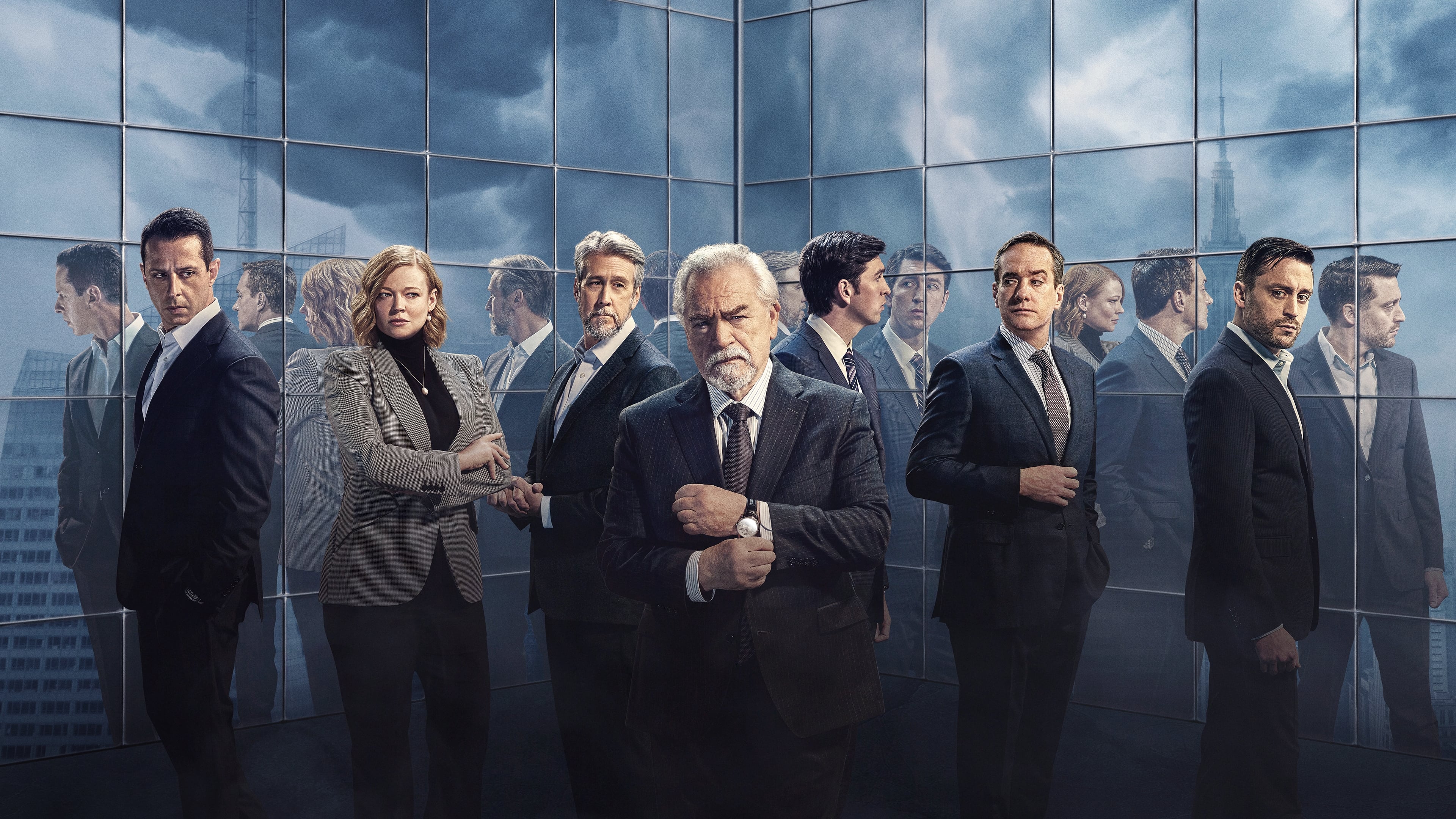
Short answer: yes. Succession is one of the two or three best-written shows HBO has aired since The Sopranos, and the ending sticks the landing. Watch it.
The longer case: four seasons, 39 episodes, a cast of miserable billionaires yelling at each other in glass conference rooms, and somehow one of the funniest shows of the last decade. It's a family drama disguised as a corporate thriller disguised as a black comedy, and Jesse Armstrong's writers' room outpaces basically every other prestige drama on the air right now. If you've been putting it off because it sounds like homework about rich people, that instinct is wrong. It's a comedy. A cruel one.
The quick verdict
Yes, watch it. Succession is for anyone who liked Veep, The Sopranos, or Arrested Development and wants something that hits all three notes at once. Skip it if you genuinely cannot stand watching unpleasant people be unpleasant to each other for 40 hours. That's the whole show. There is not a single character you'd want to have coffee with, and that's the point.
✅ WORTH IT
What Succession is actually about
Logan Roy is an old, mean, terrifying Scottish media mogul who runs a Fox-News-adjacent global conglomerate called Waystar Royco. He has four adult children, all of whom are somewhere on the spectrum between deeply broken and actively dangerous, and all of whom want his job. Season one opens with Logan deciding not to retire after all. Everything that follows is 39 episodes of his kids scrambling, backstabbing, and briefly aligning while their father toys with them like a cat with four half-dead mice.
The tone is the thing. It looks like prestige drama, shot on grey handheld with Nicholas Britell's now-iconic score doing all the heavy lifting, but the dialogue is written like a Veep episode with the safety off. People deliver insults so specific and so cruel you have to pause and rewind. Nobody grows. Nobody heals. There is no arc where a character learns a lesson and becomes a better person. That's not what this show is doing. It's a study of what happens when generational wealth combines with a father who withheld love as a management technique, and the answer is: nothing good, but a lot of great scenes.
The math on time
Four seasons. 39 episodes. Runtimes climb from around 55 minutes in season one to a full hour and change in the back half, with the finale clocking in near 90. Do the arithmetic and you're looking at roughly 38 to 40 hours of television. That's a long weekend if you're feral about it, or about six weeks at two episodes a week if you're a normal person with a job.
Compared to what people usually recommend, Succession is efficient. Better Call Saul asks for 63 episodes. Breaking Bad wants 62. The Sopranos is 86. Succession says its piece in 39, ends when it should have ended, and doesn't have a filler season where the writers ran out of ideas. That alone puts it in the top decile of prestige TV as a time investment. You will not finish this show wishing they had cut two seasons.
What it gets right
The writing. Start there. The Succession writers' room, headed by Armstrong with alumni from Veep and In the Loop, generates dialogue at a density and specificity that almost nobody else on television is doing. Insults are custom-built for the character being insulted. Business jargon is used correctly. When a hedge fund guy talks about a hostile takeover, it sounds like a hedge fund guy talking about a hostile takeover, not a screenwriter's guess. That precision is why the show holds up on rewatch. Half the jokes you missed the first time.
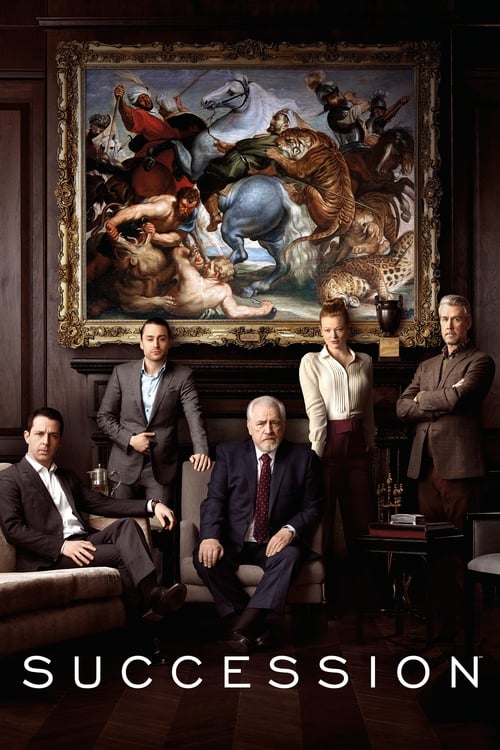
The performances are the other pillar. Brian Cox as Logan is the anchor, but he's playing the least interesting Roy on purpose, and he knows it. The real fireworks are Jeremy Strong as Kendall (a genuinely unhinged committed-actor performance that made him a target of think pieces for four years), Sarah Snook as Shiv, Kieran Culkin as Roman, and Matthew Macfadyen as Tom Wambsgans, who quietly walks off with the entire series. Nicholas Braun as Cousin Greg is the comic relief that keeps the show breathable. Every one of these actors was doing career-best work simultaneously, on the same show, for four years. That doesn't usually happen.
Craft-wise: the handheld camerawork sounds annoying in theory and works in practice, because it locks you into the anxiety of every scene. The music is unmissable. The needle drops are chosen with an actual point of view. And the pacing is ruthless. Episodes end on a moment, not a resolution, and you find yourself queuing the next one at 1 a.m. even though nobody would blame you for going to bed.
What doesn't work
Season one is slower than the rest of the show. The first three episodes are setting up a chess board, and it takes until episode four or five for the writers to figure out that the show is a comedy. If you bounce off the pilot, don't take that as final. Give it through episode three. If you're still cold by the end of the season one finale, fine, this isn't for you. But that finale is when most viewers realize what they're watching.
There are stretches, mostly in season two, where the corporate plot machinations get dense enough that you might miss what's actually being negotiated. Cruise-line scandal, GoJo acquisition talks, the DOJ inquiry. It's fine to not track every legal beat. The show is really about who's sitting where at the family dinner, and the business plot is scaffolding. Watch it for the human wreckage.
And yes, some viewers genuinely cannot stomach spending 40 hours with these people. That's a legitimate complaint, not a flaw in the show. Succession isn't interested in giving you someone to root for. Kendall is not a hero. Shiv is not a hero. Roman is definitely not a hero. If you need a protagonist to like, this is the wrong show, and no amount of me telling you it's brilliant will change that. Ted Lasso is right there.
One more honest note. The ending is divisive. I think it's the correct ending, and I think it's the only ending the show could have earned. But I've talked to enough people who felt cheated by it to warn you: the finale does not give you the catharsis you might be hoping for. It gives you the ending these characters deserve, which is a different thing.
Who should watch it
If you liked Veep, absolutely yes — same DNA, same insult-writing muscle, less overtly political. If you liked The Sopranos, yes — family dynamics as tragedy, patriarch you cannot look away from. If you liked Arrested Development, yes, because Succession is basically what happens if the Bluths were competent enough to actually run Fox News.
If you bounced off Mad Men because you found it slow and everyone was too self-serious, Succession is faster and much funnier. If you bounced off Billions because it took itself too seriously and the finance stuff was fake, Succession is the show Billions was pretending to be.
If you need a likable protagonist, skip it. If you're exhausted by shows about rich people, skip it. If you need plot resolutions where the good guys win, skip it, because there are no good guys and nobody really wins.
Where to watch
All four seasons stream on Max in the US. It's included with any Max subscription, which as of this writing runs around $10 a month for the ad tier and $17 ad-free. You can also buy individual seasons on Prime Video, Apple TV, or YouTube if you don't want to sign up for another streamer, though the price of buying the full series usually lands north of $100, so a month or two of Max is the cheaper play. Nicholas Britell's Succession soundtrack is worth owning separately if you want to feel dramatic while doing your laundry.
FAQ
Is Succession overrated?
No. The consensus on this one is right. It won the Emmy for Outstanding Drama three times because it was, in fact, the outstanding drama in each of those years. The show did have a small backlash cycle around season three when it became fashionable to complain about Jeremy Strong's acting process, but that's a story about a New Yorker profile, not about the quality of the show. Watch it and judge for yourself.
Does it get better after season 1?
Yes, significantly. Season one is a setup season, and it's good, but seasons two and three are where the show hits its peak. Season two in particular contains what a lot of viewers consider the best episode of the entire run, a rowing-crew set piece that I won't spoil. If you liked season one at all, seasons two and three will feel like the show snapping into focus.
Is it too dark to enjoy?
Not really. It's cynical and mean, but it's a comedy first. You will laugh out loud constantly, especially at anything involving Roman, Tom, or Greg. It's much less bleak than something like The Leftovers or Breaking Bad's final stretch. Nobody gets murdered in the woods. It's rich people ruining each other in glass conference rooms, and that's a fundamentally funnier premise than the marketing suggests.
Should I read anything before watching?
No, don't. Some outlets will tell you Succession is loosely inspired by the Murdoch family, and it is, but you don't need any real-world context to enjoy it. Everything you need is on screen. Avoid recap articles once you start, because the show does actually spoil, and the season-ending twists land harder if you go in cold.
What to do tonight: watch the pilot. If you're not sure by the credits, keep going through episode three. If episode three doesn't have you queuing episode four, this show isn't for you and that's fine. But it probably will.
Related guides
Some links above are affiliate links (we're an Amazon Associate) — if you buy through them we may earn a commission. It never changes a verdict.